Philanthus
Fabricius, 1790
beewolves, bee-hunters, bee-killer wasps
Species Guides
13- Philanthus bicinctus(Bumble Bee Wolf)
- Philanthus bilunatus(Two Moons Beewolf)
- Philanthus crabroniformis(beewolf)
- Philanthus gibbosus(Hump-backed Beewolf)
- Philanthus gloriosus(Bee-wolf)
- Philanthus lepidus(Pleasant Beewolf)
- Philanthus multimaculatus(beewolf)
- Philanthus nasalis(Antioch Sphecid Wasp)
- Philanthus pacificus(Pacific beewolf)
Philanthus is a of solitary predatory commonly known as beewolves. females excavate underground burrows in sandy soils and provision them with paralyzed bees as food for their larvae. Males are highly territorial, marking vegetation with to defend mating territories. The genus contains approximately 136 worldwide, with about 30 species occurring in North America. These wasps are important as adults and serve as regulators of .


Pronunciation
How to pronounce Philanthus: //fɪˈlænθəs//
These audio files are automatically generated. While they are not always 100% accurate, they are a good starting point.
Identification
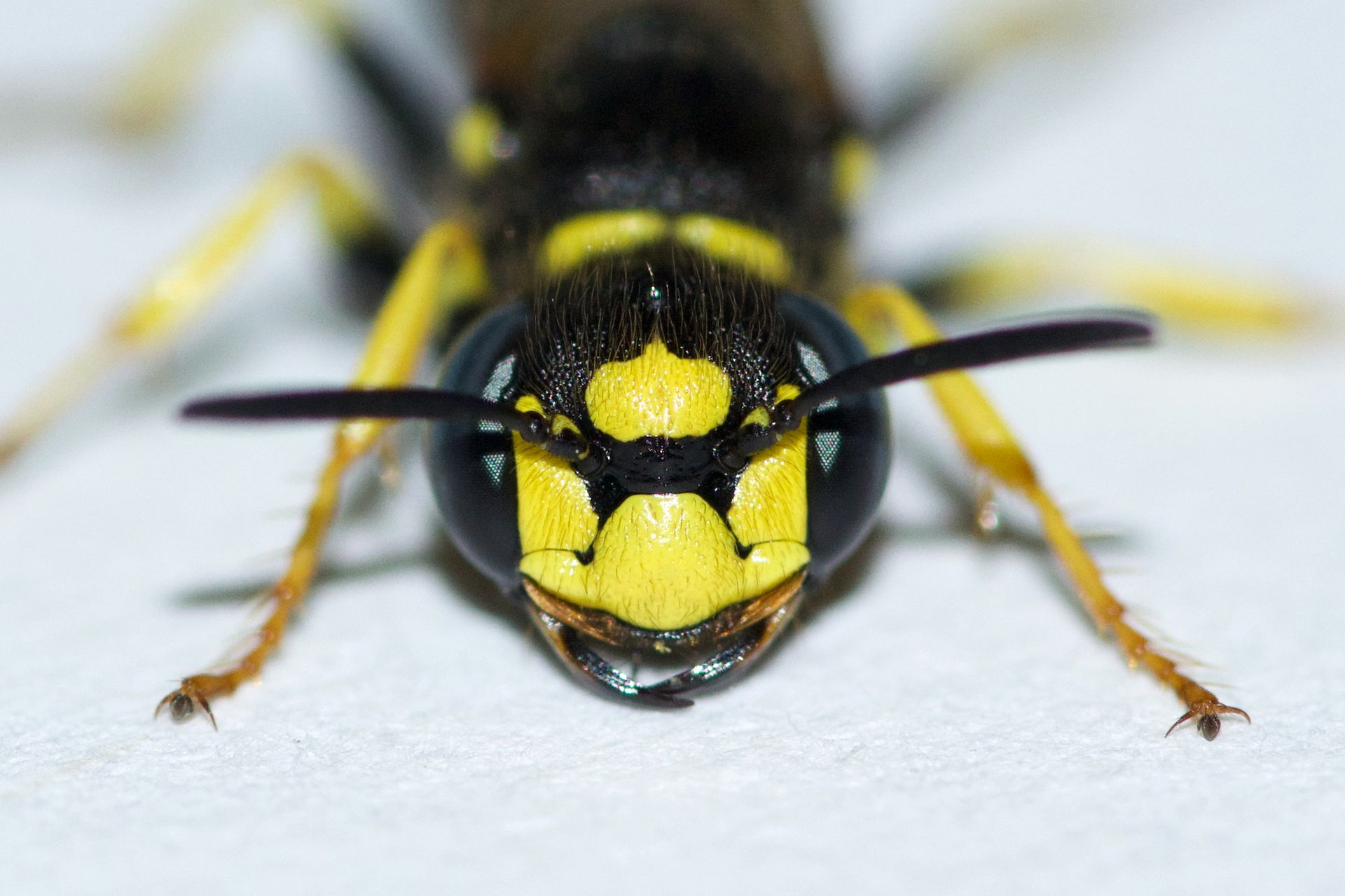
Distinguished from similar solitary by the emarginated (notched) inner margins; related Aphilanthops has straight inner eye margins. Females can be recognized by the tarsal rake—spines on the front legs used for excavation. Males lack the tarsal rake and have pale . The genus is further distinguished by its specialized prey-carrying : bees are transported beneath the body, held in the middle legs. -level identification requires examination of minute morphological characters including punctation patterns and genitalia.
Images
Habitat
Open, sandy including bare coarse sand, sandy-clay, and sandy loam soils. Females require exposed soil for burrow excavation, often removing small pebbles during digging. Males establish territories on low vegetation near nesting . Found in diverse environments from coastal dunes to inland prairies and disturbed open ground.
Distribution
Worldwide distribution with approximately 136 ; about 30 species occur in North America ranging from Canada to Mexico, Atlantic to Pacific coasts. Individual species have more restricted ranges: P. gibbosus is transcontinental, P. multimaculatus is native to the west coast of the United States, and P. triangulum is European.
Seasonality
Active primarily during warm months. Specific seasonality varies by and latitude. P. gibbosus is active from late spring through summer. P. frigidus active late June to mid-August in northern areas. P. hispidus abundant in Arizona during August and September. Males typically emerge before females to establish territories.
Diet
feed on nectar from flowers. Larvae are , provisioned with paralyzed bees by the female parent.
Host Associations
- Halictidae - preySweat bees are the majority of prey for P. gibbosus
- Colletidae - preyYellow-faced bees are common prey
- Andrenidae - preyMining bees recorded as prey
- Crabronidae - preyAphid wasps in Pemphredon recorded as prey
- Apidae - preyHoneybees (Apis) preyed upon by P. triangulum; bumblebees (Bombus) preyed upon by P. bicinctus
Life Cycle
Solitary nesting with complete . Females excavate burrows 15-24 cm deep, sometimes extending to a meter or more in successive . Burrows contain multiple radiating from the main tunnel. Each cell is provisioned with several paralyzed bees and a single . Larvae feed on the preserved prey, pupate within the cell, and emerge as the following season. Some exhibit burrow sharing among sibling females and multi-generational nest expansion.
Behavior
Females hunt by actively stalking bees at flowers, striking prey between the front legs to paralyze them with a nerve-disabling sting. Prey is carried beneath the body in the middle legs. Females use landmark-based navigation to locate burrow entrances, memorizing subtle environmental cues. Males are highly territorial, perching on low vegetation and scent-marking twigs and foliage with abdominal brushes to advertise territory ownership; territorial possession is typically brief due to frequent displacement by competitors. Males may aggregate in female burrows overnight and during inclement weather, returning to the same burrow repeatedly.
Ecological Role
of bees and other , contributing to of . serve as pollinators while foraging for nectar. Prey specialization on bees creates trophic linkage between plant-pollinator networks and higher predators. Nest can locally influence soil structure and nutrient cycling.
Human Relevance
Generally beneficial insects due to pollination services and natural control of . P. triangulum was a research subject of Nobel laureate Nikolaas Tinbergen, contributing to understanding of animal and landmark navigation. Some may occasionally prey on managed honeybees, potentially creating minor conflicts with operations. No significant medical importance; stings are not considered dangerous to humans.
Similar Taxa
- AphilanthopsAlso in Philanthinae with similar body form and ; distinguished by straight (not emarginated) inner margins and prey specialization on queens rather than bees
- NomadaCuckoo bees that mimic beewolf appearance; distinguished by being bees (Apidae) with branched body hairs and different wing venation, lacking the waist and predatory adaptations
- CercerisRelated crabronid with similar nesting ; distinguished by prey specialization on beetles (weevils) rather than bees, and different including clypeal processes
More Details
Taxonomic History
Formerly classified in Sphecidae, now placed in Crabronidae following modern phylogenetic revisions. Philanthinae also includes ant-queen kidnappers (Aphilanthops) and related .
Research Significance
P. triangulum was one of the research subjects of Nikolaas Tinbergen, whose studies of landmark navigation in female beewolves contributed to his 1973 Nobel Prize in Physiology or Medicine. The European beewolf's homing remains a classic example of insect spatial memory.
Parasite Pressure
Beewolves substantial from satellite flies (Sarcophagidae: Metopia, Senotainia, Hilarella), velvet ants (Dasymutilla nigripes), and cuckoo wasps (Hedychrydium dimidiatum). These exploit the predictable nest locations and provisioning of beewolves.
Social Tendencies
P. gibbosus exhibits burrow sharing among sibling females and potential multi-generational nest expansion, representing incipient sociality. This appears to be -level rather than -wide, with some populations showing more cooperative nesting than others.
Sources and further reading
- BugGuide
- GBIF taxonomy match
- iNaturalist taxon
- NCBI Taxonomy
- Catalogue of Life
- The Amazing World of 'Gwentomologist' Gwen Erdosh | Bug Squad
- Bug Eric: Wasp Wednesday: Beewolves
- Bug Eric: August 2011
- Bug Eric: June 2012
- Bug Eric: Wasp Wednesday: Ant-queen Kidnappers
- Bug Eric: June 2011
- The Nesting Behavior of Philanthus multimaculatus Cameron (Hymenoptera, Sphecidae)
- Nesting Biology of the Bumblebee Wolf Philanthus bicinctus Mickel (Hymenoptera: Sphecidae)
- Male Territoriality in the Bumblebee Wolf, Philanthus bicinctus (Mickel) (Hymenoptera, Sphecidae): Observations on the Behaviour of Individual ♂♂
- Nesting Behavior of Philanthus sanbornii in Florida (Hymenoptera: Sphecidae)
- Nesting Behavior of Philanthus albopilosus with Comparisons between Two Widely Separated Populations1
- Notes on the Nesting Behavior of Philanthus Lepidus Cresson (Hymenoptera, Sphecidae)
- Territorial behaviour by males of Philanthus multimaculatus (Hymenoptera: Sphecidae) with a review of territoriality in male sphecids
- Territorial Behavior in Males ofPhilanthus Psyche (Hymenoptera, Sphecidae)
- The Nesting Behavior of Some Sphecid Wasps of Arizona, including Bembix, Microbembex, and Philanthus
- Additions to the knowledge on the genus Philanthus Fabricius, 1790 (Hymenoptera: Crabronidae: Philanthinae) from the Indian subcontinent
- The behaviour of Philanthus crabroniformis (Hymenoptera: Sphecidae)
- The genome sequence of the Bee Wolf, Philanthus triangulum (Fabricius, 1775) (Hymenoptera: Crabronidae).