
Metopia
Meigen, 1803
satellite flies
Species Guides
2- Metopia argyrocephala(satellite fly)
- Metopia sinipalpis
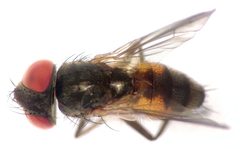
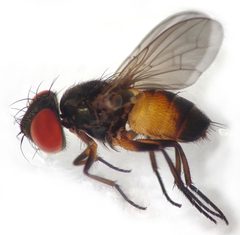
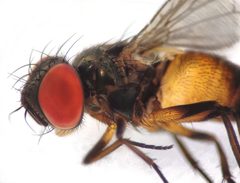
Metopia is a of kleptoparasitic flies in the Sarcophagidae, Miltogramminae, commonly known as 'satellite flies.' The genus contains at least 50 described . females are known to follow solitary back to their nest burrows, where they deposit live larvae at the entrance. These larvae then enter the burrow and parasitize the wasp larvae or their provisioned prey. This has been documented with including beewolves (Philanthus), thread-waisted wasps (Ammophila), and ant-queen kidnappers (Aphilanthops).
Pronunciation
How to pronounce Metopia: /mɛˈtoʊpiə/
These audio files are automatically generated. While they are not always 100% accurate, they are a good starting point.
Images
Distribution
Records exist from Denmark, Norway, Sweden, Vermont (USA), and other parts of the United States. The has a Holarctic distribution pattern.
Host Associations
- Philanthus gibbosus - Female Metopia flies follow female beewolves back to nests and deposit larvae at the burrow entrance; larvae parasitize larvae
- Ammophila procera - Metopia laterallis specifically recorded as ; female flies follow prey-laden female to burrows
- Ammophila aberti - Satellite flies in Metopia are constant threat to parasitize nests
- Aphilanthops frigidus - Metopia leucocephala observed loitering near nest , suspected
- Aphilanthops hispidus - Metopia leucocephala and Euaraba tergata suspected of nests
- Clitemnestra bipunctata - Metopia argyrocephala reported as ; female flies enter burrows and deposit live larvae that feed on paralyzed prey and destroy or larvae
Behavior
females exhibit kleptoparasitic by following female solitary back to their nest burrows. They deposit live larvae (larviposit) at the lip of the burrow entrance. The larvae then crawl down the tunnel and become of the wasp's larvae or their provisioned prey. This 'satellite' behavior—following the host from a distance rather than entering the nest directly—gives the group its .
Ecological Role
Metopia function as of solitary , particularly those in Crabronidae and Sphecidae. By parasitizing wasp larvae and their food stores, they exert control pressure on these predatory wasps. They represent one of several satellite fly (along with Senotainia and Hilarella) that exploit the nesting of solitary wasps.
Similar Taxa
- SenotainiaBoth are satellite fly in Sarcophagidae (Miltogramminae) that parasitize solitary ; Senotainia vigilans specifically recorded with Ammophila procera alongside Metopia laterallis
- HilarellaAnother satellite fly in same with similar kleptoparasitic lifestyle targeting solitary
- AmobiaSatellite flies in same that parasitize mud dauber (Sceliphron); historically treated as related or synonymous with Metopia in some classifications
Sources and further reading
- BugGuide
- Wikipedia
- GBIF taxonomy match
- iNaturalist taxon
- NCBI Taxonomy
- Catalogue of Life
- Bug Eric: Wasp Wednesday: Ammophila procera
- Bug Eric: Wasp Wednesday: Ant-queen Kidnappers
- Bug Eric: Wasp Wednesday: Beewolves
- Bug Eric: November 2010
- Bug Eric: Wasp Wednesday: Clitemnestra bipunctata
- Bug Eric: August 2011
- Comparative morphology of the first instar of three species of Metopia Meigen (Diptera: Sarcophagidae, Miltogramminae)