Philanthus bilunatus
Cresson, 1865
Two Moons Beewolf
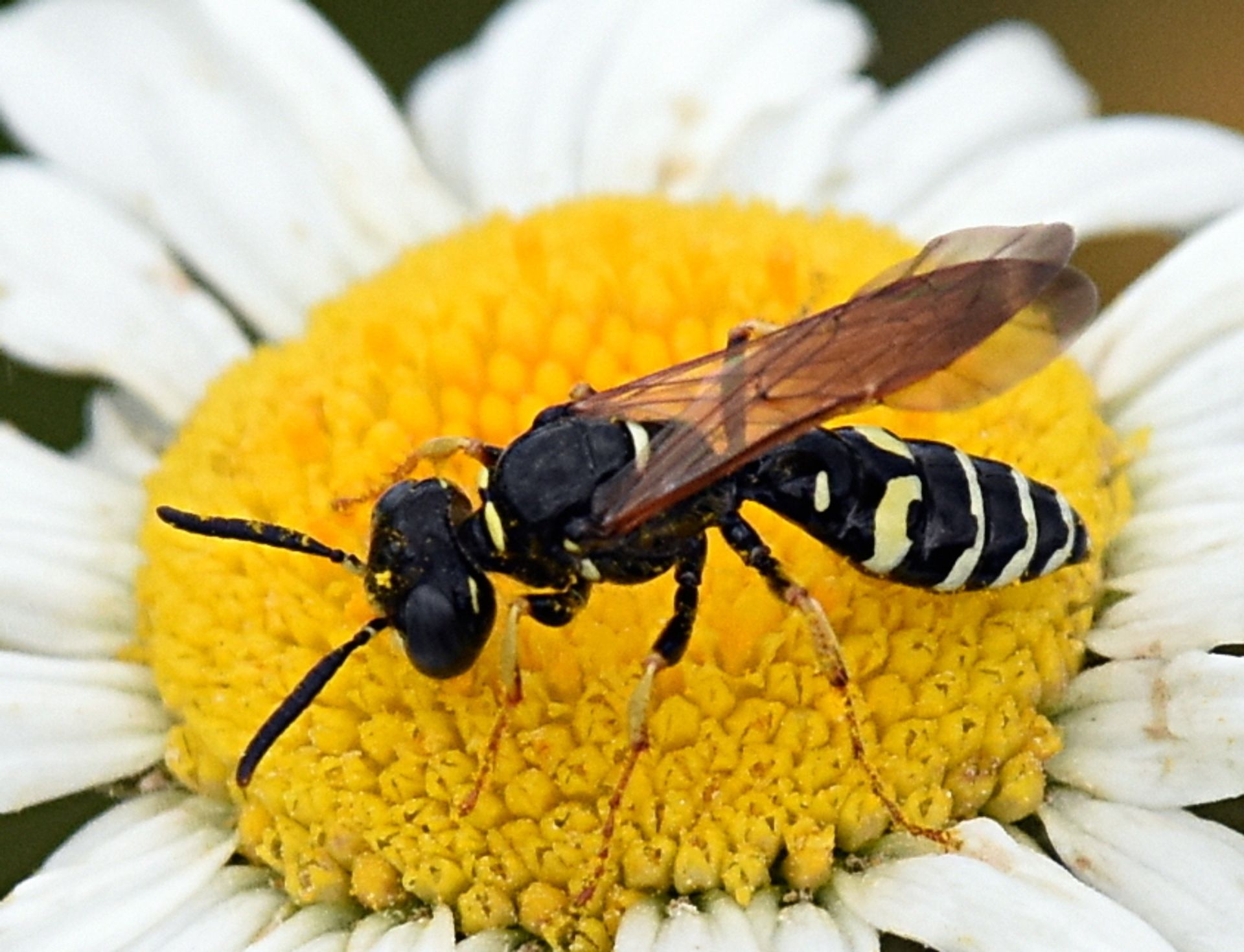
Philanthus bilunatus is a solitary in the Crabronidae, commonly known as the Two Moons Beewolf. Like other beewolves in the Philanthus, it is a of bees and wasps, which it paralyzes to provision underground nests for its larvae. The is found in North America, with records from Canada and the United States. As a member of the Philanthinae, it shares behavioral traits with related beewolves including territorial males and nest excavation in sandy soils.
Pronunciation
How to pronounce Philanthus bilunatus: /fɪˈlænθəs baɪljuˈneɪtəs/
These audio files are automatically generated. While they are not always 100% accurate, they are a good starting point.
Images
Distribution
North America; specifically recorded from Canada (Alberta) and the United States
Similar Taxa
- Philanthus gibbosusThe most common North American beewolf, also black and yellow patterned, but distinguished by different abdominal markings and broader distribution
- Philanthus ventilabrisAnother North American beewolf with similar size and general appearance, requiring close examination of abdominal pattern for separation
- Philanthus multimaculatusWest coast with green and different maculation pattern; P. bilunatus has different abdominal markings
More Details
Taxonomic note
The epithet 'bilunatus' refers to the two crescent-shaped (lunate) markings on the , a key identifying feature. The 'Two Moons Beewolf' directly translates this characteristic.
Genus characteristics
Philanthus beewolves are known for their distinctive prey-capture : females sting bees between the front legs to paralyze them, then carry the prey beneath their body using their middle legs. Males are highly territorial and use scent-marking to establish perches.