
Phylloxera caryaeavellana
Riley, 1880
hickory phylloxeran, hickory phylloxera
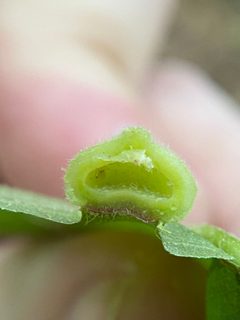
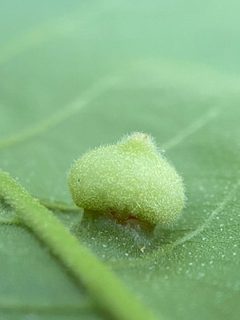
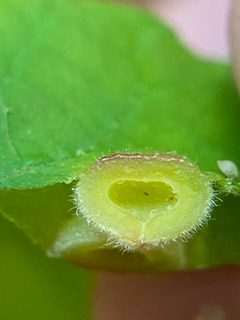
Phylloxera caryaeavellana is a small, gall-forming insect in the Phylloxeridae that infests hickory trees (Carya ). The species causes distinctive swollen, globular galls to form on leaves, petioles, and leaf during spring growth. It is closely related to aphids and shares their piercing-sucking mouthpart . The insect has a complex involving multiple and winged forms. Unlike the economically devastating grape phylloxera (Daktulosphaira vitifoliae), this species is primarily a curiosity rather than a significant agricultural pest, causing minimal lasting damage to healthy trees.
Pronunciation
How to pronounce Phylloxera caryaeavellana: //fɪˈlɒksɪrə kəˈraɪ.iˌævɛˈleɪnə//
These audio files are automatically generated. While they are not always 100% accurate, they are a good starting point.
Identification
Confirmed by presence of characteristic globular galls on hickory (Carya) , particularly on leaf blades and petioles. Galls split open in late May to release winged . Distinguished from other gall-formers by specificity (hickory vs. oak, elm, or pecan) and gall (globular, succulent, on leaves/petioles rather than stems or buds). The related pecan phylloxera (Phylloxera devastatrix) attacks pecan shoots and nuts, producing different gall types. Molecular or microscopic examination of the insect itself may be required for definitive species-level identification beyond gall characteristics.
Images
Habitat
Deciduous forests and urban landscapes where hickory trees (Carya , including mockernut hickory and shagbark hickory) occur. Found on trees during active growing season. are deposited in bark crevices or near old galls on host trees.
Distribution
North America; documented in eastern and central United States where native hickory occur. Specific range not comprehensively mapped, but associated with native range of Carya species.
Seasonality
hatch in spring during bud break. Nymphs induce gall formation as leaves expand. Galls mature and split open in late May, releasing winged . Second occurs on leaf undersurfaces, with sexual forms producing eggs in late summer. Activity ceases with onset of winter.
Diet
Phloem sap extracted from hickory (Carya) using . Feeding stimulates abnormal plant growth, forming galls that provide both nutrition and shelter.
Host Associations
- Carya - obligate Hickory including mockernut hickory (Carya tomentosa) and shagbark hickory (Carya ovata)
Life Cycle
Overwinter as in bark crevices or near old galls. Eggs hatch in spring during bud break; nymphs (fundatrices) feed on new growth and induce gall formation. Within galls, fundatrices mature parthenogenetically and lay hundreds to over a thousand eggs. These hatch into nymphs that feed within the gall, then develop into winged forms. Galls split open in late May; winged emerge and move to leaf undersurfaces to lay eggs. These produce sexual males and females that mate and deposit eggs. Some sources suggest possible additional , though this may vary by or region.
Behavior
Nymphs are sedentary, remaining within protective galls throughout development. Winged disperse to leaf undersurfaces for oviposition. The cannot fly long distances; spread slowly from tree to tree. Fundatrices chemically manipulate plant tissue to induce gall formation, creating specialized feeding chambers.
Ecological Role
Minor herbivore of hickory trees. Gall formation reduces some leaf area but generally causes negligible long-term harm to healthy trees. Galls may provide microhabitat for other organisms. The insect contributes to biodiversity of gall-forming in deciduous forest . Honeydew production, if any, is minimal compared to aphids.
Human Relevance
No significant economic impact. Occasionally noticed by homeowners and naturalists due to conspicuous galls. Not a target of pest management efforts. Serves as an accessible example of plant-insect chemical interactions for educational purposes. Related (pecan phylloxera, grape phylloxera) are economically significant, but this species is not.
Similar Taxa
- Phylloxera devastatrixAlso attacks Carya (pecan), but produces galls on shoots and nuts rather than leaves and petioles; more economically damaging
- Phylloxera caryaecaulisAnother hickory-infesting phylloxera with similar ; distinction requires taxonomic expertise
- Cynipidae (gall wasps)Produce diverse galls on oaks and other plants; galls differ in (often bullet-shaped, woolly, or horned on oaks vs. globular on hickory leaves) and galls typically contain a single larva in a pupal chamber rather than multiple nymphs
- Colopha ulmicolaElm cockscomb gall aphid; produces distinctly different gall (cockscomb-shaped on elm leaves) and on different (Ulmaceae)
More Details
Gall chemistry
The insect secretes substances during feeding that derail normal plant developmental processes, causing undifferentiated plant to form specialized gall tissue. This manipulation creates both food source and protective for the developing phylloxeran.
Taxonomic note
The specific epithet 'caryaeavellana' references the Carya and perhaps Corylus (hazel, historically 'avellana'), though hickory is the confirmed primary host. Some sources use 'caryaecaulis' for similar hickory phylloxera ; precise species boundaries within the genus may require revision.
Research history
described by Coldwell and Schuder in 'The life history and description of Phylloxera caryaecaulis on shagbark hickory.' The has received limited modern research attention compared to economically important relatives.
Sources and further reading
- BugGuide
- iNaturalist taxon
- Catalogue of Life
- Insects and mites that feed on leaves - AgriLife Extension Entomology
- Managing Insect and Mite Pests of Commercial Pecans in Texas - AgriLife Extension Entomology
- Meet 'The Moth Man' at Bohart Museum's Moth Night | Bug Squad
- A Victory for the Bees | Bug Squad
- Gall darn it! Gall insects on hickory, oak, and elm, Phylloxera caryaecaulis, Andricus palustris, Colopha ulmicola — Bug of the Week
- grape phylloxera Archives - Entomology Today