
Chaitophorini
Mordvilko, 1909
Genus Guides
2- Chaitophorus(Poplar aphids)
- Periphyllus(Periphyllus Aphids)
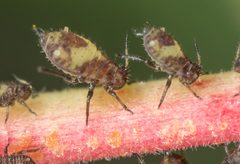
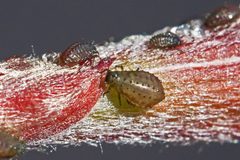
Chaitophorini is a tribe of aphids in the Chaitophorinae, established by Mordvilko in 1909. Members are generally associated with woody plants, particularly in the Salicaceae and Aceraceae. The tribe includes several , with Chaitophorus being the most diverse and well-known. These aphids are characterized by specific morphological features of the and siphunculi that distinguish them from other tribes.
Pronunciation
How to pronounce Chaitophorini: //ˌkaɪtoʊˈfɔːrəˌnaɪ//
These audio files are automatically generated. While they are not always 100% accurate, they are a good starting point.
Identification
Chaitophorini can be distinguished from other tribes by the structure of the , which bear rhinaria (olfactory organs) on specific segments, and by the shape and placement of the siphunculi. Members often have a relatively compact body form compared to other aphid groups. The cauda is typically triangular or finger-shaped rather than elongate. identification within the tribe requires examination of abdominal chaetotaxy (bristle arrangement) and the of the ultimate rostral segment.
Images
Habitat
in this tribe are primarily associated with the foliage and twigs of deciduous trees and shrubs. plants include willows (Salix), poplars (Populus), and maples (Acer). They occupy the upper and outer branches of their host plants, often forming colonies on leaf undersides or along young stems.
Distribution
The tribe has a Holarctic distribution, with greatest diversity in the Palearctic region. Records extend across Europe, Asia, and North America. Some have been introduced to regions outside their native range through human transport of plant material.
Seasonality
Activity periods vary by and latitude. Most species are active during spring and summer when plant foliage is tender and abundant. Many undergo a seasonal host alternation or produce sexual morphs in autumn. typically occurs as on woody host tissues.
Diet
All members are phloem-feeding on woody angiosperms. plant specificity varies: some are restricted to single host , while others utilize multiple related species within Salicaceae or Aceraceae.
Host Associations
- Salix - primary willows
- Populus - primary poplars and aspens
- Acer - primary maples
Life Cycle
are typically holocyclic, with obligate alternation between sexual and parthenogenetic . Most produce fundatrices in spring that give rise to several parthenogenetic generations. Sexual morphs (oviparae and males) develop in autumn, producing . Some in mild climates or greenhouses may exhibit anholocyclic (parthenogenetic-only) cycles.
Behavior
Ecological Role
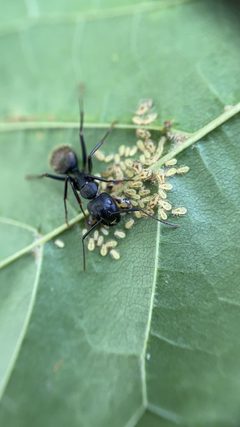
As primary consumers, Chaitophorini transfer energy from plant phloem to higher . They serve as prey for diverse including lady beetles, lacewings, and . Honeydew production supports fungi and mutualists. Their feeding can cause leaf curling or distortion on heavily infested hosts.
Human Relevance
Some are minor pests of ornamental willows, poplars, and maples in nurseries and urban plantings. Heavy may reduce aesthetic value or cause premature leaf drop, but economic damage is generally limited. The tribe has been used in studies of -plant and specialization.
Similar Taxa
- PterocommatiniAlso in Chaitophorinae; distinguished by longer relative to body and different siphuncular
- AphidiniAnother tribe in Aphididae; differs in antennal segmentation, siphuncular shape, and typically herbaceous associations
- MacrosiphiniLarge tribe with convergent body forms; distinguished by antennal development and usually more elongate siphunculi
More Details
Taxonomic history
Mordvilko originally established this tribe based on antennal characters and associations with Salicaceae. The boundaries of the tribe have remained relatively stable, though the inclusion of certain has been debated.
Research significance
Chaitophorini, particularly the Chaitophorus, has been used as a model group for studying the evolution of specialization in aphids due to its relatively discrete host associations and well-documented boundaries.