
Sarucallis
Shinji, 1922
crape myrtle aphid
Species Guides
1- Sarucallis kahawaluokalani(Crapemyrtle Aphid)
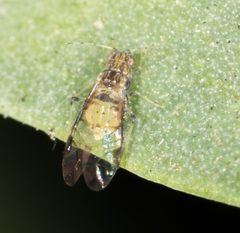
Sarucallis is a of aphids in the Aphididae. The sole described , Sarucallis kahawaluokalani, is commonly known as the crape myrtle . measure 1.2 to 1.8 millimeters in body length. The genus is native to Asia and has become widely distributed globally through the ornamental plant trade, tracking the spread of its plant, crape myrtle (Lagerstroemia spp.).


Pronunciation
How to pronounce Sarucallis: /ˌsæɹuˈkælɪs/
These audio files are automatically generated. While they are not always 100% accurate, they are a good starting point.
Images
Distribution
Native to Asia (Japan, China, South Korea, Central Asia). Introduced to North America (western and eastern United States, Hawaii), Southern South America, the Caribbean islands, Europe (France, Italy, Sicily, Portugal, Spain), Africa (Congo), and Bangladesh. Reported in 35 countries worldwide.
Seasonality
emerge from when leaves begin to emerge on trees in spring. continues through summer. Sexually reproducing males and females are produced near the end of summer after the fall equinox. Eggs are laid under sloughing bark or in branch crevices and serve as the overwintering stage.
Host Associations
- Lagerstroemia indica - primary Indian crape myrtle; primary plant for feeding and
- Lagerstroemia fauriei - Parent of hybrid cultivars
- Lagerstroemia indica × Lagerstroemia fauriei - Hybrid cultivars; reported to be more susceptible to than L. indica alone
Life Cycle
overwinter under sloughing bark or in branch crevices. Eggs hatch when leaves emerge in spring. First- females are and produce offspring without mating. Subsequent generations continue asexual through summer. Following the fall equinox, asexual females produce sexual males and females, which mate and lay eggs. Nymphs lack wings; typically have wings except for sexually reproducing females.
Behavior
Forms dense colonies on undersides of leaves. Uses to extract plant sap. Excretes honeydew during feeding, which accumulates on leaves, branches, and surfaces below infested trees.
Ecological Role
Serves as prey for diverse natural enemy including lady beetles (Coccinellidae), hover flies (Syrphidae), green lacewings (Chrysopidae), insidious flower bugs (Orius insidiosus), and ants (Formicidae). Honeydew production supports growth, which can reduce plant . May function as an alternative prey source supporting when other are scarce.
Human Relevance
Significant pest of ornamental crape myrtle trees in urban and landscape settings. Heavy cause leaf yellowing, premature leaf drop, reduced flowering, and black accumulation that impairs and aesthetics. Honeydew deposition creates nuisance conditions on vehicles, furniture, and other surfaces beneath infested trees. Management relies on cultural practices (pruning, proper siting), through natural enemies, and selective as a last resort. neonicotinoids are effective but pose risks to through pollen .
Similar Taxa
- TinocallisFormerly classified under Tinocallis; Sarucallis was separated based on morphological and taxonomic revisions
- Monelliopsis pecanisYellow pecan aphid; misidentified as a in some sources but actually a different with distinct associations
- Monellia caryellaBlackmargined aphid; another that shares natural enemies with Sarucallis but feeds on pecan rather than crape myrtle
More Details
Endosymbionts
in Bangladesh harbor six bacterial endosymbionts: one obligate (Buchnera aphidicola) and five facultative symbionts (Candidatus Fukatsuia symbiotica, Regiella insecticola, Serratia symbiotica, Spiroplasma spp., and spp.). Notably, Hamiltonella defensa is absent, possibly due to minimal pressure in the study area.
Cultivar Susceptibility
Hybrid cultivars of Lagerstroemia indica × Lagerstroemia fauriei, widely planted for powdery mildew resistance, appear more susceptible to than L. indica cultivars alone. Trees surrounded by extensive impervious surfaces tend to more aphids, while water-stressed trees host fewer.
Management Hierarchy
Recommended management sequence: (1) and insecticidal soaps, (2) selective (flonicamid, flupyradifurone, spirotetramat) if oils fail, (3) neonicotinoids only as a last resort due to . Winter pollarding pruning removes .
Sources and further reading
- BugGuide
- Wikipedia
- GBIF taxonomy match
- iNaturalist taxon
- NCBI Taxonomy
- Catalogue of Life
- crapemyrtle aphids (Sarucallis kahawaluokalani) - Entomology Today
- crapemyrtle aphid (Sarucallis kahawaluokalani) - Entomology Today
- Sarucallis kahawaluokalani Archives - Entomology Today
- crapemyrtle aphids (Sarucallis kahawaluokalani) - Entomology Today
- Crapemyrtle Aphid: A Cosmopolitan Pest of a Popular Ornamental Tree
- Pests and Diseases Threaten Crapemyrtle in U.S. Landscapes and Nurseries
- Sarucallis kahawaluokalani . [Distribution map].
- Crapemyrtle Aphid, Sarucallis kahawaluokalani (Kirkaldy) (Insecta: Hemiptera: Aphididae)
- First Detection of Sarucallis kahawaluokalani (Hemiptera: Aphididae) From Bangladesh and its Endosymbionts