
Melanaphis
van der Goot, 1917
sugarcane aphid
Species Guides
3- Melanaphis bambusae(Waxy Bamboo Aphid)
- Melanaphis donacis(Giant Reed Aphid)
- Melanaphis sacchari(Sugarcane Aphid)
Melanaphis is a of aphids in the Aphididae, first described by van der Goot in 1917. The genus includes that are significant agricultural pests, particularly of sorghum and sugarcane. Melanaphis sacchari (sugarcane aphid) has become one of the most damaging insect pests of grain and forage sorghum in the United States since its first recorded occurrence on sorghum in Texas in 2013. Members of this genus are characterized by their parthenogenetic , rapid growth, and production of honeydew.
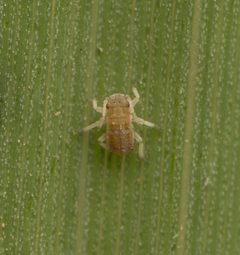
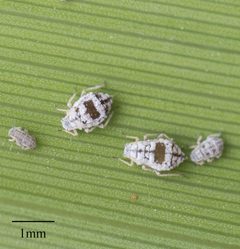
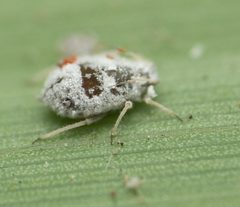
Pronunciation
How to pronounce Melanaphis: /mɛˈlæ.nə.fɪs/
These audio files are automatically generated. While they are not always 100% accurate, they are a good starting point.
Identification
Melanaphis can be distinguished from other sorghum-infesting aphids by the combination of pale yellow to tan body color with distinctly black cornicles, feet, and . This contrasts with (light green with dark green stripe), (dark bluish-green), and yellow sugarcane aphids (bright yellow with rows of dark spots and short cornicles). The presence of honeydew on lower leaves is a field indicator of .
Images
Appearance
Aphids in this are small, soft-bodied insects. Melanaphis sacchari is pale yellow, gray, or tan with black feet, , and cornicles (tailpipe-like structures at the rear of the ). The body is pear-shaped. Both winged and wingless forms occur within .
Habitat
in this feed on grasses, including cultivated sorghum and sugarcane, as well as weedy grasses such as johnsongrass and volunteer sorghum. They are found in agricultural fields, particularly on the undersides of leaves.
Distribution
Records exist from Denmark, Norway, and Sweden (GBIF). Melanaphis sacchari has expanded dramatically in North America, becoming established across much of the United States since 2013, with significant in Texas and surrounding sorghum-growing regions.
Seasonality
can develop rapidly under warm, dry conditions. In temperate regions, activity begins in spring with plant and continues through the growing season until harvest. In more southern areas, can occur earlier and persist longer.
Diet
Phloem-feeding on grasses ( Poaceae), including sorghum (Sorghum bicolor), sugarcane, and related weedy grasses such as johnsongrass (Sorghum halepense).
Host Associations
- Sorghum bicolor - primary Major agricultural ; can cause severe yield loss
- Saccharum officinarum - Sugarcane, the namesake
- Sorghum halepense - Johnsongrass serves as between crop cycles
Life Cycle
is parthenogenetic; consist entirely of females that give birth to live young. Melanaphis sorghi exhibits telescoping of , where offspring developing inside a female already contain developing embryos of their own. Development from nymph to occurs in approximately 5 days under optimal conditions. Adults live about 4 weeks. No stage is present in some populations, requiring survival on live plants throughout winter. Populations can double every 4 to 8 days depending on environmental conditions and natural enemy pressure.
Behavior
Feeds primarily on the underside of leaves. Produces large amounts of honeydew, which accumulates on upper leaf surfaces and can cause sticky, shiny appearance. Can move into grain (panicles) during later growth stages. Winged forms disperse to new plants and fields.
Ecological Role
Herbivore and agricultural pest. Heavy reduce plant vigor, cause leaf damage, delay maturity, and can lead to plant lodging. Honeydew production supports growth of sooty molds. Serves as prey for various natural enemies including lady beetles, syrphid flies, and parasitic .
Human Relevance
Major economic pest of grain and forage sorghum in the United States. Yield losses can be substantial, particularly during preboot, boot, and stages. Honeydew can interfere with harvest operations. Management relies on hybrids, , foliar insecticides (particularly flupyradifurone), and cultural practices such as early planting and elimination of alternate .
Similar Taxa
- Sipha flava (yellow sugarcane aphid)Also yellow and feeds on sorghum, but has rows of dark spots on the back and short cornicles; does not produce honeydew
- Schizaphis graminum (greenbug)Light green with dark green stripe; injects toxin causing reddish leaf spots rather than purple discoloration
- Rhopalosiphum maidis (corn leaf aphid)Dark bluish-green, typically feeds in the rather than leaf undersides; rarely causes economic damage
More Details
Rapid population growth
Melanaphis sorghi can produce up to eight offspring in a 24-hour period, enabling exponential growth and densities reaching hundreds of thousands of aphids per leaf within weeks.
Male rarity
Only five males of Melanaphis sorghi have been reported worldwide, indicating an extremely skewed sex ratio and near-complete reliance on parthenogenetic in many .
Insecticide resistance considerations
Broad-spectrum used for other sorghum pests (, headworms, stinkbugs) are highly toxic to natural enemies of Melanaphis, potentially causing resurgence after application.
Sources and further reading
- BugGuide
- GBIF taxonomy match
- iNaturalist taxon
- NCBI Taxonomy
- Catalogue of Life
- Stem- and Leaf- Feeding Insects - AgriLife Extension Entomology
- Melanaphis sorghi Archives - Entomology Today
- Melanaphis sacchari Archives - Entomology Today
- When Educating About Insects, Instructional Video Can Help
- How One Entomologist is Exploring Insect Pests in Midwestern Agroecosystems