
Melanaphis sacchari
(Zehntner, 1897)
Sugarcane Aphid, Sugarcane Aphid Complex
Melanaphis sacchari, commonly known as the sugarcane aphid, is a phloem-feeding native to the Old World that has become a major agricultural pest of sorghum and sugarcane. First recorded feeding on sorghum in Texas in 2013, it rapidly spread across the southern United States, causing significant yield losses. The reproduces primarily through , with all individuals being female and giving birth to live young. can double every 4 to 8 days under favorable conditions, making monitoring and timely intervention critical for management.
Pronunciation
How to pronounce Melanaphis sacchari: //mɛˈlanəfɪs ˈsakəraɪ//
These audio files are automatically generated. While they are not always 100% accurate, they are a good starting point.
Identification
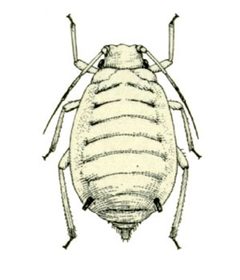
Distinguished from other sorghum-infesting aphids by the combination of pale body color and black appendages. (Schizaphis graminum) are light green with a dark green stripe down the back. (Rhopalosiphum maidis) are dark bluish-green. Yellow sugarcane aphids (Sipha flava) are bright lemon yellow with rows of dark spots and short cornicles, and do not produce honeydew. The presence of copious honeydew production is a reliable field indicator of M. sacchari .
Images
Habitat
Agricultural fields and areas with plants, particularly sorghum, sugarcane, and johnsongrass. Colonies develop on the underside of leaves, starting in the lower and spreading upward. Heavy occur in warm, dry conditions.
Distribution
Native to the Old World; now established in the southern United States including Texas and surrounding states. Present in Hawaii and the conterminous 48 United States. Records from Brazil (Ceará, Espírito Santo, Minas Gerais, Pará, Pernambuco, Paraná, Rio de Janeiro, Rio Grande do Sul, São Paulo). Sexual morphs documented in China, Japan, and Mexico.
Seasonality
Active year-round in tropical and subtropical regions. In temperate areas, activity begins with spring of plants and continues through fall. Peak damaging typically occur during summer months under warm, dry conditions. occurs as in China (on Miscanthus sacchariflorus); parthenogenetic overwintering likely in milder climates.
Diet
Phloem sap feeder specializing on Poaceae. Primary include Sorghum bicolor (grain and forage sorghum), Saccharum officinarum (sugarcane), and Sorghum halepense (johnsongrass). Has been observed on Miscanthus sacchariflorus in China where and occur.
Host Associations
- Sorghum bicolor - primaryMajor agricultural ; grain and forage sorghum
- Saccharum officinarum - primaryOriginal ; sugarcane
- Sorghum halepense - primaryJohnsongrass; important
- Miscanthus sacchariflorus - primary for and in China
Life Cycle
Primarily parthenogenetic. Females give birth to live nymphs without mating. Nymphs develop into in approximately 5 days under optimal conditions. Adults live about 4 weeks. has been documented in limited geographic areas (China, Japan, Mexico), where males and -laying females occur. In China, eggs overwinter on Miscanthus sacchariflorus.
Behavior
Forms dense colonies on the undersides of leaves, beginning in the lower and spreading upward. Produces large quantities of honeydew, which accumulates on upper leaf surfaces and can support growth. Winged forms develop for when colonies become crowded or quality declines. Can migrate into grain (panicles) late in the season, causing harvest complications due to honeydew .
Ecological Role
Herbivore that can significantly reduce plant productivity through direct feeding and honeydew production. Honeydew and associated can reduce . Serves as prey for various natural enemies including lady beetles, syrphid flies, and parasitic . The itself has few known compared to other aphid .
Human Relevance
Major agricultural pest of sorghum and sugarcane. Since 2013, has become one of the most damaging insect pests of grain and forage sorghum in the southern United States. Yield losses result from direct feeding, honeydew , stalk lodging, and harvest difficulties. Management relies on hybrids, , foliar (particularly flupyradifurone/Sivanto Prime), and conservation. have been established for treatment decisions based on plant growth stage and .
Similar Taxa
- Sipha flavaYellow sugarcane aphid; similar and but bright lemon yellow with dark spots, short cornicles, and no honeydew production
- Schizaphis graminumGreenbug; light green with dark green stripe, produces honeydew but different body coloration
- Rhopalosiphum maidisCorn leaf aphid; dark bluish-green, typically feeds in sorghum rather than leaf undersides
More Details
Rapid Population Growth
can double every 4 to 8 days depending on hybrid resistance, environmental conditions, and natural enemy abundance. This rapid increase necessitates twice-weekly scouting once aphids are detected.
Insecticide Resistance Management
Chlorpyrifos and are less effective for control and can flare by eliminating natural enemies. Flupyradifurone (Sivanto Prime) is currently the primary labeled insecticide for postemergence control in sorghum.
Seed Treatment Efficacy
Neonicotinoid (clothianidin, imidacloprid, thiamethoxam) provide 4 to 6 weeks of protection after planting, with value depending on timing of initial .
Sources and further reading
- BugGuide
- Wikipedia
- GBIF taxonomy match
- iNaturalist taxon
- NCBI Taxonomy
- Catalogue of Life
- Stem- and Leaf- Feeding Insects - AgriLife Extension Entomology
- Forage Sorghum Insects - AgriLife Extension Entomology
- Links - AgriLife Extension Entomology
- Why Drones Are Important in Sustainable Agriculture in the 21st Century | Bug Squad
- Encyrtid Holdings | Entomology Research Museum
- When Educating About Insects, Instructional Video Can Help