
Siphoninus
Silvestri, 1915
ash whiteflies
Species Guides
1- Siphoninus phillyreae(ash whitefly)
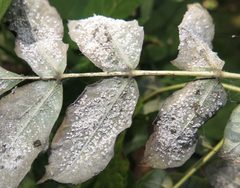
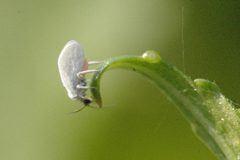
Siphoninus is a of whiteflies in the Aleyrodidae. The genus includes at least three recognized : Siphoninus phillyreae (the ash whitefly), S. immaculatus, and S. gruveli. Siphoninus phillyreae is the most extensively studied species, known as a pest with a broad global distribution spanning Europe, Asia, Africa, the Americas, and Oceania. The genus has been subject to recent taxonomic revision, including the revalidation of S. finitimus as a distinct species.
Pronunciation
How to pronounce Siphoninus: /ˌsɪfəˈnaɪnəs/
These audio files are automatically generated. While they are not always 100% accurate, they are a good starting point.
Identification
Puparial is critical for -level identification within Siphoninus and related . Siphoninus species are distinguished from other Aleyrodidae genera by characteristic puparial features, though specific diagnostic traits require microscopic examination. Siphoninus phillyreae can be recognized by its association with ash (Fraxinus) and other plants, though morphological confirmation is necessary for reliable identification.
Images
Habitat
within this occupy diverse associated with their plants. Siphoninus phillyreae has been documented in pomegranate orchards, ash-dominated landscapes, and various agricultural and ornamental settings. The genus shows adaptability to both natural and cultivated environments.
Distribution
The has a wide geographic distribution, with Siphoninus phillyreae recorded across Europe (including Austria, Bulgaria, Croatia, Cyprus, Czech Republic, France, Germany, Greece, Hungary, Ireland, Italy, Netherlands, Poland, Portugal, Romania, Russia, Spain, UK, Ukraine), Asia (India, Iran, Israel, Japan, Oman, Pakistan, Saudi Arabia, Syria, Turkey, Turkmenistan), Africa (Cameroon, Egypt, Eritrea, Ethiopia, Libya, Morocco, South Africa, Sudan, Tunisia), North America (Mexico, USA: California, Florida, Nevada), South America (Argentina, Chile, Peru, Venezuela, Brazil), and Oceania (Australia, New Zealand). Distribution records for the genus also include Denmark, Norway, and Sweden based on occurrence data.
Diet
in this are phloem-feeders. Siphoninus phillyreae is , with documented in Oleaceae (Fraxinus, Olea, Phillyrea), Rosaceae (Crataegus, Cydonia, Malus, Prunus, Pyrus), Lythraceae (Punica granatum), and other . Host plant suitability varies; studies have demonstrated differential ovipositional preference and survival across host species.
Host Associations
- Fraxinus - primary ; ash
- Punica granatum - pomegranate; significant economic
- Olea - olive
- Phillyrea - mock privet
- Crataegus - hawthorn
- Malus - apple
- Prunus - stone fruits
- Pyrus - pear
- Citrus sinensis - navel orange; tested with variable suitability
- Pistacia vera - pistachio; tested
- Heteromeles arbutifolia - toyon; tested
Life Cycle
Development is temperature-dependent. Siphoninus phillyreae are dominated by stage during periods of population increase, with age structure shifting toward reduced proportion of young stages when pressure is high. Fourth instar nymphs serve as the stage from which either whiteflies or parasitoids emerge.
Ecological Role
Siphoninus function as herbivores and prey in . Siphoninus phillyreae serves as for multiple species including Encarsia partenopea, Encarsia inaron, and Encarsia brasiliensis, and as prey for including Clitostethus arcuatus, Sticholotis species, Chrysopa species, and Acladocera indica. of Siphoninus phillyreae and its natural enemies are interdependent, with parasitoid abundance capable of suppressing whitefly below .
Human Relevance
Siphoninus phillyreae is an economically significant agricultural and ornamental pest. It has high invasion potential and has established in multiple regions outside its native range, including the western United States, South America, and Oceania. can affect productivity of pomegranate, ash, and other crops. programs utilizing Encarsia partenopea and Encarsia inaron have been implemented successfully in several regions. The was first recorded in Brazil in 2023, prompting management concerns for expanding pomegranate .
Similar Taxa
- AleyrodesBoth belong to Aleyrodidae and share similar life habits; distinguished by puparial and associations
- BemisiaBoth are whitefly with and economic importance; Bemisia is distinguished by different puparial characteristics and typically more severe agricultural impact
- AsterobemisiaFormerly confused taxonomically; distinguished by puparial and taxonomic history involving synonymy revisions
Sources and further reading
- BugGuide
- Wikipedia
- GBIF taxonomy match
- iNaturalist taxon
- NCBI Taxonomy
- Catalogue of Life
- Siphoninus phillyreae . [Distributiom map].
- First record of Siphoninus phillyreae on pomegranate in Greece
- Biology of Siphoninus phillyreae (Haliday) (Homoptera: Aleyrodidae) and Its Relationship to Temperature
- Submission to: Phytoparasitica Occurrence of ash whitefly, Siphoninus phillyreae (Haliday) (Hemiptera: Aleyrodidae), in Brazil
- Primer registro de siphoninus phillyreae (hemiptera: aleyrodidae) y su parasitoide encarsia inaron (hymenoptera: aphelinidae) en Morelos, México
- Evaluation of biological control of Siphoninus phillyreae (Haliday) by the parasitoid Encarsia partenopea (Walker), using life-table analysis
- SIPHONINUS PHILLYREAE (HALIDAY) (HEMIPTERA: STERNORRHYNCHA: ALEYRODIDAE) AND ITS PARASITOID, ENCARSIA INARON (WALKER) (HYMENOPTERA: APHELINIDAE): TWO NEW RECORDS OF INSECTS FOR MEXICO
- Effect of Weather Factors on the Host-Predators Relationship in the Aleyrodid, Siphoninus phillyreae finitimus Goux on Pomegranate
- POPULATION DENSITY OF THE POMEGRANATE WHITEFL Y,Siphoninus phillyreae (HALIDA Y) (HOMOPTERA: ALEYRODIDAE) AND ITS PARASITOIDS IN MIDDLE EGYPT.
- SEASONAL ABUNDANCE OF THE WHITEFLY, Siphoninus phillyreae(HALIDAY) ( HEMIPTERA : ALEYRODIDAE) AND ITS PARASITOID, Encarsia inaron (WALKER) (HYMENOPTERA : APHELINIDAE) WITH PRODUCTIVITY AND ECONOMIC INDICATORS FOR THE POMEGRANATE CROP IN EGYPT
- Population dynamics of Siphoninus philyreae in California in the presence and absence of a parasitoid, Encarsia partenopea
- Ovipositional preference of Siphoninus phillyreae and its fitness on seven host plant species
- The Aleyrodidae (Hemiptera: Sternorrhyncha) of the Canary Islands with special reference to Aleyrodes, Siphoninus, and the challenges of puparial morphology in Bemisia
- Biology and Feeding Behaviour of Ladybird,Clitostethus arcuatus, the Predator of the Ash Whitefly,Siphoninus phillyreae, in Fars Province, Iran
- Augmentation and evaluation of a parasitoid,Encarsia inaron, and a predator,Clitostethus arcuatus, for biological control of the pomegranate whitefly,Siphoninus phillyreae