
Dalbulus
DeLong, 1950
corn leafhoppers
Species Guides
2- Dalbulus elimatus(Mexican corn leafhopper)
- Dalbulus maidis(corn leafhopper)
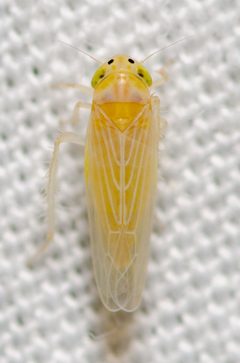
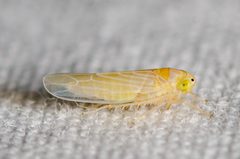
Dalbulus is a of leafhoppers in the Cicadellidae, Deltocephalinae, tribe Macrostelini. The genus comprises approximately 11 , with 10 species occurring in Mexico. Several species, particularly D. maidis (corn leafhopper) and D. elimatus (Mexican corn leafhopper), are economically significant agricultural pests. These species are highly efficient of maize stunting including Spiroplasma kunkelii (corn stunt spiroplasma), maize bushy stunt phytoplasma, and maize rayado fino virus. The genus exhibits a spectrum of plant specialization, with species ranging from maize (D. maidis, D. elimatus) to gamagrass specialists (D. tripsacoides, D. quinquenotatus, D. guzmani) and that utilize both host types.
Pronunciation
How to pronounce Dalbulus: /dælˈbuːləs/
These audio files are automatically generated. While they are not always 100% accurate, they are a good starting point.
Images
Habitat
in this are primarily associated with Poaceae , specifically maize (Zea mays) and its relative gamagrass (Tripsacum dactyloides). Maize are found in crop systems, while gamagrass specialists inhabit perennial grassland environments. Intermediate species occupy both habitat types. Winter crops including barley and sorghum serve as alternative habitats for some species during non-growing seasons.
Distribution
The is predominantly distributed in the Americas, with highest in Mexico. D. maidis and D. elimatus occur throughout maize-growing regions of Latin America. D. maidis has been documented in Argentina, where recent have caused significant crop damage. The distribution extends through Central and South America, with occurrence correlated with plant availability.
Diet
All are phloem-feeding herbivores that ingest plant sap from vascular tissues. Feeding occurs on xylem and phloem, with phloem ingestion being the primary mode of nutrient acquisition and the route of acquisition for species.
Host Associations
- Zea mays - primary Maize D. maidis and D. elimatus; also used by
- Tripsacum dactyloides - primary Gamagrass D. tripsacoides, D. quinquenotatus, D. guzmani; also used by
- Zea diploperennis - relative of maize used by some
- Hordeum vulgare - winter Barley serves as alternative for D. elimatus during winter
- Sorghum bicolor - winter Sorghum serves as alternative for D. elimatus during winter
Life Cycle
Development from to varies by and plant. Maize exhibit the shortest developmental times: approximately 26 days for D. maidis and 27 days for D. elimatus on maize. Gamagrass specialists have longer developmental times: approximately 32 days for D. tripsacoides, 34 days for D. quinquenotatus, and 40 days for D. guzmani. Development is consistently faster on maize (mean 29 days across species) than on T. dactyloides (mean 34 days). Voltinism varies with climate and host plant .
Behavior
Oviposition has been characterized for the , with females exhibiting specific -laying patterns and plant preferences. Escape behavior has been documented in comparative studies with related genera. Probing behavior on host plants involves distinct phases of stylet penetration, with phloem feeding attempts characterized by salivation events followed by ingestion. can disrupt normal probing behavior, causing increased salivation without successful phloem ingestion.
Ecological Role
As primary consumers, Dalbulus function as phloem-feeding herbivores in grassland and agricultural . Their most significant ecological role is as of plant , particularly in agroecosystems where they transmit multiple maize stunting . The represents a model system for studying plant specialization, with species arrayed along an r-K continuum from plant to specialists. They serve as hosts for diverse natural enemies including (Mymaridae, Trichogrammatidae), parasitoids (Pipunculidae, Dryinidae), and fungi.
Human Relevance
D. maidis and D. elimatus are major agricultural pests causing substantial economic losses in maize production throughout Latin America. Estimated losses from D. maidis in Argentina have reached up to 80% of crop value. The primary damage mechanism is transmission rather than direct feeding injury. Management strategies include monitoring with yellow sticky traps, using , and development of maize hybrids. interference technology has been demonstrated as a potential genetic pest control tool. The has been extensively studied for program development.
Similar Taxa
- BaldulusRelated leafhopper in tribe Macrostelini; shares similar and escape patterns
- GraminellaAnother deltocephaline leafhopper containing maize-associated ; similar plant relationships and ecological roles
More Details
Pathogen Vector Efficiency
D. maidis is considered the most efficient of maize stunting in the Americas, capable of transmitting at least four distinct pathogens: Spiroplasma kunkelii, maize bushy stunt phytoplasma, maize rayado fino virus, and potentially additional uncharacterized pathogens.
Research Significance
The serves as an important model for studying herbivore-plant , race formation, and the evolutionary of insect-vectored plant . The r-K continuum represented by Dalbulus specialization has been used to test theory predictions.
Natural Enemy Complex
documented for Dalbulus include Anagrus species (Mymaridae), Paracentrobia species, Pseudoligosita species, and Ufens niger (Trichogrammatidae). parasitoids include Eudorylas subopacus (Pipunculidae) and Gonatopus bartletti (Dryinidae).
Biological Control Potential
Anagrus naulti, a newly described from Mexico, is an of D. quinquenotatus and represents a potential agent. Foreign exploration for natural enemies has been conducted in Argentina and Mexico for programs.
Sources and further reading
- BugGuide
- GBIF taxonomy match
- iNaturalist taxon
- NCBI Taxonomy
- Catalogue of Life
- Publications | Entomology Research Museum
- Dalbulus quinquenotatus Archives - Entomology Today
- New Parasitoid Wasp Species Named after Lowell “Skip” Nault
- Ecological strategies of Dalbulus leafhoppers
- Oviposition Behavior of Dalbulus Leafhoppers (Homoptera: Cicadellidae)
- Egg Parasitoids of the LeafhoppersDalbulus maidisandDalbulus elimatus(Hemiptera: Cicadellidae) in Two Maize Habitats
- Native parasitoids ofDalbulus elimatusandDalbulus maidis(Hemiptera: Cicadellidae) in winter crops of central Mexico
- Control decision making systems for Dalbulus maidis in corn crops
- MANEJO DA CIGARRINHA DO MILHO (DALBULUS MAIDIS) UTILIZANDO ÓLEO DE NEEM ASSOCIADO AOS FUNGOS ENTOMOPATOGÊNICOS BEAUVERIA BASSIANA E ISARIA FUMOSOROSEA MANAGEMENT OF THE CORN SCARLET (DALBULUS MAIDIS) USING NEEM OIL ASSOCIATED WITH THE ENTOMOPATHOGENIC FUNGI BEAUVERIA BASSIANA AND ISARIA FUMOSOROSEA MANEJO DEL MAÍZ ESCARLATA (DALBULUS MAIDIS) UTILIZANDO ACEITE DE NEEM ASOCIADO A LOS HONGOS ENTOMOPATÓGENOS BEAUVERIA BASSIANA E ISARIA FUMOSOROSEA
- EUDORYLAS (METADORYLAS) SP. (DIPTERA: PIPUNCULIDAE): A PREVIOUSLY UNREPORTED PARASITOID OF DALBULUS MAIDIS (DELONG AND WOLCOTT) AND DALBULUS ELIMATUS (BALL) (HOMOPTERA: CICADELLIDAE)
- Miscelanea 152 (2024): Dalbulus maidis (Hemiptera: Cicadellidae), vector of corn stunt disease: Relevant biological aspects, with special reference to knowledge generated in Argentina
- Probing behavior of the corn leafhopper Dalbulus maidis on susceptible and resistant maize hybrids
- Biology of the Leafhopper Dalbulus maidis at Selected Temperatures12
- Escape Behavior of Dalbulus and Baldulus Leafhoppers (Homoptera: Cicadellidae)
- Observations on the Life Cycle of Dalbulus maidis on Three Plant Species
- Assessing the Functionality of RNA Interference (RNAi) in the Phloem-feeding Maize pest Dalbulus maidis
- Biological control and management of Dalbulus maidis (Hemiptera: Cicadellidae) with egg parasitoids: a review.
- Colonization and Age Structure of Dalbulus maidis Population in Maize Crops During the Vegetative Stage in the Brazilian Cerrado.
- Complete genome sequence of chicharrita del maíz iflavirus 1, a virus previously identified from transcriptomic data of the corn leafhopper (Dalbulus maidis).