
Deltocephalinae
Dallas, 1870
leafhoppers
Tribe Guides
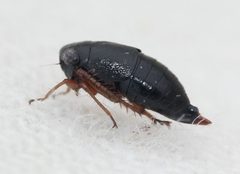
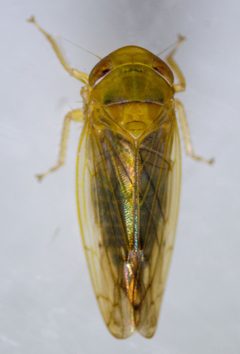
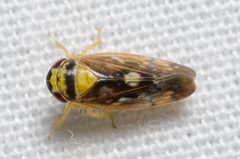
21Deltocephalinae is the largest of leafhoppers (Cicadellidae), comprising approximately 38 tribes, 923 , and over 6,600 described . Members are characterized by a deltoid (triangular) shape and are predominantly associated with grasses and sedges. Several species are significant agricultural pests, including of plant that affect rice and other crops. The subfamily exhibits global distribution with particular diversity in tropical and temperate grassland .
Pronunciation
How to pronounce Deltocephalinae: /dɛl.toʊ.seɪ.fəˈlaɪni/
These audio files are automatically generated. While they are not always 100% accurate, they are a good starting point.
Identification
Deltocephalinae can be distinguished from other Cicadellidae by the combination of a deltoid (broadly triangular) shape, with paired processes, and a Y-shaped connective in the male genitalia. The subfamily lacks the enlarged hind characteristic of some other leafhopper groups. Tribal-level identification requires examination of head , wing venation patterns, and detailed male genitalic structures including the pygofer, subgenital plates, and aedeagus.
Images
Habitat
Predominantly associated with grassland, savanna, and agricultural . Many are specialized to grasses (Poaceae) and sedges (Cyperaceae), with some exhibiting narrow -plant specificity. Halophilic species occur in coastal sand dune vegetation. The has been documented from the Grassland, Savanna, and Fynbos Biomes of southern Africa, as well as from threatened grassland such as the New Jersey Pine Barrens.
Distribution
Global distribution with highest in tropical and temperate regions. Documented from North America (including the New Jersey Pine Barrens), South America, Africa (South Africa, Namibia), Europe, Asia (China, Japan, Korea), and Australia. The occupies diverse biogeographic regions from coastal sand dunes to montane grasslands.
Diet
Phloem-feeding on vascular plants. The majority of feed on grasses (Poaceae) and sedges (Cyperaceae). Some species are documented from woody plants in at least 18 , including Fabaceae (e.g., Aspalathus linearis, Rooibos Tea). Several species are significant agricultural pests feeding on rice and other cereal crops.
Host Associations
- Poaceae - primary grasses
- Cyperaceae - primary sedges
- Fabaceae - Aspalathus linearis (Rooibos Tea)
- Carex - halophilic Psammotettix
- Muhlenbergia torreyana - pinebarren smokegrass, threatened grass in New Jersey Pine Barrens
Ecological Role
As phloem-feeders, members of this function as herbivores in grassland and agricultural . Some serve as for plant , including viruses and phytoplasmas affecting cereal crops. Their -specificity patterns contribute to plant structure and may influence grassland ecosystem dynamics.
Human Relevance
Several are economically important agricultural pests, particularly rice leafhoppers in the tribe Chiasmini. Some species transmit plant causing crop . The includes species of conservation concern due to specificity and association with threatened grassland . Taxonomic research on this group has been facilitated by comprehensive database resources including 3I (Interactive Identification and Information).
Similar Taxa
- CicadellinaeAnother large of Cicadellidae, but distinguished by different shape (not deltoid) and male genitalic structures including connective .
- TyphlocybinaeLeafhoppers with reduced wing venation and different ; often associated with woody plants rather than grasses.
More Details
Taxonomic Resources
The has been the subject of comprehensive modern revision (Zahniser & Dietrich 2013), resulting in recognition of 38 tribes and 18 subtribes. An online database and interactive identification key (3I: Interactive Identification and Information) provides access to nomenclatural information, images, distributional data, and bibliographic references for all included .
Phylogenetic Research
Molecular phylogenetic studies using 28S and Histone H3 sequences have informed tribal-level classification, with recent analyses incorporating 37 additional not included in previous studies.
Conservation Significance
Some members exhibit extreme -plant specificity, with individual restricted to single grass species. This specialization renders them vulnerable to loss and climate change, particularly in threatened grassland such as the New Jersey Pine Barrens.
Sources and further reading
- BugGuide
- Wikipedia
- iNaturalist taxon
- NCBI Taxonomy
- Catalogue of Life
- Deltocephalinae Archives - Entomology Today
- Uncategorized | Blog - Part 13
- Big city life: New leafhopper species found on a threatened grass in New Jersey | Blog
- New Leafhopper Species Named after University of Illinois Entomologist
- Revision of Vilargus Theron (Hemiptera: Cicadellidae: Deltocephalinae) from South Africa
- New Distribution Record of Halophilic Psammotettix Leafhopper (Auchenorrhyncha, Cicadellidae, Deltocephalinae) from Japan
- Three new species in the genus Chanohirata (Hemiptera: Cicadellidae: Deltocephalinae: Penthimiini) from China
- A review of the tribes of Deltocephalinae (Hemiptera: Auchenorrhyncha: Cicadellidae)
- A new leafhopper genus Geelus and 12 new species (Hemiptera, Cicadellidae, Deltocephalinae) from Southern Africa
- Characterization of complete mitochondrial genome of Hishimonus sellatus uhler (Hemiptera: cicadellidae: deltocephalinae) and phylogeny of deltocephalinae.
- Phylogeographic and Ecological Insights Into the Evolutionary History of the Grass- and Sedge-Specializing Deltocephalinae Leafhoppers.