
Athysanini
Van Duzee, 1892
Genus Guides
35Athysanini is a large tribe of leafhoppers within the Deltocephalinae ( Cicadellidae), containing over 230 across three subtribes (Athysanina, Cochlorhinina, Koebeliina). It is the largest tribe in Deltocephalinae with a distribution. The tribe includes economically significant genera such as Euscelidius, whose members are known of plant .
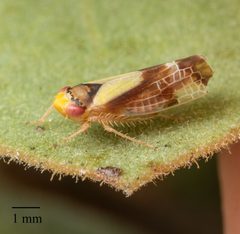
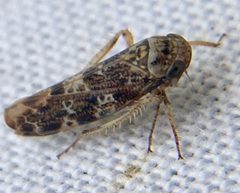
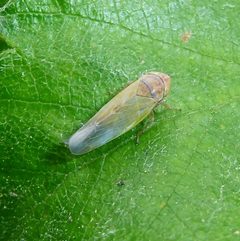
Pronunciation
How to pronounce Athysanini: /æˌθaɪˈsænɪnaɪ/
These audio files are automatically generated. While they are not always 100% accurate, they are a good starting point.
Images
Habitat
Members occupy diverse including temperate coniferous forests, montane grasslands and shrublands, and seasonally dry tropical forests. Specific habitat preferences vary by and .
Distribution
distribution. Documented from the Neotropical region (Caribbean, Central America, South America, Mexico), Palearctic region (Pakistan, temperate coniferous forests), and China.
Ecological Role
Some , notably Euscelidius, function as of plant including phytoplasmas and viruses. Euscelidius variegatus has been documented transmitting corn stunt spiroplasma, clover phyllody, Western X- virus, Grapevine Flavescence Dorée, and Chrysanthemum yellows phytoplasma.
Human Relevance
Economic importance derives from transmission to agricultural crops. Specific roles are -level rather than tribe-wide.
Sources and further reading
- BugGuide
- Wikipedia
- iNaturalist taxon
- NCBI Taxonomy
- Catalogue of Life
- Catálogo dos Deltocephalinae (Hemiptera: Cicadellidae) neotropicais (incluíndo o norte do México). Parte I — Athysanini e Deltocephalini excluídos
- An Overlooked New Endemic Species of Renonus DeLong, 1959 (Hemiptera: Cicadellidae: Deltocephalinae: Athysanini) from the Seasonally Dry Forest of Western Mexico
- First report of an economically important genus Euscelidius (Cicadellidae: Deltocephalinae: Athysanini) from the Indian subcontinent, with description of a new species
- An enigma of Handianus Ribaut, 1942 (Hemiptera: Cicadellidae: Deltocephalinae: Athysanini): identical host preferences and male calling signals in two morphologically distinctive sympatric species
- A new Athysanini leafhopper genus from China (Hemiptera, Cicadellidae, Deltocephalinae), with description of two new species.