
Koebeliina
Baker, 1897
Genus Guides
1- Koebelia(mottled pine leafhoppers)
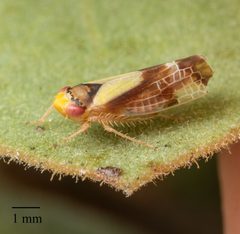
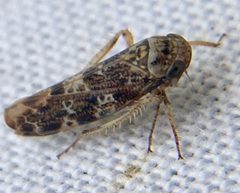
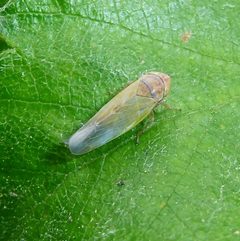
Koebeliina is a subtribe of leafhoppers ( Cicadellidae) established by Baker in 1897, previously treated as the tribe Koebeliini. It contains six and over 15 , including members of the genera Koebellina and Grypotina. All species are to western North America. The subtribe is classified within the tribe Athysanini and Deltocephalinae.
Pronunciation
How to pronounce Koebeliina: //koʊˌbiːliːˈaɪnə//
These audio files are automatically generated. While they are not always 100% accurate, they are a good starting point.
Identification
Members of this subtribe can be distinguished from other Athysanini by combinations of genitalic and external morphological characters used in the original tribal-level classification. The subtribe was historically recognized at tribal rank (Koebeliini) before being reclassified as a subtribe within Athysanini.
Images
Distribution
Western North America; all are to this region.
Similar Taxa
- Other Athysanini subtribesKoebeliina differs from other subtribes within Athysanini in genitalic and geographic restriction to western North America; other subtribes in this tribe have broader distributions or different morphological character states.
More Details
Taxonomic history
Originally described as the tribe Koebeliini, this group was subsequently reclassified as a subtribe (Koebeliina) within the expanded tribe Athysanini. This change reflects broader revisions in leafhopper classification that reduced the number of recognized tribes in Deltocephalinae.
Observational data
As of source data, Koebeliina has 266 observations recorded on iNaturalist, indicating moderate levels of citizen science documentation for this relatively small, regionally restricted group.