
Allygus
Fieber, 1872
Species Guides
1Allygus is a of leafhoppers in the Cicadellidae, established by Fieber in 1872. occur in Europe and North America, with some documented as economically significant of phytoplasma . A. modestus, the most thoroughly studied species, has a sequenced and distinctive wing patterning. Certain species transmit western-X in cherry and peach yellows disease.
Pronunciation
How to pronounce Allygus: //əˈlɪɡəs//
These audio files are automatically generated. While they are not always 100% accurate, they are a good starting point.
Identification
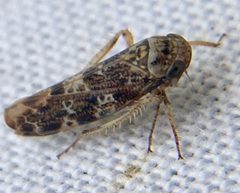
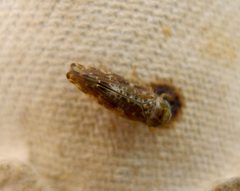
A. modestus is distinguished from by forewings with white cross covered in dark dots and a pair of short dark diagonal lines on the vertex running inwards from near the ocelli. The is medium-sized, measuring 6–7.5 mm in length.
Images
Habitat
Open woodland on deciduous trees, typically in damp woodland but occasionally in drier conditions. occur on edges of woodlands or in woodland clearings, rides, and paths. Nymphs are found on grasses. Some occur in agricultural settings: cherry orchards, peach orchards, and celery fields.
Distribution
Europe and North America. Documented locations include Britain and Ireland, Hungary, and unspecified cherry orchard locations. Specific coordinates recorded from Thompson Common, Norfolk, England (52.53°N, 0.85°E). Distribution records from Denmark, Norway, and Sweden.
Host Associations
- Prunus avium - cherry; source of western-X transmission by A. commutatus
- Prunus persica - peach; source of peach yellows transmission by A. abbreviatus
- Apium graveolens - celery; used in experimental transmission studies with A. commutatus
Life Cycle
Nymphal stage occurs on grasses; stage occurs on deciduous trees in woodland . For , acquisition occurs during the nymphal stage, with transmission occurring only in the adult stage. Adults retain for their entire lifespan (70–80 days documented for A. commutatus).
Behavior
Minimum acquisition feeding period for transmission: 14–21 days () or 11–15 days (nymphs) for A. commutatus; 10–15 days (nymphs) or 13–18 days (adults) for A. abbreviatus. before transmission capability: 28–38 days (adults) or 24–35 days (nymphs) for A. commutatus; 30–40 days (adults) or 28–35 days (nymphs) for A. abbreviatus.
Ecological Role
Economic of phytoplasma . A. commutatus transmits mycoplasma-like bodies associated with western-X between cherry and celery plants. A. abbreviatus transmits mycoplasma-like bodies associated with peach yellows disease. A. commutatus has been identified as potentially the most important economic vector of western-X disease in cherry and peach plantations.
Human Relevance
Agricultural pest significance due to transmission of plant . Western-X disease affects cherry ; peach yellows disease affects peach cultivation. A. abbreviatus is described as frequent in Hungarian peach orchards.
More Details
Genome sequencing
Allygus modestus has a chromosomal-level assembly with total length 1,819.90 Mb, 99.86% scaffolded into 7 chromosomal pseudomolecules (6 + X ). Mitochondrial genome is 16.69 kb. Assembly achieves EBP reference standard 6.C.61 with QV 61.0, k-mer completeness 99.09%, and BUSCO completeness 97.5%.