
Euscelidius
Ribaut, 1942
Species Guides
2- Euscelidius schenckii
- Euscelidius variegatus(leafhopper)
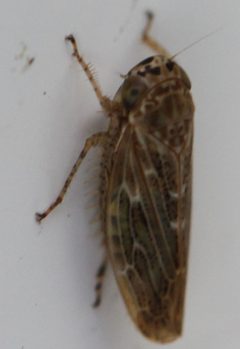
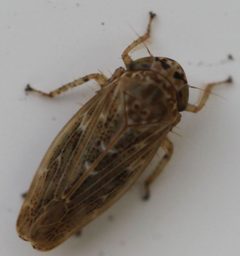
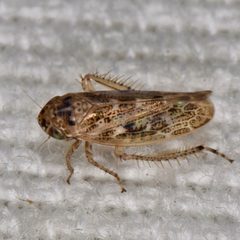
Euscelidius is a of leafhoppers (Cicadellidae: Deltocephalinae: Athysanini) described by Ribaut in 1942. The genus contains at least four described , including the economically important Euscelidius variegatus, which serves as a key of phytoplasmas causing agricultural such as cherry X-disease and flavescence dorée in grapevines. The genus has been reported from Europe, North America, and the Indian subcontinent (Pakistan), with E. variegatus being the most extensively studied species due to its role in plant transmission.
Pronunciation
How to pronounce Euscelidius: //juːˌskɛˈlɪdiəs//
These audio files are automatically generated. While they are not always 100% accurate, they are a good starting point.
Identification
within Euscelidius can be distinguished by male genitalia characteristics, particularly aedeagal . A key to worldwide species has been published providing aedeagal illustrations for identification. The belongs to the tribe Athysanini within the Deltocephalinae, which can be distinguished from other leafhopper groups by features of the and wing venation, though specific diagnostic traits for Euscelidius itself are not detailed in available sources.
Images
Habitat
information is primarily available for E. variegatus: commercial cherry orchards in the Pacific Northwest (The Dalles and Hood River, Oregon), laboratory rearing on barley (Hordeum vulgare) and oat (Avena sativa) plants. Natural habitat associations for the broadly include temperate agricultural and grassland environments.
Distribution
Europe (including grape-growing regions where flavescence dorée occurs); North America (Pacific Northwest, USA); Indian subcontinent (Pakistan, reported from Palearctic temperate coniferous forests and montane grasslands and shrublands). GBIF records indicate presence in Denmark, Norway, and Sweden.
Ecological Role
Agricultural pest ; at least one (E. variegatus) is a significant of phytoplasmas causing economically important plant . The bacterial endosymbiont Candidatus Symbiopectobacterium (BEV) has been documented in E. variegatus, though its role in transmission remains unclear.
Human Relevance
Euscelidius variegatus is of major economic concern as a of 'Candidatus Phytoplasma pruni' causing cherry X- in the Pacific Northwest, requiring orchard destruction to prevent spread. The is also a laboratory vector of flavescence dorée phytoplasma, a disease threatening European viticulture. Research on E. variegatus has contributed to understanding phytoplasma-vector interactions, including mechanisms of adhesion, transmission barriers, and strain competition.
Similar Taxa
- EuscelisBoth belong to Deltocephalinae and share similar ; Euscelis incisus is also a of chrysanthemum yellows phytoplasma alongside E. variegatus, requiring genitalia examination for accurate separation
- MacrostelesM. quadripunctulatus transmits the same chrysanthemum yellows phytoplasma as E. variegatus with higher ; similar leafhopper in the same Deltocephalinae necessitates careful identification
More Details
Research Significance
Euscelidius variegatus has become a model organism for studying phytoplasma- interactions due to its amenability to laboratory rearing and its role as a vector for multiple phytoplasma strains. Research using this has revealed that leafhoppers can transmit phytoplasmas with shortened latency periods, challenging assumptions about nymph-biased transmission .
Microbiome Complexity
E. variegatus harbors a bacterial endosymbiont (Candidatus Symbiopectobacterium, or BEV) containing multiple temperate (EVP-1, EVP-2, EVP-3). These phages become transcriptionally active in different environments, particularly in the , suggesting complex regulatory interactions that may influence competence.
Sources and further reading
- BugGuide
- Wikipedia
- GBIF taxonomy match
- iNaturalist taxon
- NCBI Taxonomy
- Catalogue of Life
- Euscelidius variegatus Archives - Entomology Today
- Cultural Isolation: A Story of One Entomology Student's Difficult Journey
- Biological characterization of Euscelidius variegatus iflavirus 1
- Bacteriophage-Host Association in the Phytoplasma Insect Vector Euscelidius variegatus
- Ability of Euscelidius variegatus to Transmit Flavescence Dorée Phytoplasma with a Short Latency Period
- Rewiring the proteome of the Euscelidius variegatus holobiont in response to Flavescence dorée phytoplasma
- Phenology of Euscelidius variegatus (Hemiptera: Cicadellidae) reared under controlled conditions
- Competition among Flavescence Dorée Phytoplasma Strains in the Experimental Insect Vector Euscelidius variegatus
- Variation in vector competency depends on chrysanthemum yellows phytoplasma distribution within Euscelidius variegatus
- First report of an economically important genus Euscelidius (Cicadellidae: Deltocephalinae: Athysanini) from the Indian subcontinent, with description of a new species
- Ultrastructural studies of the digestive system of the leafhopper Euscelidius variegatus infected with BEV bacteria
- Vector‐pathogen‐host plant relationships of chrysanthemum yellows (CY) phytoplasma and the vector leafhoppers Macrosteles quadripunctulatus and Euscelidius variegatus
- Variable Membrane Protein A of Flavescence Dorée Phytoplasma Binds the Midgut Perimicrovillar Membrane of Euscelidius variegatus and Promotes Adhesion to Its Epithelial Cells