
Macrosteles
Fieber, 1866
leafhoppers
Species Guides
42Macrosteles is a of leafhoppers (Cicadellidae: Deltocephalinae) comprising more than 80 distributed primarily in the northern hemisphere. Members are phloem-feeding insects with . Several species are economically significant as of phytopathogenic phytoplasmas, including "Candidatus Phytoplasma asteris" ( ) and "Candidatus Phytoplasma oryzae" (rice yellow dwarf). Some species exhibit migratory . The genus harbors complex endosymbiotic including obligate nutritional "Candidatus Sulcia muelleri" and "Candidatus Nasuia deltocephalinicola".
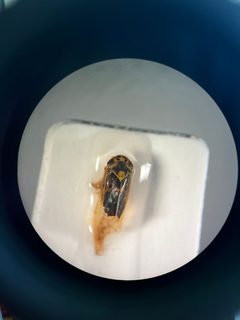
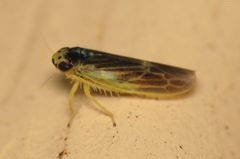
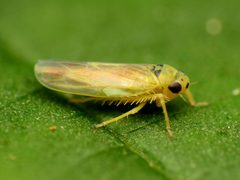
Pronunciation
How to pronounce Macrosteles: //ˌmækroʊˈstiːliːz//
These audio files are automatically generated. While they are not always 100% accurate, they are a good starting point.
Identification
Macrosteles are small leafhoppers within the tribe Macrostelini. Specific diagnostic characters for the versus related deltocephaline genera are not documented in available sources. Species-level identification within Macrosteles requires examination of male genitalia and other fine morphological details; some species form cryptic complexes distinguishable by acoustical and mating rather than alone.
Images
Habitat
occur in diverse terrestrial including agricultural fields, grasslands, and areas with herbaceous vegetation. Specific microhabitat preferences vary by species: inhabits carrot fields and associated weed , while M. fascifrons is associated with lettuce, aster, and various crop plants. Some species utilize cereals and grassy weeds as .
Distribution
Primarily northern hemisphere distribution with records from North America (United States, Canada), Europe (Denmark, Norway, Sweden), and Asia. Specific range varies by . Macrosteles fascifrons occurs in Manitoba and migrates northward annually. is present in North American agricultural regions. Macrosteles quadripunctulatus has been studied in European contexts.
Seasonality
Macrosteles fascifrons produces one per year in Manitoba, with migrating from southern regions and producing offspring before autumn. Activity patterns are temperature-dependent: Macrosteles quadripunctulatus shows increased feeding bout frequency at higher temperatures (15-30°C range), accelerating phytoplasma transmission rates.
Diet
Phloem-feeding; stylets penetrate through layers to reach phloem tissue. Specific plant associations vary by . Macrosteles fascifrons prefers lettuce over aster, parsley, carrot, and flax. utilizes cereals, vegetables, and weeds as hosts, with demonstrated preference for grasses over broadleaf weeds.
Host Associations
- Lettuce - preferred plantMacrosteles fascifrons
- Carrot - plant; also Daucus carota
- Aster - plantMacrosteles fascifrons; less preferred than lettuce
- Cereals - plantsoat, rye, barley, wheat, triticale, spelt;
- Grassy weeds - attractscrabgrass; increases abundance relative to carrots
- Broadleaf weeds - repelsreduces abundance by 59% in carrot fields
- Chrysanthemum carinatum - experimental for phytoplasma transmissionMacrosteles quadripunctulatus
- "Candidatus Phytoplasma asteris" - transmitted by multiple Macrosteles ; causes and related
- "Candidatus Phytoplasma oryzae" - transmitted by M. striifrons and M. sexnotatus; causes rice yellow dwarf
- Clitemnestra bipunctata - preycrabronid ; M. fascifrons recorded as
Behavior
Feeding involves intracellular stylet penetration through multiple layers to reach phloem, causing localized cellular damage and solute leakage. Feeding creates beneficial microhabitats for bacterial on leaf surfaces. Some migrate annually (M. fascifrons migrate northward into Manitoba). Temperature affects behavior: higher temperatures increase feeding bout frequency. Presence of Salmonella enterica alters probing attempt distribution in M. quadrilineatus. Males produce species-specific acoustic calling songs used in mate recognition.
Ecological Role
Primary consumers as phloem-feeding herbivores. Significant transmitting phytoplasmas among plants, with transmission affected by temperature. Modify phyllosphere microbial through feeding damage, facilitating growth of epiphytic bacteria including Salmonella enterica. complex bacterial endosymbiont communities including obligate nutritional mutualists and facultative . Prey for predatory including Clitemnestra bipunctata.
Human Relevance
Agricultural pests and of major economic importance. Macrosteles fascifrons and M. quadrilineatus (both called "") transmit phytoplasma, causing disease in lettuce, carrot, celery, and ornamental plants. Management strategies include weed control (eliminating grassy weeds, maintaining broadleaf weeds), border crop selection (spelt reduces abundance compared to other cereals), and exclusion netting. Some lettuce varieties show limited . Serve as experimental models for studying insect-microbe-plant interactions and phytoplasma .
Similar Taxa
- Other Deltocephalinae leafhoppersSimilar general ; Macrosteles distinguished by tribe-level characters (Macrostelini) and male genitalia structure, though specific diagnostic features require examination
- Macrosteles fascifrons species complex membersCryptic distinguishable by acoustical and mating rather than ; males produce different calling songs and females show selective response to signals
More Details
Endosymbiont microbiota
Macrosteles harbor complex bacterial . All examined species contain obligate endosymbionts "Candidatus Sulcia muelleri" and "Candidatus Nasuia deltocephalinicola" at 100% frequency, housed in separate bacteriocytes forming paired bacteriomes in the . Facultative endosymbiont infection varies by species and : , , Burkholderia, Diplorickettsia, Arsenophonus, Cardinium, and Lariskella have been detected with variable . M. laevis shows limited facultative diversity compared to other Macrosteles species.
Salivary gland ultrastructure
Macrosteles fascifrons possesses specialized salivary structures including mycoplasma-like bodies (MLBs) in transmitting individuals, -like bodies (RLBs), and salivary bodies (SBs) associated with saliva secretion. The precibarium contains 20 chemosensilla and a precibarial valve regulating fluid uptake; stylets contain 12 mechanosensilla for proprioception.
Phytoplasma transmission biology
Multiple Macrosteles phytoplasmas with temperature-dependent . Transmission involves acquisition from infected plants, multiplication or circulation within the insect, and inoculation into new . Latency periods in both insect and plant hosts vary with temperature, affecting epidemiological dynamics.
Sources and further reading
- BugGuide
- Wikipedia
- GBIF taxonomy match
- iNaturalist taxon
- NCBI Taxonomy
- Catalogue of Life
- Bug Eric: Wasp Wednesday: Clitemnestra bipunctata
- Give and Take: Salmonella Enterica Alters Macrosteles Quadrilineatus Feeding Behaviors Resulting in Altered S. Enterica Populations and Distribution on Leaves
- Temperature-dependent transmission of Candidatus phytoplasma asteris by the vector leafhopper Macrosteles quadripunctulatus Kirschbaum
- Acoustical and Mating Behavior of Two Taxa in the Macrosteles fascifrons1 Species Complex
- The sensory systems and feeding behavior of leafhoppers. I. The aster leafhopper, Macrosteles fascifrons stål (homoptera, cicadellidae)
- Limited variation in microbial communities across populations of Macrosteles leafhoppers (Hemiptera: Cicadellidae)
- Life Cycle of Macrosteles divisus in Relation to Carrot Yellows in Western New York
- The impact of plant associations onMacrosteles quadrilineatusmanagement in carrots
- STUDIES ON THE SIX-SPOTTED LEAFHOPPER, MACROSTELES FASCIFRONS (STÅL.), AND ASTER YELLOWS IN MANITOBA
- MYCOPLASMA-LIKE BODIES, RICKETTSIA-LIKE BODIES, AND SALIVARY BODIES IN THE SALIVARY GLANDS AND SALIVA OF THE LEAFHOPPER MACROSTELES FASCIFRONS (HOMOPTERA: CICADELLIDAE)
- Diversity of Bacterial Endosymbionts Associated with Macrosteles Leafhoppers Vectoring Phytopathogenic Phytoplasmas