Macrosteles quadrilineatus
(Forbes, 1885)
Aster leafhopper, Six-spotted leafhopper
is a small leafhopper native to the United States and a major agricultural pest. It is the primary of phytoplasma, transmitting the to vegetable crops including carrot, celery, lettuce, and potato. migrate northward in spring on southerly winds, often arriving in the Midwest and northern regions earlier and in greater numbers than resident . The species exhibits feeding on numerous grasses, cereals, and broadleaf plants.
Pronunciation
How to pronounce Macrosteles quadrilineatus: /ˌmæ.krəˈstiː.liːz ˌkwɒ.drɪ.lɪˈneɪ.ə.təs/
These audio files are automatically generated. While they are not always 100% accurate, they are a good starting point.
Identification
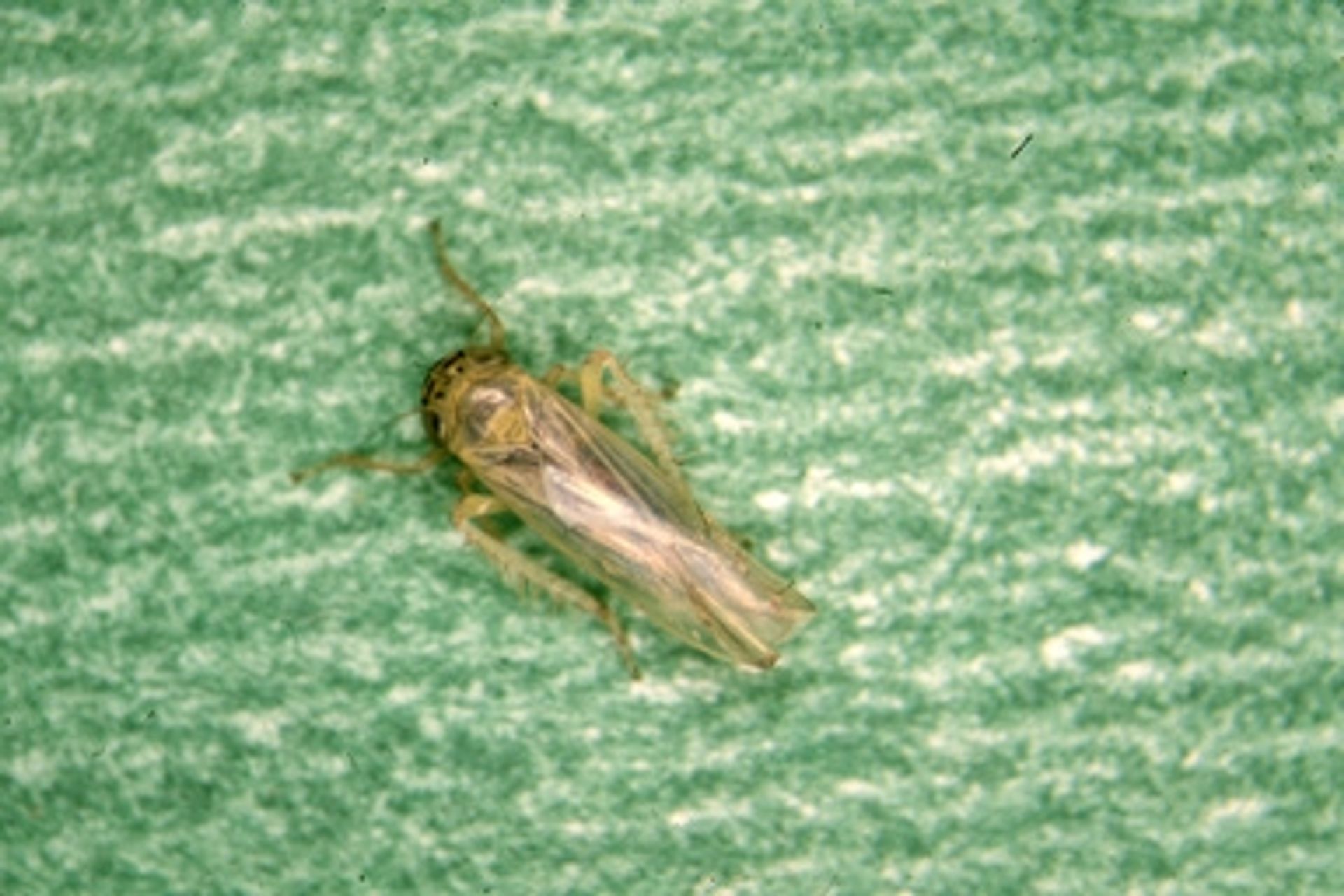
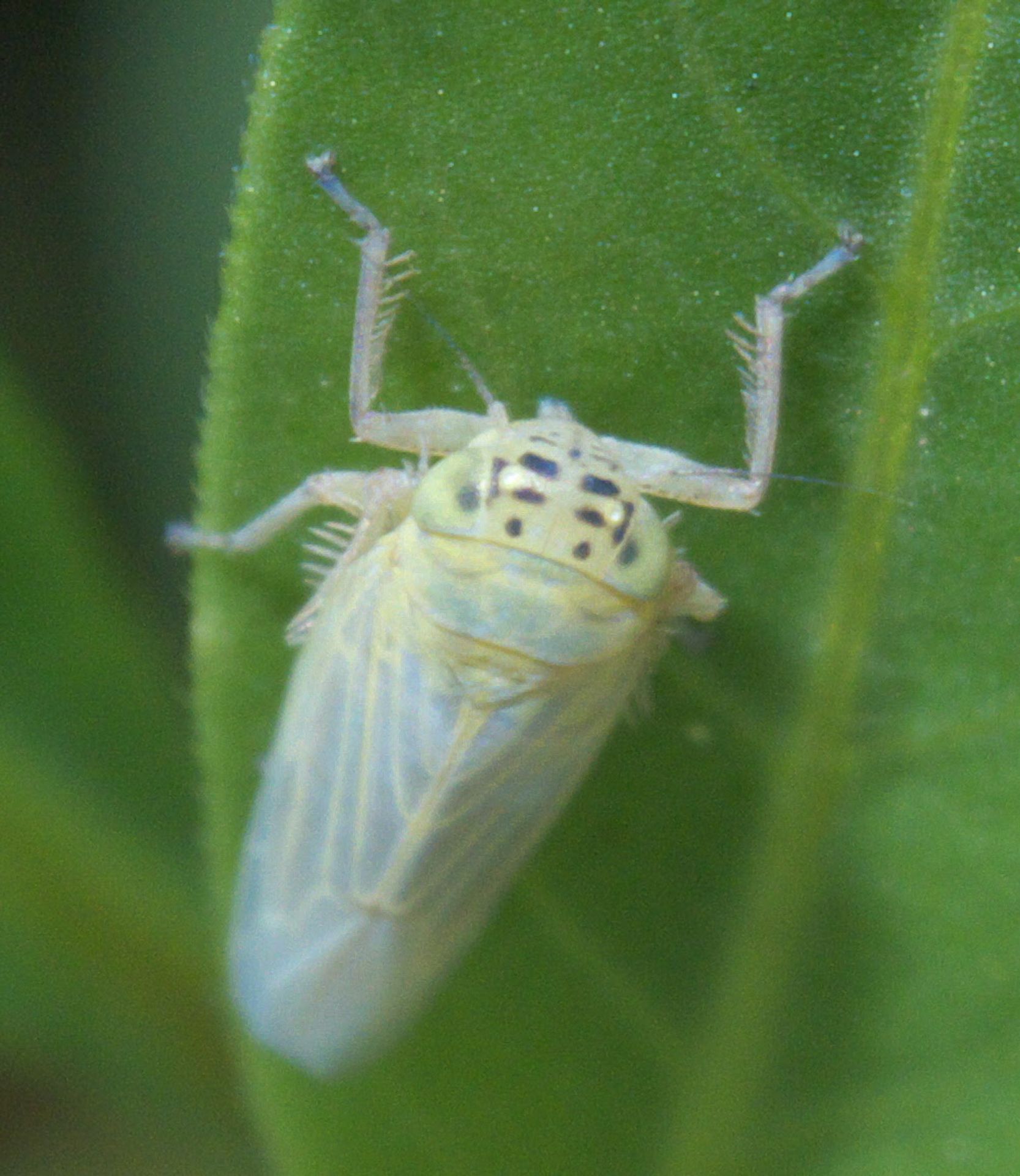
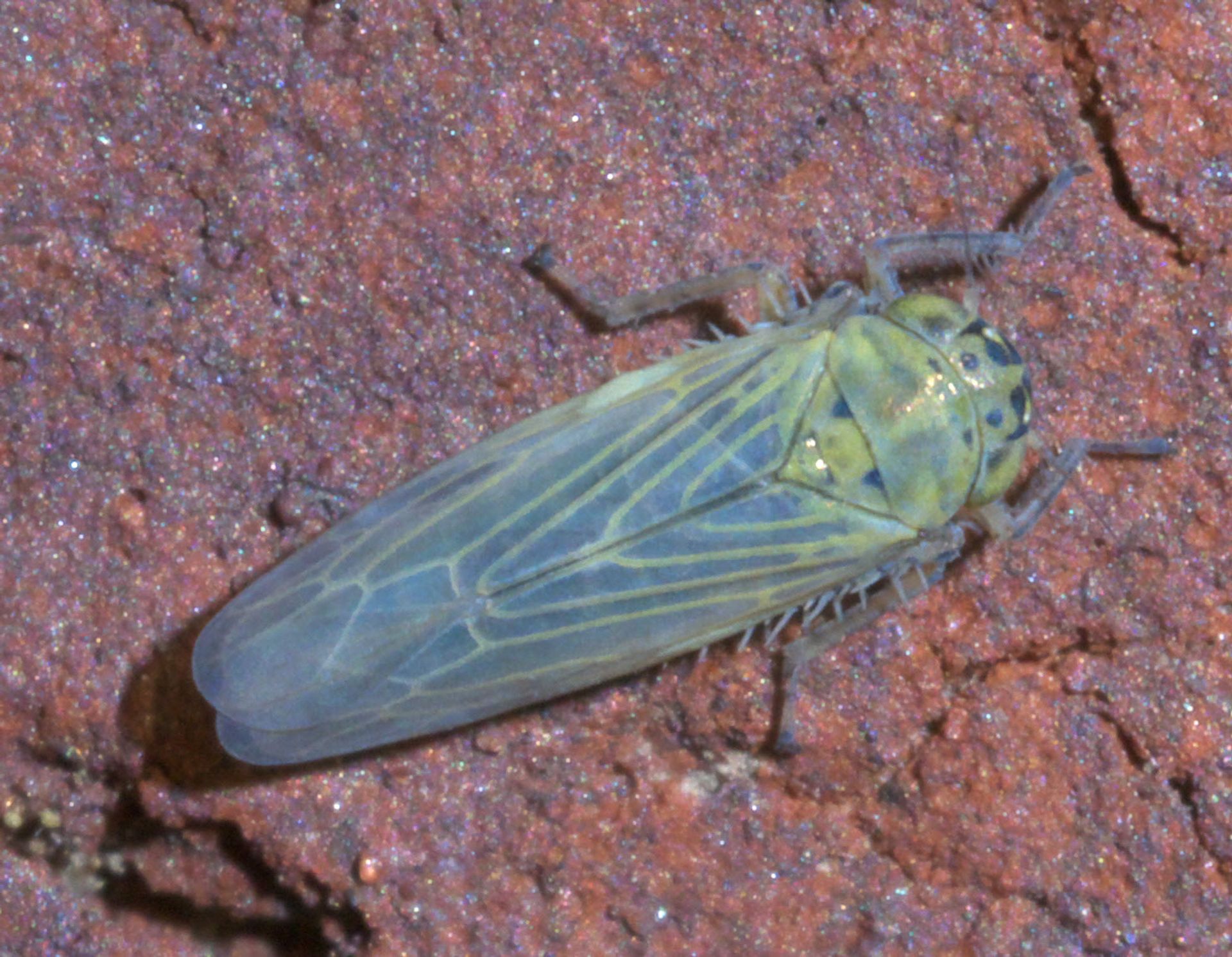
Males measure approximately 3.3 mm in length, females about 3.7 mm. Forewings are greyish-green; is yellowish-green. Six pairs of minute black spots or streaks on the provide the alternative 'six-spotted leafhopper.'
Images
Habitat
Found in agricultural fields, particularly carrot, celery, lettuce, and potato crops. Overwinters primarily on grasses and cereals. In field experiments, abundance is influenced by surrounding vegetation: grassy weeds and cereals increase , while broadleaf weeds reduce them.
Distribution
United States; Canada (Alberta). occurs from southern areas northward to the Midwest and northern United States and the Western Canadian Prairies.
Seasonality
migrate northward in spring on strong southerly winds. In the upper Midwest and northern United States, migrants arrive earlier and typically exceed resident in number. Activity declines after freezing temperatures in fall.
Diet
Phloem feeder; feeds intracellularly by penetrating layers with stylets to reach phloem tissue. feed on carrot, dill, potato, and radish, though these support poor reproductive performance.
Host Associations
- Aster yellows phytoplasma (Candidatus Phytoplasma asteris, 16SrI) - Primary transmission agent; phytoplasma causes in numerous crops and weeds
- carrot (Daucus carota) - Preferred feeding and reproductive ; major crop pest
- celery (Apium graveolens) - Affected by transmission
- lettuce (Lactuca sativa) - Affected by transmission
- potato (Solanum tuberosum) - feeding ; poor for breeding
- barley (Hordeum vulgare) - Experimental for probing studies
- canola/rapeseed (Brassica napus) - Marginal ; does not support complete development
- oats (Avena sativa) - and rearing
- rye (Secale cereale) - plant
- corn (Zea mays) - -laying
- dill (Anethum graveolens) - feeding
- radish (Raphanus sativus) - feeding ; poor for breeding
- clovers (Trifolium spp.) - -laying
- spelt (Triticum spelta) - Border crop; associated with reduced leafhopper abundance in adjacent carrot plots compared to other cereals
- grasses (Poaceae) - Preferred for oviposition and ; attract leafhoppers in choice tests
- broadleaf weeds - Repel leafhoppers in choice tests; carrot plots with broadleaf weeds show 59% fewer leafhoppers than those with crabgrass or carrot alone
Life Cycle
are laid on a wide range of plants including grasses, clovers, corn, oats, rye, carrots, and various weeds. Eggs hatch in approximately one week. Complete takes about four weeks under favorable conditions.
Behavior
Exhibits migratory : are carried northward in spring on strong southerly winds. Probing behavior involves intracellular stylet penetration to reach phloem, creating nine distinct waveform patterns detectable by electropenetrography. Males show higher frequency of nonprobing activities and phase events than females. Feeding behavior facilitates growth of Salmonella enterica on leaves by creating localized beneficial through cellular damage. Distribution of probing attempts is altered by presence of S. enterica. Infected leafhoppers show temporary preference for phytoplasma-infected plants at 2 weeks post-, but this preference disappears by 4 weeks.
Ecological Role
Primary of phytoplasma, a significant plant affecting vegetable crops, weeds, and ornamentals. Modifies phyllosphere microbial ; facilitates persistence and growth of Salmonella enterica on leaf surfaces through feeding-induced cellular damage and solute leakage. Serves as prey for including Pachygonatopus minimus, Neogonatopus ombrodes, and Epigonatopus plesius.
Human Relevance
Major agricultural pest due to transmission of , causing yellowing, stunting, and deformed flowers in vegetable crops. Management strategies include adjusting weed management (favoring broadleaf weeds over grasses), selecting border crops carefully (spelt reduces abundance compared to wheat, barley, or triticale), and timing control measures to account for spring . No specific recommendations developed for wheat .
Similar Taxa
- Macrosteles fascifronsCongeneric ; both are small leafhoppers in the same with similar and agricultural pest status
- other Macrosteles species members share small size, similar body proportions, and phloem-feeding habits; identification requires examination of spot patterns and genitalia
Sources and further reading
- BugGuide
- Wikipedia
- GBIF taxonomy match
- iNaturalist taxon
- NCBI Taxonomy
- Catalogue of Life
- Occasional Pests - AgriLife Extension Entomology
- Bohart Museum Virtual Open House: Think Pests of Alfalfa and Rice | Bug Squad
- Bug Eric: Wasp Wednesday: Clitemnestra bipunctata
- The impact of plant associations onMacrosteles quadrilineatusmanagement in carrots
- Give and Take: Salmonella Enterica Alters Macrosteles Quadrilineatus Feeding Behaviors Resulting in Altered S. Enterica Populations and Distribution on Leaves
- Salmonella enterica changes Macrosteles quadrilineatus feeding behaviors resulting in altered S. enterica distribution on leaves and increased populations
- Characterization and correlation of the probing behaviors of Macrosteles quadrilineatus (Hemiptera: Cicadellidae) with electropenetrography (EPG) waveforms
- Effects of Phytoplasma Infection on Aster Leafhopper ( Macrosteles quadrilineatus ) Settling Behavior and Development on Brassica napus
- Chromosome‐level genome assembly of the aster leafhopper (Macrosteles quadrilineatus) reveals the role of environment and microbial symbiosis in shaping pest insect genome evolution