
Siphlonurus
Eaton, 1868
primitive minnow mayflies, gray drakes
Species Guides
11- Siphlonurus alternatus(Northern Summer Mayfly)
- Siphlonurus columbianus(Columbian gray drake)
- Siphlonurus marshalli(primitive minnow mayfly)
- Siphlonurus mirus(primitive minnow mayfly)
- Siphlonurus occidentalis(primitive minnow mayfly)
- Siphlonurus phyllis(primitive minnow mayfly)
- Siphlonurus quebecensis(early brown quill mayfly)
- Siphlonurus rapidus
- Siphlonurus securifer(primitive minnow mayfly)
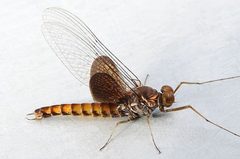
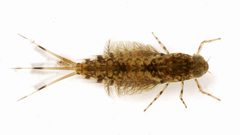
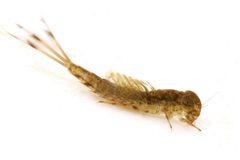
Siphlonurus is a of primitive minnow mayflies in the Siphlonuridae, comprising more than 40 described . Species inhabit temporary and intermittent ponds, with nymphal development occurring during spring months and in late May to June. Adults are non-feeding and rely on energy reserves accumulated during the aquatic larval stage. The genus is notable among fly fishers for species such as Siphlonurus quebecensis (early brown quill), which is imitated with specialized fly patterns.
Pronunciation
How to pronounce Siphlonurus: //ˌsɪfləˈnʊrəs//
These audio files are automatically generated. While they are not always 100% accurate, they are a good starting point.
Identification
Siphlonurus are distinguished from other by their classification as "primitive minnow mayflies" within Siphlonuridae. Specific identification features for the genus are not documented in available sources. Species-level identification requires examination of morphological details not specified here.
Images
Habitat
Temporary ponds and intermittent ponds, including pond inlets and outlets. Aquatic nymphs develop in these lentic freshwater .
Distribution
Recorded from Denmark, Norway, Sweden, Vermont (USA), and other parts of the United States. Specific distribution varies by ; Siphlonurus typicus documented in eastern Connecticut, Siphlonurus alternatus (Northern Summer Mayfly) occurs in northern regions.
Seasonality
Nymphal development from March to June; and mating from late May to late June (27 May to 21 June for Siphlonurus typicus).
Diet
are unable to feed and rely entirely on energy reserves (fat, , free sugars) stored during the aquatic larval stage. Larval diet not specified in available sources.
Life Cycle
Hemimetabolous development with aquatic nymphal stage and terrestrial/aerial stage. Nymphs progress through 11 maturity classes during development. from larva to subimago involves utilization of free sugar reserves, likely to fuel swimming and from water. Fat reserves comprise the main energy source for final development and adult activities. Short adult lifespan; degree days are highly predictive of maturity (r²=0.963).
Behavior
in : males perform long swarming flights using substantial fat reserves while waiting for females; females perform only brief flights to mate and reproduce with minimal fat expenditure. Oviposition occurs directly on ponds, inlets, and outlets, indicating include both local migrants and permanent residents.
Human Relevance
Significant to fly fishing: of Siphlonurus quebecensis (early brown quill/gray drake) are mimicked with artificial fly patterns using thread cross-hatched over caribou hair to simulate body segmentation. The contributes to understanding of development, growth measurement methodologies, and energetics in relation to mating systems.
Similar Taxa
- Other Siphlonuridae generaSiphlonurus is distinguished within Siphlonuridae as a of primitive minnow mayflies; other genera in the share the primitive minnow mayfly designation but differ in composition and presumably in specific morphological features not detailed here.
- DrunellaBoth are important to fly fishers, but Drunella ( Ephemerellidae) belongs to a different family and includes such as Drunella grandis (green drake) with distinct coloration and timing.
- HexageniaBoth are with importance to anglers, but Hexagenia ( Ephemeridae) are burrower mayflies with different nymphal and ; Hexagenia limbata is notably larger and has different patterns than Siphlonurus .
More Details
Research significance
Siphlonurus typicus has been used to develop a new application for measuring nymphal development and growth based on maturity classes and capsule widths, with degree days as a predictive tool for maturity.
Genomic resources
The of Siphlonurus alternatus (Northern Summer Mayfly) has been sequenced, providing resources for evolutionary and developmental studies of mayflies.
Sources and further reading
- BugGuide
- Wikipedia
- GBIF taxonomy match
- iNaturalist taxon
- NCBI Taxonomy
- Catalogue of Life
- Teach a Man to Fish (and some entomology) and You’ll Feed Him for a Lifetime
- Nielsen’s gray drake - Entomology Today
- Flight energetics in relation to sexual differences in the mating behaviour of a mayfly, Siphlonurus aestivalis
- Life history aspects of the mayfly Siphlonurus typicus (Ephemeroptera: Siphlonuridae) with a new application for measuring nymphal development and growth
- Life History and Ecology of Siphlonurus mirus Eaton (Ephemeroptera: Siphlonuridae) in an Intermittent Pond
- The genome sequence of the Northern Summer Mayfly, Siphlonurus alternatus (Say, 1824).