
Sphecomyia weismani
Moran, 2019
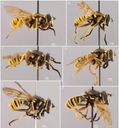
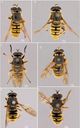
Sphecomyia weismani is a hoverfly described in 2019, one of seven new species identified during a comprehensive revision of the Sphecomyia. It belongs to the S. pattonii species group, distinguished from other Sphecomyia by the absence of scutellar vittae. The species is a mimic, exhibiting the characteristic large size and yellow-and-black coloration typical of this Holarctic genus. Like other members of subtribe Criorhinina, it likely develops in decaying wood or rot holes, though specific larval remains undocumented.
Pronunciation
How to pronounce Sphecomyia weismani: //sfɛk.oʊˈmaɪ.jə ˈwaɪz.məˌnaɪ//
These audio files are automatically generated. While they are not always 100% accurate, they are a good starting point.
Identification
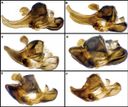
Distinguished from by: two-thirds of scutellum (vs. anterior third or less in related ); calypter with long yellow pile; tergite 1 with uninterrupted pruinose band along margin; tergite 2 with two yellow bands (anterior interrupted, posterior uninterrupted). Differs from S. oraria by having at least partly yellow pilose scutellum (vs. completely black pilose). Separated from S. cryptica and S. dyari by sternite pruinosity patterns and male surstylus . Male genitalia photographs and barcode data are available for definitive identification.
Images
Distribution
Arizona, United States.
Behavior
mimic; exhibits of vespid wasps. No specific behavioral observations have been published for this .
Similar Taxa
- Sphecomyia orariaSimilar size and coloration, but S. oraria has completely black pilose scutellum versus at least partly yellow in S. weismani
- Sphecomyia crypticaOverlapping morphological features; distinguished by sternite pruinosity patterns and male surstylus
- Sphecomyia dyariClose relative in same group; separated by sternite pruinosity patterns and male surstylus
- Sphecomyia vittataBelongs to different group (S. vittata group) with scutellar vittae, which S. weismani lacks