
Criorhinina
Genus Guides
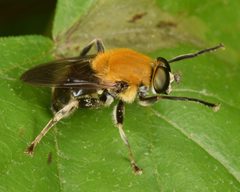
2- Criorhina(Bumble Flies)
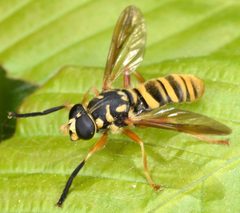
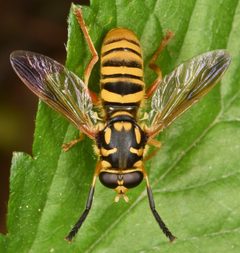
- Sphecomyia(Yellowjacket Flies)
Criorhinina is a subtribe of hoverflies ( Syrphidae) within the tribe Milesiini and Eristalinae. Members are characterized by their association with decaying wood and sap flows, where larvae develop. The subtribe includes such as *Criorhina* and *Sphecomyia*, which are often large-bodied and mimic bumble bees or . are primarily found in forested .
Pronunciation
How to pronounce Criorhinina: /kriː.oʊˈraɪnɪnə/
These audio files are automatically generated. While they are not always 100% accurate, they are a good starting point.
Identification
Criorhinina can be distinguished from other hoverfly subtribes by the combination of: large body size (often 15-25 mm); robust, - or -mimicking form; that meet at the top of the in males; and larvae that inhabit decaying wood. The subtribe is separated from related subtribes within Milesiini (such as Milesiina) by larval specificity and morphological details of the wing venation and facial structure.
Images
Habitat
Forested environments, particularly mature woodlands with standing dead trees, stumps, and decaying logs. Larval development occurs in moist decaying wood, under bark, or in sap flows of hardwood trees.
Distribution
Primarily Holarctic, with documented occurrence in North America, Europe, and northern Asia. Distribution follows the range of suitable forest with decaying wood resources.
Seasonality
active primarily in spring and early summer, with peak activity varying by latitude. In temperate regions, most observations occur from April to July.
Host Associations
- decaying hardwood - larval Larvae develop in moist, decaying wood of broadleaf trees and in sap flows.
Life Cycle
Complete . laid in or near decaying wood or sap flows. Larvae feed on microorganisms in decaying wood, progressing through multiple instars. occurs within the larval substrate. emerge in spring.
Behavior
Ecological Role
Larvae contribute to wood decomposition and nutrient cycling in forest . As , have limited but documented role in servicing early spring woodland flowers.
Human Relevance
Occasional subjects of ecological study due to specificity and sensitivity to forest management practices. Some are of conservation concern where old-growth forest habitat has declined.
Similar Taxa
- MilesiinaAlso within tribe Milesiini, but distinguished by larval development in rot holes and tree wounds rather than decaying wood, and generally smaller size with different wing venation.
- XylotinaShares wood-associated larvae, but belongs to tribe Xylotini and differs in larval feeding habits (predatory or mycophagous in some groups) and facial structure.
More Details
Conservation relevance
within Criorhinina are considered indicators of old-growth forest conditions in several European countries, as their dependence on decaying wood in mature forests makes them sensitive to intensive forestry practices.