
Sphecomyia pattonii
Williston, 1882
Patton's Yellowjacket Fly
Sphecomyia pattonii is a large -mimicking syrphid fly in the subtribe Criorhinina, originally described by Williston in 1882. It belongs to the S. pattonii group, distinguished from by the absence of scutellar vittae. The species exhibits classic yellowjacket mimicry, including coloration, body form, and similar to Vespula queens. As with other members of its subtribe, the larval stage likely develops in decaying wood or rot holes, though this remains unconfirmed for this species.
Pronunciation
How to pronounce Sphecomyia pattonii: //ˌsfɛkoʊˈmaɪə ˈpætəni.aɪ//
These audio files are automatically generated. While they are not always 100% accurate, they are a good starting point.
Identification
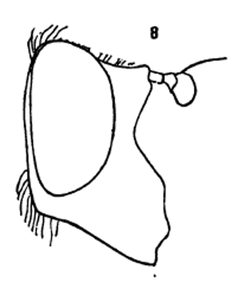
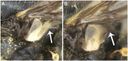
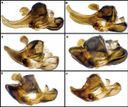
Distinguished from congeneric Sphecomyia vittata and allies by the absence of scutellar vittae; scutellum uniformly colored or differently patterned. Broadened fore and calypter with long black pile are diagnostic features of the S. pattonii group. Separated from actual vespid by single pair of wings (Diptera), reduced wing venation, and short (though Sphecomyia species have relatively longer antennae than most flies). Male genitalia provide definitive identification.
Images
Appearance
Large syrphid fly with robust -like build. Possesses broadened fore and calypter with long black pile. anteroventrally produced, characteristic of subtribe Criorhinina. Scutellum lacks vittae, distinguishing it from the S. vittata group. Coloration and patterning mimics yellowjacket wasps (Vespula), though specific markings not detailed in available sources.
Habitat
observed in woodland edge with sun-exposed vegetation. Larval habitat unknown, though inferred from subtribe Criorhinina to likely involve rot holes, decaying wood, or decaying roots.
Distribution
North America: Canada and United States. Specific range details not documented in available sources.
Life Cycle
Complete with , larva, pupa, and stages. Larvae never illustrated or described; developmental details unknown for this .
Behavior
mimic exhibiting similar to yellowjackets, including lazy, zig-zag searching flight pattern. likely visit flowers for nectar and pollen, though specific floral records for this not documented.
Ecological Role
function as when visiting flowers. Larval role in decomposition of wood or plant matter inferred but unconfirmed.
Similar Taxa
- Sphecomyia vittataSimilar size and yellowjacket mimicry, but distinguished by presence of scutellar vittae versus their absence in S. pattonii
- Vespula maculifrons (Eastern Yellowjacket)Model for mimicry; distinguished by two pairs of wings, longer and elbowed , and constricted waist (petiole)
- Vespula queens (various species)Primary models for mimicry; distinguished by hymenopteran wing structure, , and defensive stinging capability
More Details
Taxonomic History
Originally described by Williston in 1882. Revised by Moran in 2019 as part of a world revision of Sphecomyia, which established the current group classification and transferred several former Criorhina species into the .
Mimicry System
Part of a Müllerian or complex involving yellowjacket (Vespula). The S. pattonii group represents one of three major lineages within the , differentiated by scutellar pruinescence patterns.