
Sphecomyia vittata
(Wiedemann, 1830)
Long-horned Yellowjacket Fly
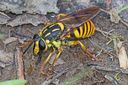
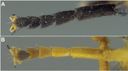
Sphecomyia vittata is a large, striking syrphid fly known for its exceptional mimicry of yellowjacket . It possesses unusually long, thick for a fly—longer than the depth in lateral view—which enhances its resemblance to vespid wasps. The belongs to the S. vittata species group within subtribe Criorhinina, characterized by scutellar vittae and specific thoracic pruinosity patterns. are flower visitors, though detailed natural history remains poorly documented. The species has a Holarctic distribution with concentration in eastern North America.
Pronunciation
How to pronounce Sphecomyia vittata: /ˌsfɛkəˈmaɪə vɪˈtɑːtə/
These audio files are automatically generated. While they are not always 100% accurate, they are a good starting point.
Identification
Distinguished from other syrphid flies by the combination of: exceptionally long, thick (longer than depth); scutellar vittae (placing it in the S. vittata group); bare medial facial vitta; bare gena and katepimeron; and specific wing venation with setae absent on half of C before crossvein h. Most similar to other Sphecomyia species, particularly within the S. vittata group, requiring examination of male genitalia or for definitive species-level identification. Distinguished from actual yellowjackets (Vespula, Dolichovespula) by single pair of wings (Diptera), though this may be difficult to observe in the field due to -mimicking wing positioning.
Images
Appearance
Large, robust fly resembling a yellowjacket in size and coloration. exceptionally long and thick for a syrphid—longer than depth in lateral view, with segments elongated. with anepimeron; scutellum with at least margin densely pruinose. Sternite 2 with anterior corners and lateral margins pruinose. Wing with anterior half of C before crossvein h bare (without setae). Bare medial vitta extends ventrally from oral margin on . Gena and katepimeron bare. Overall -like appearance enhanced by behavioral mimicry of slow, zigzag pattern.
Habitat
associated with floral environments. Larval unknown; inferred from related Criorhinina to potentially include rot holes, decaying wood, or root environments, though this remains unconfirmed by direct observation.
Distribution
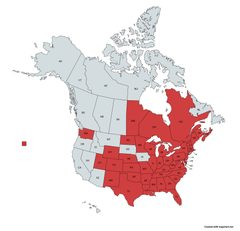
Holarctic distribution. In North America, concentrated in the eastern half of the continent; recorded from Canada and the United States, including Vermont. Specific range boundaries poorly documented due to rarity and identification challenges.
Diet
feed on nectar and pollen from flowers. Larval diet unknown.
Life Cycle
Larvae never illustrated or described. site unknown. Developmental stages and duration undocumented.
Behavior
Exhibits -mimicking : slow, zigzag flight pattern similar to yellowjackets searching for nesting sites. waved in manner resembling wasp antennae. Floral visitation documented, though specific plant associations not detailed. Mating behavior mentioned in literature but not described.
Ecological Role
Flower visitor; contributes to pollination through nectar and pollen feeding. Potential role in decomposition or wood decay as larva, though unconfirmed. No documented engineering or keystone effects.
Human Relevance
No documented economic importance. Occasionally encountered by entomologists and naturalists due to impressive mimicry; may cause temporary alarm due to resemblance to stinging . No records of direct benefit or harm to agriculture, forestry, or human health.
Similar Taxa
- Temnostoma spp.Also syrphid mimics with darkened wing leading edges and leg-waving mimicry, but distinguished by shorter antennae and different thoracic pruinosity patterns.
- Somula decoraYellowjacket-mimic syrphid of similar size and coloration, but with shorter and different facial markings.
- Vespula maculifrons (Eastern Yellowjacket)The putative model for S. vittata mimicry; distinguished by two pairs of wings, stinger present, and different antennal structure.
More Details
Taxonomic history
Originally described as Chrysotoxum vittatum by Wiedemann in 1830. Transferred to Sphecomyia by subsequent authors. Included in comprehensive 2019 revision of world Sphecomyia by Moran in ZooKeys, which established the S. vittata group based on scutellar vittae.
Mimicry quality
Considered among the most convincing mimics in Syrphidae due to combination of size, coloration, elongated , and . The antennae are notably longer and thicker than almost any other syrphid fly, representing an extreme morphological for mimicry.
Data gaps
Larval completely unknown. No described larvae, pupae, or confirmed larval . Specific floral undocumented. status and trends unassessed.
Sources and further reading
- BugGuide
- Wikipedia
- GBIF taxonomy match
- iNaturalist taxon
- NCBI Taxonomy
- Catalogue of Life
- Jasmin Ramirez Bonilla: Targeting Cucumber Beetles on Melons | Bug Squad
- Bug Eric: Eight Illinois Wasp and Bee Mimics in Twenty Minutes
- Chrysomelidae | Beetles In The Bush | Page 5
- Megalopygidae | Beetles In The Bush
- Striped Cucumber Beetles: A New Guide Reviews Management Options for Vexing Cucurbit Pests
- Revision of world Sphecomyia Latreille (Diptera, Syrphidae)