
Brachyopini
Williston, 1885
Chrysogastrini
Tribe Guides
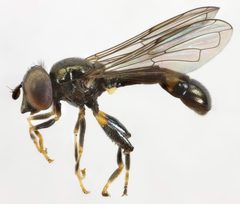
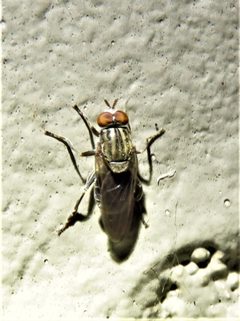
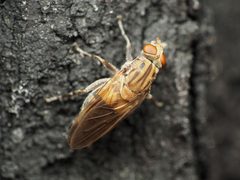
2Brachyopini is a tribe of hoverflies (Diptera: Syrphidae) in the Eristalinae. The tribe contains approximately 20 divided into two subtribes: Brachyopina and Spheginina. Members are generally darker and less colorful than many other hoverflies, though some genera such as Chrysogaster exhibit metallic luster. The tribe has been recorded across Europe including the Iberian Peninsula and Ukraine, with new continuing to be described.
Pronunciation
How to pronounce Brachyopini: /ˌbrækiˈɒpɪnaɪ/
These audio files are automatically generated. While they are not always 100% accurate, they are a good starting point.
Identification
Brachyopini can be distinguished from other hoverfly tribes by their generally darker, less colorful coloration compared to the often bright yellow-and-black patterns seen in many Syrphidae. Some within the tribe, particularly Chrysogaster, display metallic blue or green luster. The tribe comprises two subtribes: Brachyopina (including Brachyopa, Chrysogaster, Orthonevra, and related genera) and Spheginina (including Sphegina, Neoascia, and related genera).
Images
Habitat
Members of this tribe occupy two primary types. such as Brachyopa are associated with sap runs on trees, where larvae develop. Other genera inhabit boggy or wetland areas where larvae are semiaquatic.
Distribution
The tribe has been documented across Europe including the Iberian Peninsula (Spain), Ukraine, Norway, and Germany. Specific locality records include Jaén (Sierra de Cazorla), Alicante (Alcoy, Font Roja), Granada (Sierra Nevada), and Valencia (Chelva) in Spain.
Diet
Larvae feed on decaying organic matter. In Brachyopa, larvae consume decaying sap. In bog-dwelling , larvae feed on decaying organic matter in semiaquatic conditions.
Ecological Role
are . The tribe contributes to services including pollination, consistent with broader hoverfly characteristics.
Similar Taxa
- other Syrphidae tribesBrachyopini differs from most other hoverfly tribes in its generally darker, less colorful appearance rather than the typical yellow-and-black mimicry patterns.
More Details
Taxonomic subdivisions
The tribe is divided into two subtribes: Brachyopina (Brachyopa, Cacoceria, Chromocheilosia, Chrysogaster, Chrysosyrphus, Cyphipelta, Hammerschmidtia, Hemilampra, Lejogaster, Lepidomyia, Liochrysogaster, Melanogaster, Myolepta, Orthonevra, Riponnensia) and Spheginina (Austroascia, Chamaesphegina, Neoascia, Sphegina).
Recent taxonomic work
A 2022 revision of five Brachyopini from the Iberian Peninsula described two new (Melanogaster baetica and Orthonevra arcana), reinstated Chrysogaster coerulea as valid, and provided the first Iberian record of Chrysogaster rondanii.
Sources and further reading
- BugGuide
- Wikipedia
- iNaturalist taxon
- NCBI Taxonomy
- Catalogue of Life
- New Records of Hoverflies (Diptera, Syrphidae) from Ukraine. II. Brachyopini and Merodontini
- Assessing the Diversity and Systematics of Brachyopini Hoverflies (Diptera: Syrphidae) in the Iberian Peninsula, Including the Descriptions of Two New Species.