
Spheginina
Williston, 1887
Genus Guides
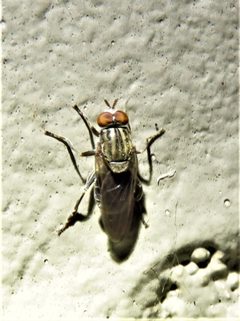
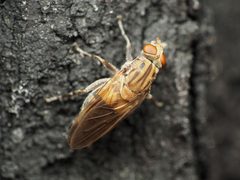
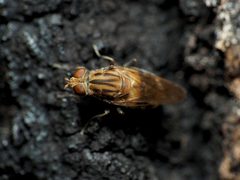
2Spheginina is a subtribe of hoverflies ( Syrphidae) within the tribe Brachyopini. It comprises four recognized : Austroascia, Chamaesphegina, Neoascia, and Sphegina. These flies are generally small to medium-sized hoverflies with larvae that develop in decaying wood or sap flows. The subtribe has a primarily Holarctic distribution with some representatives in the Neotropics.
Pronunciation
How to pronounce Spheginina: //ˌsfɛɡɪˈniːnə//
These audio files are automatically generated. While they are not always 100% accurate, they are a good starting point.
Identification
Members of Spheginina can be distinguished from other hoverfly subtribes by a combination of characters including reduced wing venation with a characteristic spurious , and often a distinctive elongate or flattened . The Sphegina, the largest in the subtribe, is particularly noted for its slender, -like appearance with a constricted waist. Separation from related subtribes within Brachyopini requires examination of genitalic characters and larval .
Images
Habitat
Larvae of Spheginina are associated with moist, decaying wood, particularly in forested environments. They have been reared from sap runs on living trees and from decaying heartwood in stumps and logs. are typically found in woodland , often near larval development sites.
Distribution
Seasonality
activity varies by and region. In temperate zones, most fly from late spring through summer, with some extending into early autumn. Peak activity generally coincides with the availability of floral resources and suitable larval .
Life Cycle
Larvae develop in decaying wood, particularly in moist, fungus-inhabited substrates such as sap runs and rotting heartwood. The larval stage is the primary feeding and growth phase, with occurring within the wood substrate. emerge to feed on nectar and pollen, though specific floral associations remain poorly documented for most .
Behavior
are and visit flowers for nectar and pollen. They are capable of hovering characteristic of the Syrphidae. Larvae are saproxylic, feeding on microorganisms in decaying wood and sap flows.
Ecological Role
Larvae contribute to wood decomposition and nutrient cycling in forest . may serve as , though their specific contributions to plant pollination have not been quantified.
Human Relevance
No direct economic importance. The subtribe is of interest to dipterists and conservation biologists due to its association with old-growth forest and saproxylic .
Similar Taxa
- Other Brachyopini subtribesShare the tribe Brachyopini but differ in genitalic , larval preferences, and details of wing venation. Spheginina is distinguished by its characteristic larval association with decaying wood and sap flows.
- XylotiniAnother tribe of Eristalinae with saproxylic larvae; Xylotini are generally more robust with different wing venation patterns and larval development in different types of decaying wood.
More Details
Taxonomic history
The subtribe was established by Williston in 1887. The classification of Brachyopini has undergone revision, with Spheginina maintained as a distinct lineage based on larval and characters.
Larval biology
The saproxylic larval habit is a defining feature of the subtribe. Larvae possess adaptations for life in wet wood, including telescopic breathing tubes in some . This makes them indicators of old-growth forest conditions.
Conservation concern
Several , particularly in the Sphegina, are associated with mature forest that are declining in many regions. The group may be vulnerable to forestry practices that remove dead wood and old trees.