
Neoascia
Williston, 1886
Fen Flies
Species Guides
2- Neoascia metallica(Double-banded Fen Fly)
- Neoascia tenur(Black-kneed Fen Fly)
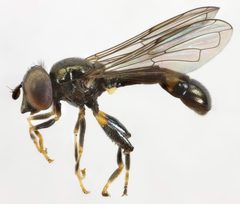
Neoascia is a of small hoverflies (Syrphidae) characterized by black and yellow or mostly black coloration with a narrow, -like waist between the and . are typically found in damp, low-vegetation including fens, marshes, and pond margins. The genus has a Holarctic distribution with records across Northern and Central Europe, Western Siberia, and Scandinavia. Larvae are saprophagous, developing in wet organic matter such as decaying vegetation, compost, and wet manure associated with aquatic margins.
Pronunciation
How to pronounce Neoascia: /ˌni.oʊˈæs.si.ə/
These audio files are automatically generated. While they are not always 100% accurate, they are a good starting point.
Identification
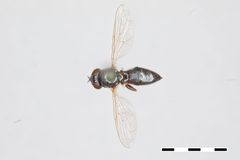
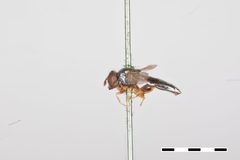
distinguished by narrow, constricted near creating -like waist; females possess club-shaped lower abdomen while males have more streamlined form. Neoascia interrupta specifically identified by yellow spots on edges of abdominal tergite 4. Small body size relative to other syrphid .
Images
Habitat
Vegetation surrounding ponds, marshes, ditches and canals; fens; semi-brackish ditches in coastal areas; damp places among low herbage. Larval in wet manure, compost, and decaying vegetation associated with banks of ponds and ditches.
Distribution
Northern and Central Europe; Western Siberia; Scandinavia (Denmark, Norway, Sweden); UK (most frequent in East of England, also recorded across Southern England, Wales and South Yorkshire); Luxembourg.
Seasonality
active April to September, with peak activity in June.
Life Cycle
Larvae flattened without oral hooks; possess short spiracular process or 'tail'. Development occurs in wet organic substrates. -specific breeding records limited; -level larval records indicate saprophagous habit in decaying vegetation and wet manure.
Behavior
fly slowly among low-growing flowers. Frequent visitors to flowers including forget-me-nots (Myosotis) and fool's watercress (Apium nodiflorum).
Ecological Role
Frequent flower visitors; likely contributes to pollination of low-growing wetland flora.
Human Relevance
Neoascia unifasciata listed as Endangered on European Red List of hoverflies and IUCN Red List; subject to conservation action plans in Luxembourg. Neoascia interrupta added to UK list in 1981.
Similar Taxa
- Other SyrphidaeNarrow waist distinguishes Neoascia from most other hoverfly which typically have broader, unconstricted .
- Neoascia interrupta vs. congenersYellow spots on edges of abdominal tergite 4 distinguish N. interrupta from other Neoascia .