
Polyphylla hammondi
LeConte, 1856
Hammond's Lined June Beetle
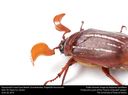
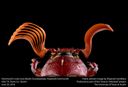
Polyphylla hammondi is a large scarab beetle in the Melolonthinae. measure 24.8–35.5 mm in length and are highly variable in coloration with almost no stripes or mottling. Males possess greatly enlarged, fan-like used to detect female . The is strongly associated with sand dune across the Great Plains and southwestern North America. Males are attracted to lights at night and exhibit distinctive splayed-antennae when actively searching for females. Females are rarely encountered and may be flightless.

Pronunciation
How to pronounce Polyphylla hammondi: /ˌpɒlɪˈfɪlə ˈhæməndi/
These audio files are automatically generated. While they are not always 100% accurate, they are a good starting point.
Identification
Distinguished from other Polyphylla by the near absence of stripes or mottling on the and pronotum. The highly variable coloration and large size (24.8–35.5 mm) separate it from smaller, more patterned . Males are readily identified by their spectacularly enlarged, splayed . In the field, best identified by (sand dunes) combined with large size and reduced patterning.
Images
Habitat
Strongly associated with sand dune systems and sandy . Documented from sand hills and dunes in the Great Plains and southwestern North America. active in open sandy areas with sparse vegetation.
Distribution
Nearctic region: Canada (Alberta, Manitoba, Saskatchewan), United States (Arizona, Arkansas, California, Colorado, Illinois, Indiana, Iowa, Kansas, Louisiana, Minnesota, Mississippi, Missouri, Montana, Nebraska, Nevada, New Mexico, North Dakota, Oklahoma, South Dakota, Texas, Utah, Wisconsin, Wyoming), and Mexico (Aguascalientes, Chihuahua, Coahuila, Durango, Hidalgo, Jalisco, Morelos, Oaxaca, Puebla, San Luis Potosí).
Seasonality
active in summer, with peak activity in June. Males fly in late afternoon and evening, with light attraction continuing after dusk. Activity ceases shortly to several hours after sunset.
Life Cycle
Larval development presumably underground, feeding on roots like other Melolonthinae. Specific plants unknown. Females likely burrow into sand and may be flightless, remaining near the ground surface.
Behavior
Males exhibit distinctive -tracking : are held splayed outward to maximize detection of female-emitted . Males fly rapidly upwind in zig-zag patterns (osmoclinotactic orientation) to locate females. Multiple males are attracted to individual females. Males produce loud, buzzing and characteristically thump to the ground when arriving at light sources. Antennal splaying behavior diminishes and ceases after sunset as female pheromone release stops.
Ecological Role
are and attracted to light. Presumed root-feeding larvae contribute to soil nutrient cycling in sandy . Part of the sand dune including other or restricted arthropods.
Human Relevance
Of interest to coleopterists due to large size, spectacular male , and association with distinctive sand dune . Historical collecting site at Sand Hills State Park, Kansas has been popular with entomologists since the late 1800s.
Similar Taxa
- Polyphylla decemlineataSimilar large size and male antennal structure, but P. decemlineata has distinct elytral stripes (ten-lined pattern) versus the reduced patterning of P. hammondi
- Phyllophaga spp.Similar body form and size, but Phyllophaga males lack the spectacularly enlarged, fan-like of Polyphylla; also active earlier in the season and in broader
- Polyphylla monahansensisAnother sand dune with overlapping range in Texas and New Mexico; distinguished by different elytral patterning and or parapatric distribution
More Details
Male antennal behavior
The splayed- posture in males is an active searching for female . This behavior has a narrow temporal window and is affected by environmental cues including temperature. Males arriving at lights immediately after sunset display this behavior most prominently, but cease within hours as female pheromone release stops.
Female rarity
Females of P. hammondi and other sand-dwelling Polyphylla are exceptionally rarely collected. This is likely due to reduced or absent capability and burrowing in sand. The best method to locate females is to track arriving males to their point of ground contact.