
Polyphylla monahansensis
Hardy, 1978
Monahans ten-lined June beetle, Monahan's ten-lined June beetle
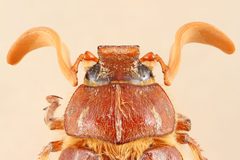
Polyphylla monahansensis is a large scarab beetle to sand dune of the southwestern United States and adjacent Mexico. Like other members of the , males possess greatly enlarged, fan-like used to detect female . The is and attracted to lights, with males actively searching for flightless females after sunset. It is one of several Polyphylla species specialized to sandy environments in this region.
Pronunciation
How to pronounce Polyphylla monahansensis: //pəˌlɪfɪlə ˌmɒnəˈhænˌsɛnsɪs//
These audio files are automatically generated. While they are not always 100% accurate, they are a good starting point.
Identification
Males can be distinguished from similar Polyphylla by the combination of large body size, ten-lined elytral pattern, and greatly enlarged, that are held splayed when actively searching. Females are flightless, smaller-antennaed, and rarely encountered; they are best located by searching areas where males are concentrated. The species is larger than P. pottsorum, with which it co-occurs at some localities. Specific distinguishing features from other ten-lined Polyphylla species require examination of genitalia or other subtle morphological characters.
Images
Habitat
Sand dune , including active and stabilized dunes with sparse vegetation. Associated with sandy soils suitable for larval development.
Distribution
United States: New Mexico and Texas. Mexico: Chihuahua. Records are concentrated in the Mescalero Sand Dunes region of southeastern New Mexico and the Kermit Sand Dunes area of west Texas.
Seasonality
have been observed in June. Activity is likely triggered by rainfall sufficient to support vegetation and .
Diet
Larvae feed on roots of plants growing in sandy soils. may feed on foliage or pollen, though specific food plants are not documented for this .
Life Cycle
Complete with soil-dwelling larval stages. Larvae are typical white feeding on plant roots. occurs in soil. emerge in response to environmental conditions, particularly rainfall. Females are flightless and remain near the ground surface.
Behavior
Males fly at dusk and are attracted to lights. They actively search for females by detecting with their enlarged , which are held in a distinctive splayed posture during search. Males have been observed hitting the ground or vegetation when locating females. Activity ceases shortly after sunset.
Ecological Role
Larvae contribute to soil aeration and nutrient cycling through root feeding and burrowing. serve as prey for . The is a component of sand dune .
Human Relevance
Attracted to artificial lights, occasionally encountered by entomologists and naturalists. No significant economic importance documented.
Similar Taxa
- Polyphylla pottsorumSmaller sympatric found in same sand dune ; distinguished by smaller size and subtle morphological differences
- Polyphylla hammondiSimilar large size and antennal structure, but occurs in Great Plains sand dunes rather than southwestern deserts
- Polyphylla decemlineataShares ten-lined elytral pattern and general , but occurs in different geographic region and type