Alaus
Eschscholtz, 1829
eyed click beetles, eyed elaters
Species Guides
6- Alaus lusciosus(Texas Eyed Click Beetle)
- Alaus melanops(Western Eyed Click Beetle)
- Alaus myops(Small-eyed Click Beetle)
- Alaus oculatus(Eastern Eyed Click Beetle)
- Alaus patricius(Caribbean Eyed Click Beetle)
- Alaus zunianus(Zuni Click Beetle)
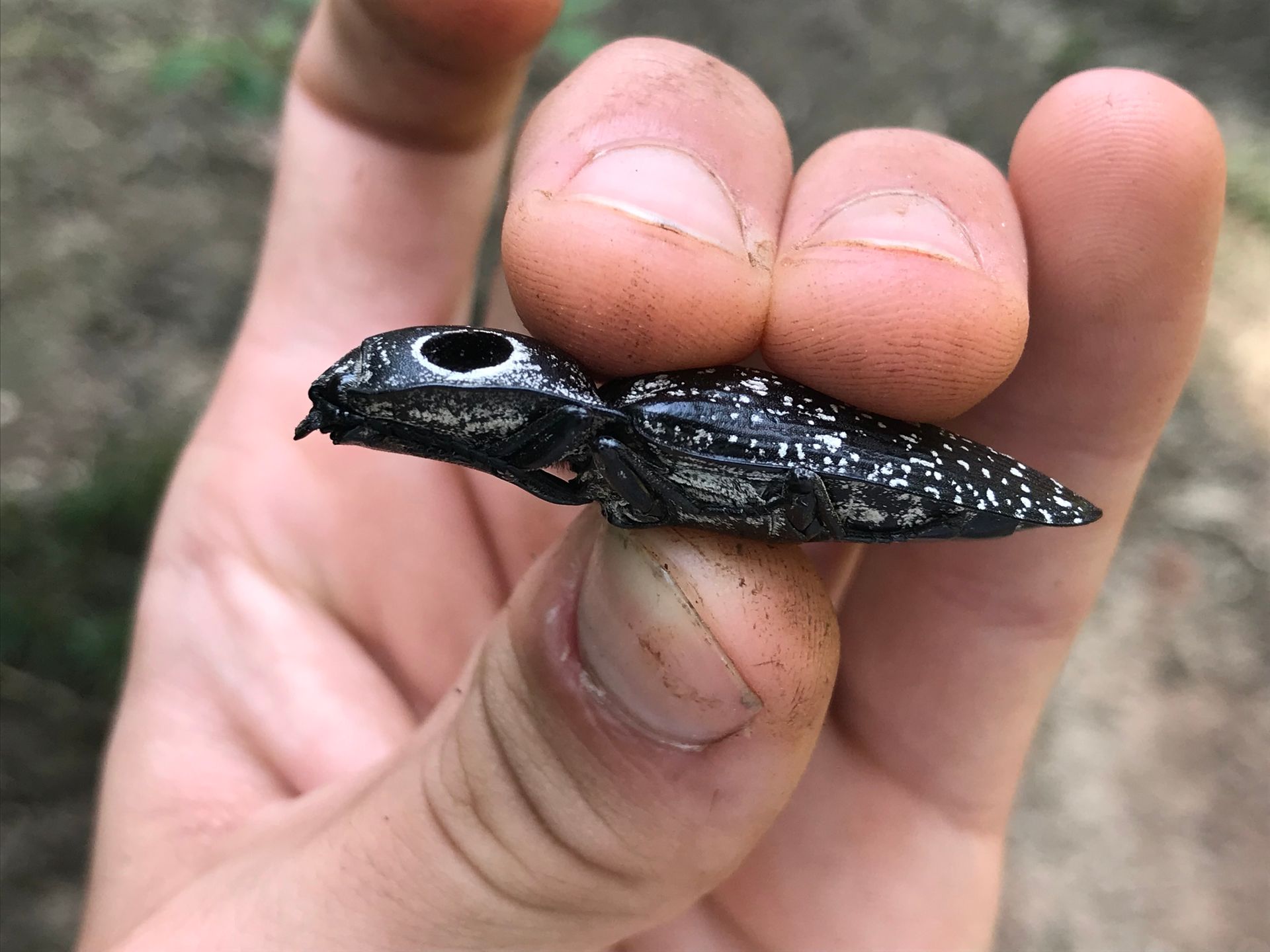
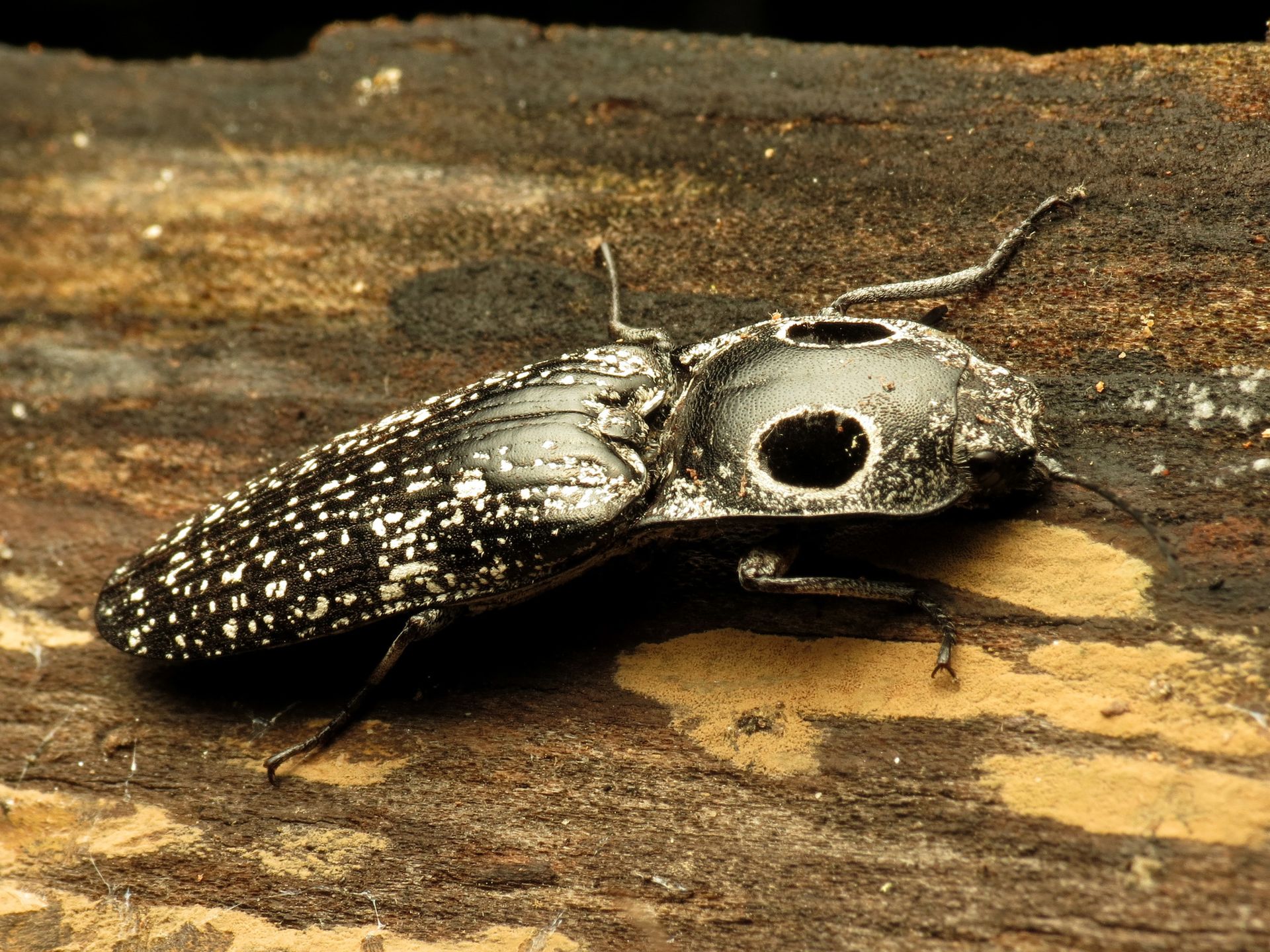
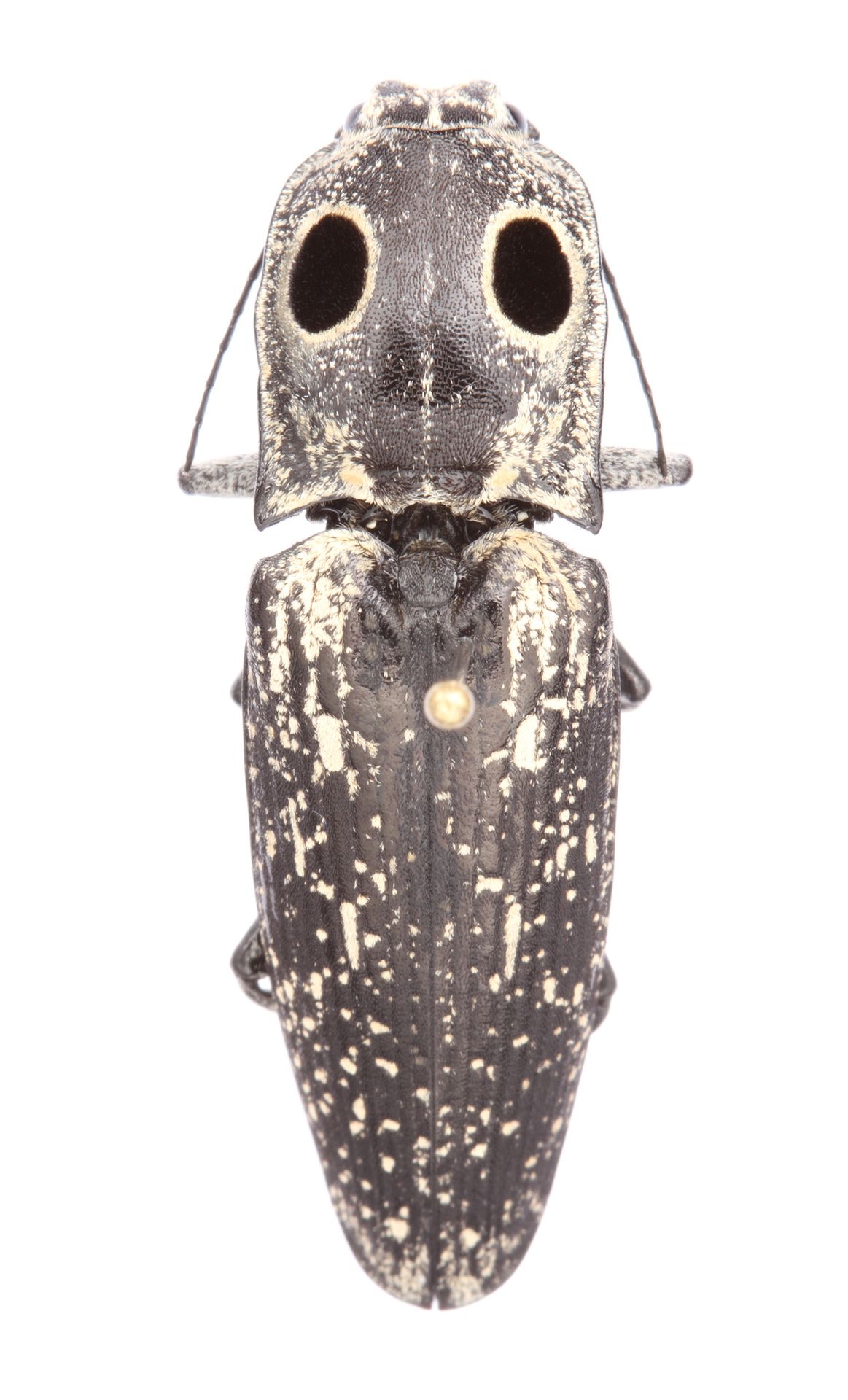
Alaus is a of large click beetles ( Elateridae) distinguished by prominent false eyespots on the pronotum. These eyespots—black patches surrounded by white rings—serve as defensive mimicry to startle . possess a unique clicking mechanism: a prosternal spine that snaps into a mesosternal notch, producing an audible click that can launch the into the air to escape predators or right itself when overturned. The genus includes approximately six recognized North American , most notably Alaus oculatus, the eyed click beetle. Unlike most click beetles whose larvae feed on decaying wood, Alaus larvae are obligate predators of other insects beneath bark.
Pronunciation
How to pronounce Alaus: /ˈæ.laʊs/
These audio files are automatically generated. While they are not always 100% accurate, they are a good starting point.
Identification
Distinguished from other click beetles by the large, conspicuous eyespots on the pronotum. Among Alaus : A. oculatus has the largest and most prominent eyespots with bold black-and-white contrast; A. myops (blind click beetle) has much reduced eyespots and is predominantly slate gray; A. melanops resembles A. myops but occurs in western North America where ranges do not overlap; A. zunianus has rounder eyespots and ivory/beige mottling; A. lusciosus is nearly identical to A. zunianus but ranges from Texas to Kansas rather than Arizona. Distinguished from other large beetles with eyespots (e.g., some cerambycids) by the click mechanism and elaterid body form.
Images
Appearance
Large, robust beetles with elongated, bullet-shaped bodies. Most striking feature is the pair of prominent false eyespots on the pronotum—circular to oval black patches surrounded by narrow white rings, mimicking vertebrate . True are small and located on the to the eyespots. Body surface covered with mottled black and white or gray providing cryptic bark-matching coloration. range from 19–44 mm in length depending on . serrate. surface bears the clicking apparatus: a large spine on the that fits into a groove on the mesosternum.
Habitat
Associated with dead and decaying wood. found on logs, stumps, and tree trunks where bark texture provides camouflage. Larvae inhabit spaces beneath bark of fallen trees in early stages of decomposition, where they hunt other insects. Some adults attracted to aromatic solvents and fresh paint, which mimic scents of freshly cut or damaged trees.
Distribution
North America, with distributed across most of the United States and southern Canada. A. oculatus: eastern North America from Quebec and Ontario south to Texas and west to the Dakotas and eastern Colorado. A. myops: eastern and central regions from Quebec to Florida and west to Manitoba, Minnesota, Kansas, and Texas, most common in southern pine forests. A. melanops: western North America including British Columbia, Oregon, Colorado, California, and New Mexico. A. zunianus: Arizona. A. lusciosus: Texas to southern Colorado, Oklahoma, and Kansas. A. oklahomensis: Oklahoma. A. patricius, A. plebejus, A. pantherinus: additional regional distributions.
Seasonality
active primarily late spring through summer, peaking in June and July. Some adults may overwinter in cavities in rotten wood and can be encountered year-round. Larvae present beneath bark throughout the year, entering winter torpor in colder months.
Life Cycle
Complete . laid in or near decaying wood. Larvae are elongate, cylindrical, and heavily sclerotized with powerful . They inhabit spaces beneath bark of fallen trees, where they actively hunt and consume larvae and pupae of other beetles, fly larvae, and caterpillars. After completing development, larvae pupate in wood. emerge and may be found on bark surfaces. Some adults reportedly overwinter in wood cavities.
Behavior
exhibit (playing dead) when disturbed, lying motionless with legs and appressed to the body. When grasped or overturned, they activate the clicking mechanism: arching the and pronotum to engage the prosternal spine against the mesosternal notch, then releasing stored elastic energy to snap the spine into the notch with an audible click. This can launch the several body lengths into the air; tumbling during results in approximately 50% chance of landing upright. Multiple attempts may be required to right themselves. Adults are strong fliers but appear relatively clumsy walkers. or activity patterns in some .
Ecological Role
Larvae function as apex in the subcortical (beneath-bark) of decaying wood, regulating of other insects. As predators of larvae that consume wood, they may indirectly influence decomposition rates. may contribute to nutrient cycling through association with decaying wood .
Human Relevance
Occasionally encountered by homeowners and outdoor when handling firewood or encountering beetles attracted to fresh paint or solvents. Harmless to humans despite large size and startling appearance; do not bite unless handled extremely roughly. Sometimes mistaken for dangerous insects due to size and eyespots. Of interest to entomologists and naturalists for their remarkable defensive adaptations. Subject of biomechanical research on jumping mechanisms.
Similar Taxa
- PyrophorusBioluminescent click beetles in same ; lack eyespots but share clicking mechanism and habits; produce light from photic organs
- AgriotesCommon click beetles in same ; much smaller, lack eyespots, larvae are wireworms that damage crops rather than predatory
- Anoplophora glabripennisAsian longhorned beetle; large size and mottled pattern may cause confusion, but has extremely long and lacks both eyespots and clicking mechanism
- Dynastes tityusEastern Hercules beetle; large size and mottled coloration may invite comparison, but has prominent horns (males) and completely different body form without eyespots
More Details
Biomechanics of clicking
Research by Ribak & Weihs (2011) and Ribak et al. (2012) indicates the click mechanism evolved primarily for vertical jumping rather than escape. Jump height is dramatically reduced (by ~75%) on soft substrates like leaves, suggesting beetles cannot moderate force and simply jump 'as high as possible,' relying on random chance for upright landing.
Chemical ecology research
Alaus zunianus has been subject of research by USDA-ARS scientist Jacqueline Serrano, who identified attractants for this and related click beetle .
Etymology
The name 'Alaus' and 'elater' derive from Greek 'elater' meaning 'that which drives away,' referring to the 's startling defensive .
Sources and further reading
- BugGuide
- Wikipedia
- GBIF taxonomy match
- iNaturalist taxon
- NCBI Taxonomy
- Catalogue of Life
- Barking up the right tree for the eyed elater, Alaus oculatus — Bug of the Week
- Bug Eric: Eyed Elaters
- Pop! goes the beetle | Beetles In The Bush
- Finding Pheromones: How One Entomologist Puts Discoveries to Work in Pest Management
- Archive — Bug of the Week