
Xyleborinus gracilis
Wood & Bright, 1992
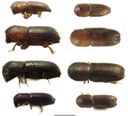
Xyleborinus gracilis is a of ambrosia beetle in the Curculionidae, Scolytinae. It was described by Wood & Bright in 1992. As a member of the ambrosia beetle tribe Xyleborini, it engages in fungus-farming , excavating galleries in wood and cultivating symbiotic fungi as a food source for its larvae. The species has been documented across multiple continents including North America, South America, Africa, the Caribbean, and Middle America.
Pronunciation
How to pronounce Xyleborinus gracilis: /zɪˌlɛbɔːˈraɪnəs ˈɡrækɪlɪs/
These audio files are automatically generated. While they are not always 100% accurate, they are a good starting point.
Identification
Xyleborinus gracilis belongs to the Xyleborinus, which is distinguished from related ambrosia beetle genera by specific morphological features of the elytral declivity and . Within Xyleborinus, -level identification requires examination of minute details of the pronotum, elytral , and declivital armature. Accurate identification typically necessitates taxonomic keys and microscopic examination; field identification to species is generally not reliable.
Images
Habitat
Xyleborinus gracilis inhabits forested and wooded environments where suitable trees are available. As an ambrosia beetle, it requires dead or dying wood for gallery excavation and fungal . The has been recorded from Brazil (states of Espírito Santo, Mato Grosso do Sul, Paraná, Santa Catarina, and São Paulo) and is present across Africa, the Caribbean, Middle America, and North America, suggesting adaptability to diverse forest types and climates.
Distribution
Documented from Brazil (Espírito Santo, Mato Grosso do Sul, Paraná, Santa Catarina, São Paulo); present in Africa, Caribbean, Middle America, and North America. The broad geographic range indicates either native distribution across multiple continents or human-mediated .
Diet
Xyleborinus gracilis feeds on ambrosia fungi cultivated within its wood galleries. The female inoculates gallery walls with fungal spores, and both adults and larvae consume the resulting fungal growth. The beetles do not consume wood directly.
Life Cycle
The follows the typical pattern of ambrosia beetles: females initiate galleries in dead or dying wood, introduce symbiotic fungi, and lay . Larvae develop within the gallery system, feeding on cultivated fungi. Development occurs entirely within the wood, with new emerging to disperse and establish new galleries. Specific details of developmental timing and voltinism for this are not documented.
Behavior
Xyleborinus gracilis exhibits the characteristic ambrosia beetle of fungus farming. Females bore into wood and excavate extensive gallery systems, inoculating the walls with fungal . The beetles are attracted to ethanol and other volatiles released by stressed, dying, or recently dead trees. occurs through of females to new material.
Ecological Role
As a primary colonizer of dead wood, Xyleborinus gracilis contributes to decomposition and nutrient cycling in forest . Its fungus-farming activity accelerates wood decay by introducing decay fungi. The may fungal spores, including both its cultivated ambrosia fungi and incidental pathogenic fungi encountered in galleries.
Human Relevance
Xyleborinus gracilis has potential significance in forestry and agriculture due to its wood-boring habit. While not specifically documented as a major pest, ambrosia beetles in this can attack stressed or dying trees and may contribute to tree decline. The ' presence in multiple continents, including North America, suggests possible economic relevance in timber and fruit production systems.
Similar Taxa
- Xyleborinus saxeseniiAnother Xyleborinus frequently associated with fruit trees; distinguished by subtle differences in declivital and size.
- Xylosandrus germanusA related ambrosia beetle in tribe Xyleborini that attacks similar ; differs in pronotal and elytral , and is generally larger.
- Xylosandrus crassiusculusGranulate ambrosia beetle with overlapping range; distinguished by more granulate pronotum and different declivity structure.
More Details
Taxonomic Note
Xyleborinus gracilis was described by Wood & Bright in 1992. The Xyleborinus is part of the diverse ambrosia beetle tribe Xyleborini, one of the most -rich groups within Scolytinae. The specific epithet 'gracilis' (Latin for 'slender') likely refers to body form, though the original description should be consulted for confirmation.
Data Limitations
Detailed biological information for Xyleborinus gracilis specifically is sparse in the available literature. Much of what is inferred about its derives from general knowledge of Xyleborinus characteristics and ambrosia beetle . Targeted research on this ' specific preferences, economic impact, and invasion biology has not been identified in the provided sources.
Sources and further reading
- BugGuide
- GBIF taxonomy match
- iNaturalist taxon
- NCBI Taxonomy
- Catalogue of Life
- Grasshopper Collections and Survey
- Grasshoppers of Colorado
- Bichos Argentinos #2 – Pseudomyrmex sp. | Beetles In The Bush
- What Role, If Any, Do Ambrosia Beetles Play in Rapid Apple Decline?
- Traffic Jam Treehoppers | Beetles In The Bush
- Why two prehistoric sharks found in Ohio got new names