
Ambrosiophilus atratus
(Eichhoff, 1875)
Black Bark Weevil
Ambrosiophilus atratus is a non-native ambrosia beetle in the weevil Curculionidae, Scolytinae. First recorded in Europe in Slovenia in 2017 during monitoring surveys for ambrosia beetles. The is distinguished by pronounced asperities covering the entire pronotum surface. Native to North America and Southern Asia, it has established in Europe through human-mediated introduction.
Pronunciation
How to pronounce Ambrosiophilus atratus: //æmˌbroʊ.siˈɒfɪləs əˈtreɪtəs//
These audio files are automatically generated. While they are not always 100% accurate, they are a good starting point.
Identification
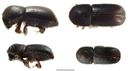
Distinguished from other European ambrosia beetles by the complete coverage of the pronotum with asperities. This character separates it from superficially similar in the region. Identification confirmed through morphological comparison with illustrated keys (Rabaglia et al. 2006; Faccoli et al. 2009).
Images
Appearance
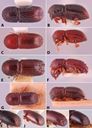
Small ambrosia beetle distinguished by dense asperities (small raised projections) covering the entire surface of the pronotum. Typical scolytine body plan with compact, cylindrical form adapted for burrowing in wood.
Habitat
Deciduous temperate forests. Associated with woody substrates suitable for ambrosia beetle .
Distribution
Native to North America and Southern Asia. First European record from Slovenia (Klavže, 46° 09′ 39″ N, 13° 48′ 7″ E) in 2017. Non-native established in Europe.
Diet
Fungus-farming ambrosia beetle. and larvae feed on symbiotic ambrosia fungi cultivated within wood galleries, not on wood tissue itself.
Life Cycle
Typical ambrosia beetle involving gallery excavation in wood, inoculation with ambrosia fungi, and larval development within fungal gardens. Specific details for this not documented.
Behavior
Attracted to ethanol-baited traps. Exhibits typical of ambrosia beetles, establishing in new regions through human-mediated transport of wood products.
Ecological Role
Non-native . As an ambrosia beetle, introduces symbiotic fungi into trees and may contribute to tree stress or mortality, particularly in novel environments without co-evolved host defenses.
Human Relevance
Subject of biosecurity monitoring due to potential. Detection in Slovenia prompted targeted surveillance to assess distribution and spread. Represents emerging threat to European forest health through ambrosia fungus introduction.
Similar Taxa
- Ambrosiodmus rubricollisCo-occurring non-native ambrosia beetle detected simultaneously in Slovenia; distinguished by different pronotal and coloration
- Xylosandrus germanusTarget of original monitoring program that led to A. atratus detection; similar size and but distinct pronotal and elytral characters
More Details
Detection circumstances
Discovered incidentally during routine monitoring for Xylosandrus germanus in western Slovenia, highlighting the value of general surveillance programs for detecting unexpected .
Sources and further reading
- BugGuide
- GBIF taxonomy match
- iNaturalist taxon
- NCBI Taxonomy
- Bug Eric: Caught on Video: Prionyx atratus
- Tabanidae | Beetles In The Bush
- Brazil Bugs #4 – Mais dos percevejos | Beetles In The Bush
- The first record of two non-native ambrosia beetles in Slovenia: Ambrosiodmus rubricollis (Eichhoff, 1875) and Ambrosiophilus atratus (Eichhoff, 1875) (Coleoptera: Curculionidae, Scolytinae)