
Hylesinus aculeatus
Say, 1824
eastern ash bark beetle
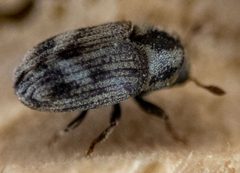
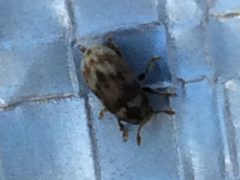
Hylesinus aculeatus, commonly known as the eastern ash bark beetle, is a of bark beetle in the Curculionidae. It is one of approximately 20 species in the Hylesinus, which are primarily associated with ash trees (Fraxinus spp.). The species is native to North America and has been documented across a broad geographic range from Canada through the United States. Like other bark beetles in this genus, it is likely a phloem feeder that develops under the bark of trees, though specific biological details remain poorly documented in published literature.
Pronunciation
How to pronounce Hylesinus aculeatus: /haɪˈliːsɪnəs əˌkjʊˈleɪtəs/
These audio files are automatically generated. While they are not always 100% accurate, they are a good starting point.
Identification
Hylesinus aculeatus can be distinguished from other North American bark beetles by its association with ash (Fraxinus) and its placement in the Hylesinus, characterized by the presence of crenulate (scalloped or notched) elytral declivity. The specific epithet 'aculeatus' (meaning 'prickly' or 'spiny') likely refers to some aspect of the elytral armature or declivital structure. Accurate identification to level typically requires examination of microscopic features of the elytral declivity and genitalia.
Images
Habitat
Found in forested and riparian where ash trees (Fraxinus spp.) occur. Specific microhabitat requirements include the inner bark (phloem) and cambium region of ash trunks and branches.
Distribution
North America, with records from Canada (Alberta, Manitoba, New Brunswick, Nova Scotia) and throughout the United States. The has a transcontinental distribution across northern and eastern North America.
Diet
Larvae feed on phloem tissue of ash trees (Fraxinus spp.). may also feed on phloem, though specific adult feeding habits are not well documented.
Host Associations
- Fraxinus - larval primary ; specific not documented in available sources
- Fraxinus americana - white ash, inferred from association
- Fraxinus pennsylvanica - green ash, inferred from association
Life Cycle
Typical of bark beetles: laid in galleries excavated in phloem, larvae feed in radiating galleries, pupate in outer bark or wood, and emerge through exit holes. Specific timing and number of per year not documented for this .
Ecological Role
As a phloem-feeding bark beetle, contributes to nutrient cycling in forest through the consumption of inner bark tissues. May serve as prey for woodpeckers and other . Potential role in ash tree mortality during , though not documented as a primary pest .
Human Relevance
Not documented as a significant economic pest. The congeneric Hylesinus fraxini and Hylesinus crenatus are more notable pests of ash in Europe. The potential impact of H. aculeatus on North American ash has not been extensively studied, particularly in the context of emerald ash borer (Agrilus planipennis) invasion.
Similar Taxa
- Hylesinus fraxiniEuropean with similar and association; distinguished by geographic range
- Hylesinus crenatusEuropean ; distinguished by geographic range and subtle morphological differences in declivital structure
- Other Scolytinae on ashNumerous other bark beetles (e.g., Scolytus spp.) utilize ash; distinguished by -level characters of Hylesinus including crenulate declivity
- Agrilus planipennisEmerald ash borer, a destructive pest of ash; distinguished by (Buprestidae vs. Curculionidae), metallic coloration, and larval gallery patterns
More Details
Taxonomic Note
The Hylesinus was formerly placed in the , which is now treated as a (Scolytinae) within Curculionidae. The term 'crenulate bark beetle' in common usage refers to this distinctive elytral feature.
Research Gaps
Despite being described in 1824, H. aculeatus remains poorly studied. No dedicated studies, range assessments, or economic impact evaluations were found in the reviewed literature. Most information is inferred from -level characteristics or congeneric .
Sources and further reading
- BugGuide
- Wikipedia
- GBIF taxonomy match
- iNaturalist taxon
- NCBI Taxonomy
- Catalogue of Life
- A Brazilian longhorned beetle – Oxymerus aculeatus | Beetles In The Bush
- Mallow munchers: Mallow sawfly, a.k.a. Hibiscus sawfly, Atomacera decepta — Bug of the Week
- Archives | Beetles In The Bush
- Bibliography | Beetles In The Bush
- Mallow munchers: Mallow sawfly, Atomacera decepta — Bug of the Week
- From the Bug of the Week Mailbag: Daddy-longlegs, the most venomous of all spiders? Opilionids and Pholcid spiders — Bug of the Week