
Mecas bicallosa
Martin, 1924
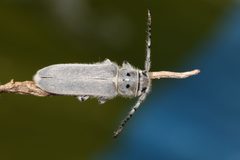
Mecas bicallosa is a of longhorned beetle in the Cerambycidae, first described by Martin in 1924. The species occurs in North and Central America. Like other members of the Mecas, it is associated with plants in the sunflower family (Asteraceae), where larvae bore into stems and roots.
Pronunciation
How to pronounce Mecas bicallosa: /mɛˈkɑs baɪˈkæləsə/
These audio files are automatically generated. While they are not always 100% accurate, they are a good starting point.
Images
Distribution
North America and Central America. Distribution records include British Columbia, Canada.
Diet
Larvae feed internally on plant stems and roots. Based on congeneric , plants are likely in the Asteraceae.
Host Associations
- Asteraceae - larval Inferred from -level association; specific for M. bicallosa not documented
Life Cycle
Complete with , larva, pupa, and stages. Larvae are stem and root borers. Adults likely emerge in summer.
Behavior
females girdle stems to facilitate larval development, a trait observed in congeneric .
Ecological Role
Phytophagous insect; larvae act as stem and root borers in herbaceous plants. May contribute to plant mortality or lodging in agricultural settings.
Human Relevance
Related in the Mecas are occasional pests of cultivated sunflowers, causing stalk girdling and lodging. Specific economic impact of M. bicallosa not documented.
Similar Taxa
- Mecas pergrataCongeneric with similar and ; both are gray longhorned beetles in the 6-12 mm range associated with Asteraceae
- Mecas femoralisCongeneric with similar appearance and preferences; to Florida but overlaps in general
- Dectes texanusAnother longhorned beetle pest of sunflowers with similar larval boring and gray coloration; distinguished by longer and different girdling pattern
- Ataxia hubbardiLonghorned beetle also associated with sunflowers; does not girdle stems and uses wild sunflowers as alternate
More Details
Taxonomic history
Described by Martin in 1924. The specific epithet 'bicallosa' refers to two callosities or raised structures, likely on the or pronotum.
Research gaps
Specific plants, larval , and detailed distribution within the reported range remain undocumented in primary literature.