
Mecas pergrata
(Say, 1824)
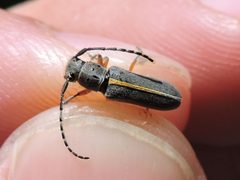
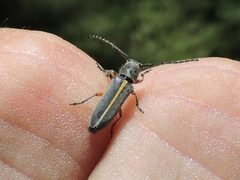
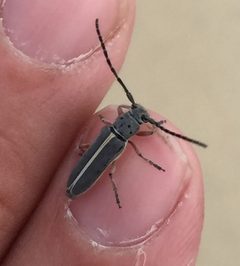
Mecas pergrata is a longhorned beetle in the Cerambycidae, described by Thomas Say in 1824. are 6–12 mm in length with gray . The is a stem- and root-borer that exploits plants in the sunflower family (Asteraceae), including cultivated sunflowers. It is known from Mexico and the United States.
Pronunciation
How to pronounce Mecas pergrata: //ˈme.kas pɛrˈɡraː.ta//
These audio files are automatically generated. While they are not always 100% accurate, they are a good starting point.
Identification
are 6–12 mm long with dense gray covering the body. The can be distinguished from other Mecas species by size and geographic distribution; M. femoralis is largely to Florida, while M. pergrata occurs more broadly in North America and Middle America.
Images
Habitat
Associated with plants in the sunflower (Asteraceae), including native and cultivated sunflowers.
Distribution
Mexico and the United States. GBIF records indicate presence in Middle America and North America, including California and Mexico.
Diet
Larvae feed internally on stems and roots of plants in Asteraceae.
Host Associations
- Asteraceae - larval plantsexploits many plants in this
- Helianthus annuus - larval cultivated sunflower
Life Cycle
Larvae bore into stems and roots of plants. females make two girdles about one-third of the way down the stalk, causing the upper stalk to die and fall to the ground. are deposited just beneath the stem surface and above the lower girdle. Larvae are white and reach approximately 1 inch when mature, burrowing down the pith to the roots where they overwinter.
Behavior
females girdle sunflower stalks prior to -laying, a that causes lodging of the upper plant portion.
Ecological Role
Phytophagous insect; larval feeding damages sunflower stems and roots. Part of the natural insect fauna associated with sunflowers, but becomes a pest in agricultural contexts.
Human Relevance
Considered an occasional pest of cultivated sunflowers in Texas and other sunflower-growing regions. Larval tunneling and girdling can reduce crop yields. Management recommendations include destroying stalks after harvest to reduce .
Similar Taxa
- Dectes texanusAnother longhorned beetle (Cerambycidae) that attacks sunflowers; distinguished by larger size (16 mm), pale gray color, and longer than the body
- Mecas femoralisFlorida- ; distinguished by geographic restriction and subtle morphological differences
- Ataxia hubbardiAnother longhorned beetle in same guild; does not girdle stalks and uses wild sunflowers and cockleburs as alternate