
Saperdini
Genus Guides
1- Saperda(flat-faced longhorn beetles)
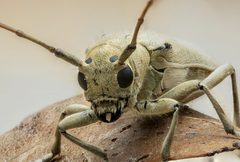
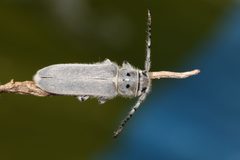
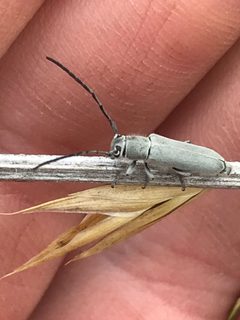
Saperdini is a tribe of longhorn beetles (Cerambycidae) within the Lamiinae. The tribe includes numerous distributed across Asia, with many characterized by distinctive patterns and coloration. Members of this tribe are primarily documented through taxonomic revisions focused on and geographic distribution, with limited published ecological data available.
Pronunciation
How to pronounce Saperdini: /sæpərˈdiːnaɪ/
These audio files are automatically generated. While they are not always 100% accurate, they are a good starting point.
Identification
Members of Saperdini are distinguished from other Lamiinae tribes by combinations of morphological characters including antennal structure, pronotal shape, and elytral . Specific diagnostic features vary by ; for example, Paraglenea are recognized by and hair , while Glenea and Nupserha species exhibit characteristic color patterns and body proportions. Accurate identification typically requires examination of male genitalia and comparison with .
Images
Habitat
within Saperdini have been collected from wooded mountain environments, including forested areas in the Indian Himalayas, Western Ghats, and montane regions of China, Taiwan, and Southeast Asia. Paraglenea dairanxingorum was collected using sweeping nets in wooded mountains in Hunan and Hubei Provinces, China. Heteroglenea nigromaculata was found in association with the Indian Screw Tree (Helicteres isora) in Kerala, South India.
Distribution
The tribe Saperdini has a primarily Asian distribution. Documented occurrences include: China (Beijing, Inner Mongolia, Hunan, Hubei, Guangxi), Taiwan, India (Kerala, Indian Himalayas), Myanmar, Thailand, Laos, and the Philippines. Specific show varying ranges: Mandibularia, Mimocagosima, and Parastenostola are Asian; Paraglenea dairanxingorum is known from Hunan and Hubei; Heteroglenea nigromaculata occurs in China, Thailand, Myanmar, and India; Nupserha are recorded from the Philippines including Northern Mindanao.
Host Associations
- Helicteres isora - associated with Indian Screw Tree (Sterculiaceae); of Heteroglenea nigromaculata found in association with this plant in Kerala, South India
Similar Taxa
- Other Lamiinae tribesSaperdini can be distinguished from related tribes within Lamiinae by specific combinations of morphological characters; however, tribal boundaries require expert examination of antennal, pronotal, and genitalic features
More Details
Taxonomic focus
Available literature on Saperdini is predominantly taxonomic, emphasizing descriptions, generic revisions, and distribution records. Ecological and biological data remain sparse for most species.
Notable taxonomic changes
Recent revisions include transfer of Mandibularia humeralis to Mimocagosima; transfer of Mandibularia quadricolor to Parastenostola as junior synonym of P. brunnipes; and new combination of Paraglenea jianfenglingensis as Malloderma jianfenglingense.
Sources and further reading
- BugGuide
- Wikipedia
- iNaturalist taxon
- NCBI Taxonomy
- Catalogue of Life
- First records of Heteroglenea nigromaculata (Thomson, 1865) (Cerambycidae, Lamiinae, Saperdini) from India
- Male description of Eutetrapha velutinofasciata Pic, with a new synonym (Coleoptera: Cerambycidae: Lamiinae: Saperdini)
- Taxonomic review of three saperdine genera, Mandibularia Pic, Mimocagosima Breuning and Parastenostola Breuning (Coleoptera: Cerambycidae: Lamiinae: Saperdini)
- Taxonomy and distribution of Glenea beesoni Heller, 1926 (Coleoptera: Cerambycidae: Lamiinae: Saperdini) from Indian Himalayas
- Checklist of the Genus Nupserha Chevrolat (Coleoptera: Cerambycidae: Lamiinae: Saperdini) in the Philippines with a Re-description of Nupserha melanoscelis Aurivillius, 1922 from Northern Mindanao
- A Remarkable New Species of the Genus Paraglenea Bates from China, with Notes on the Genus Malloderma Lacordaire (Coleoptera: Cerambycidae: Lamiinae: Saperdini)