
Ataxia hubbardi
Fisher, 1924
Ataxia hubbardi is a longhorned beetle (Cerambycidae) described by Warren Samuel Fisher in 1924. The is distributed across the United States and Mexico. are active in fall and have been observed on flower stalks of plants. A distinctive associated with prairie dock (Silphium terebinthinaceum) in Missouri dolomite glades exhibits smaller, darker, and narrower body proportions compared to typical individuals.
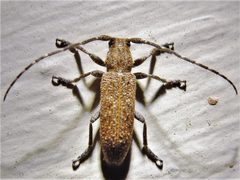
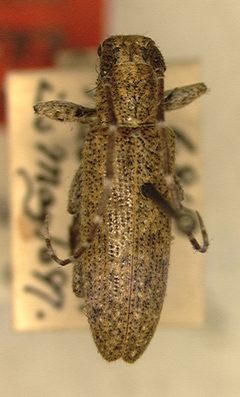
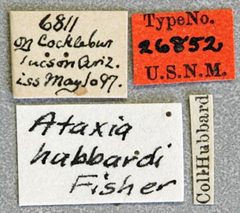
Pronunciation
How to pronounce Ataxia hubbardi: /əˈtæksiə ˈhʌbɑrdi/
These audio files are automatically generated. While they are not always 100% accurate, they are a good starting point.
Identification
may be distinguished from similar Ataxia by association with specific plants; the prairie dock-associated in Missouri is notably smaller, darker, and more slender than typical individuals found on sunflower and other common hosts.
Images
Habitat
Prairie glades, particularly dolomite glades in Missouri; also found in association with herbaceous plants in eastern and central United States.
Distribution
United States and Mexico.
Seasonality
Fall; most abundant on flower stalks during autumn months.
Diet
Larvae bore into living tissues of herbaceous plants, particularly in Asteraceae including Helianthus, Ambrosia, and Silphium.
Host Associations
- Silphium terebinthinaceum - larval Prairie dock in Missouri glades; observed on tall flower stalks
- Helianthus - larval Sunflower and related
- Ambrosia - larval Ragweed
Life Cycle
Larvae bore into tap-roots of living plants; emerge in fall and have been observed on flower stalks, presumably for -laying.
Behavior
cling to flower stalks of plants during fall activity period.
Ecological Role
Herbivore; larval boring activity affects living tissues of herbaceous plants.
Human Relevance
Considered a pest in sunflower in the southern Great Plains.
Similar Taxa
- Ataxia cryptaSimilar and ; differentiation requires examination of association and subtle morphological differences
- Other Ataxia species-level similarity; specific identification often requires plant association and geographic context