
Ataxia
Haldeman, 1847
Species Guides
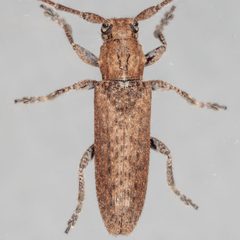
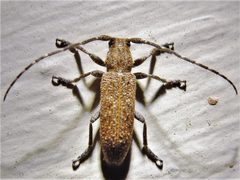
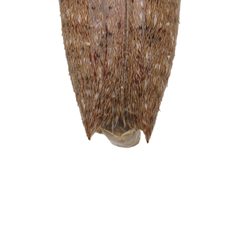
6Ataxia is a of longhorn beetles (Cerambycidae: Lamiinae: Pteropliini) described by Haldeman in 1847. in this genus are found in the Americas and are associated with herbaceous plants, particularly members of the Asteraceae . The genus includes species such as Ataxia hubbardi, which breeds in living tissues of plants including Helianthus, Ambrosia, and Silphium species. Some show morphological variation associated with specific plants.
Pronunciation
How to pronounce Ataxia: /əˈtæksiə/
These audio files are automatically generated. While they are not always 100% accurate, they are a good starting point.
Identification
Ataxia are longhorn beetles in the Lamiinae, tribe Pteropliini. They can be distinguished from related by features typical of the tribe, though specific diagnostic characters require examination of and detailed morphological study. Ataxia hubbardi, the most frequently referenced species, has been noted to show -level variation in size, coloration, and body form associated with different plants.
Images
Habitat
occur in open including prairies, glades, and grasslands. Ataxia hubbardi is associated with herbaceous plants in the Asteraceae , particularly prairie dock (Silphium terebinthinaceum) in Missouri dolomite glades and sunflower (Helianthus) in the southern Great Plains.
Distribution
occurs in North America, Central America, and South America. Ataxia hubbardi is distributed across the eastern and central United States.
Seasonality
of Ataxia hubbardi are most abundant in fall, where they have been observed on tall flower stalks of plants.
Diet
Larvae feed internally in living tissues of plants. feed on host plant tissues; specific adult feeding habits are not well documented.
Host Associations
- Silphium terebinthinaceum - larval prairie dock; associated with distinctive smaller, darker, narrower in Missouri glades
- Helianthus - larval sunflower; primary in southern Great Plains where is considered a pest
- Ambrosia - larval ragweed
- Silphium - larval rosinweeds
Life Cycle
Larvae bore into living tissues of plant stems and roots. Ataxia hubbardi larvae remain active through winter and do not enter state, unlike some related longhorn beetles. occurs within host plant tissues. emerge in fall. There appears to be one per year.
Behavior
are found on flower stalks of plants during fall, presumably for mating and oviposition. Larval tunneling occurs in stems and down to root tissues.
Ecological Role
As herbivores, larvae act as stem and root borers in living plants. May contribute to plant stress or mortality under heavy . In prairie , may serve as food source for and .
Human Relevance
Ataxia hubbardi is considered a pest of cultivated sunflower in the southern Great Plains, where larvae cause damage through tunneling in stalks. However, damage is generally less severe than that caused by related such as Dectes texanus. associated with prairie dock in Missouri glades have declined dramatically, possibly due to fire management practices, raising conservation concerns.
Similar Taxa
- Dectes texanusAlso a longhorn beetle pest of sunflower and soybean; larvae girdle stalks at base causing lodging, whereas Ataxia hubbardi larvae do not girdle and remain active through winter
- Mecas spp.Related longhorn beetles that also attack sunflower; females make two girdles on stalk causing upper portion to die and fall, differing from Ataxia
More Details
Population variation
A distinctive of Ataxia hubbardi associated with prairie dock (Silphium terebinthinaceum) in Missouri dolomite glades exhibits smaller size, darker coloration, and narrower body form compared to typical populations on sunflower. This morphological divergence has raised questions about potential cryptic status, though additional material is needed for taxonomic assessment.
Fire management impact
of Ataxia hubbardi on prairie dock in Missouri glades have not been detected for over 20 years at historically occupied sites. This decline coincides with implementation of prescribed fire management in these glades, suggesting fire-sensitive , though direct causal link remains unproven.
Sources and further reading
- BugGuide
- Wikipedia
- iNaturalist taxon
- Catalogue of Life
- Managing Insect Pests of Texas Sunflowers - AgriLife Extension Entomology
- Araneae | Beetles In The Bush | Page 5
- Meloidae | Beetles In The Bush | Page 3
- Two things I love about glades during fall… | Beetles In The Bush
- Ataxia Telangiectasia
- Ataxia as Symptom or Disease: A Review of Mechanisms of Primary Ataxia and Acquired Ataxia.
- Radiobiology of Ataxia-Telangiectasia
- The TRKB Agonist 7,8-dihydroxyflavone Alleviates DNA Damage and Apoptosis in a Neuronal Cell Model of Friedreich's Ataxia.