
Mecas femoralis
(Haldeman, 1847)
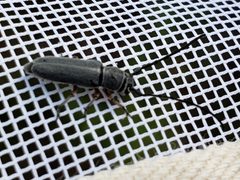
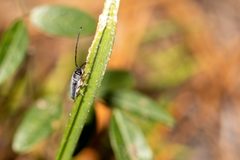
Mecas femoralis is a small longhorn beetle ( Cerambycidae) described by Haldeman in 1847. It is found in the southeastern United States and is considered largely to Florida. The measures 6–8 mm in length and can be distinguished by its rather uniform , lack of pronotal calluses, and reddish . It has been collected by sweeping dried grasses in open oak/pine sandhill woodland .
Pronunciation
How to pronounce Mecas femoralis: /ˈmiːkas fɛmoˈralɪs/
These audio files are automatically generated. While they are not always 100% accurate, they are a good starting point.
Identification
Mecas femoralis can be identified by its small size (6–8 mm), rather uniform , lack of pronotal calluses on the pronotum, and reddish . These features distinguish it from similar small cerambycids in the southeastern United States. The is most reliably encountered by sweeping dried grass stems in open woodland areas rather than by beating woody vegetation.
Images
Appearance
Small measuring 6–8 mm in length. Body with rather uniform . Pronotum lacks calluses. reddish in color.
Habitat
Dry oak/pine sandhill woodland with grassy understory. Associated with open areas within woodland where dried grasses from the previous growing season persist.
Distribution
Southeastern United States, with records primarily from Florida. Considered largely to Florida based on available collection records.
Seasonality
Active during cooler morning hours in spring. have been collected in April in Florida when temperatures are moderated by overnight cold fronts.
Host Associations
- Grasses - found on dried grass stems; larval unknownCollected by sweeping dried grass stems in open woodland areas. Specific larval plant not documented.
Behavior
are found on dried grass stems in open woodland areas. Activity appears to be concentrated during cooler morning periods. The is not readily collected by beating woody vegetation, suggesting a preference for herbaceous substrates.
Similar Taxa
- Other Mecas speciesSimilar small size and general ; distinguished by reddish and lack of pronotal calluses in M. femoralis
- Other small LamiinaeMany small longhorn beetles occur in similar ; combination of size, pattern, pronotal structure, and femoral coloration distinguishes M. femoralis
More Details
Collection method
Unlike many cerambycids that are collected by beating woody vegetation, M. femoralis is most effectively collected by sweeping dried grass stems in open areas of oak/pine sandhill woodland. This collecting technique was used successfully in Florida to obtain series of 12–15 specimens in a single day.
Taxonomic history
Described by Haldeman in 1847. The has remained relatively obscure in the literature, with limited biological information published beyond basic collection records.