
Hyperplatys maculata
Haldeman, 1847
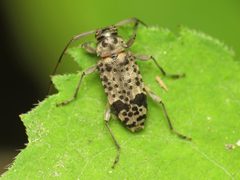
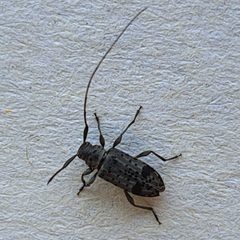
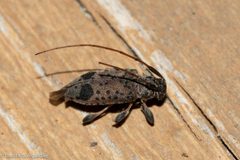
Hyperplatys maculata is a of longhorn beetle in the Lamiinae, described by Haldeman in 1847. It is a wood-boring cerambycid with documented associations to dead branches of red buckeye (Aesculus pavia). The species has been reared from cut wood in Missouri, representing a documented larval record.
Pronunciation
How to pronounce Hyperplatys maculata: /ˌhaɪpərˈpleɪtɪs ˌmækjʊˈleɪtə/
These audio files are automatically generated. While they are not always 100% accurate, they are a good starting point.
Images
Habitat
Rich, moist, east-facing slopes in deciduous forest; associated with dead wood of hardwood trees.
Distribution
North America: recorded from Canada (Manitoba, New Brunswick, Nova Scotia, Ontario) and the United States.
Seasonality
have been observed in early spring; larvae develop in dead wood and emerge the following spring.
Diet
Larvae feed on dead wood of red buckeye (Aesculus pavia); specific diet unknown.
Host Associations
- Aesculus pavia - larval Documented from dead branches cut and left in situ for one season in Missouri Ozarks
Life Cycle
Larvae develop in dead branches for approximately one year; emerge the following spring.
Behavior
Wood-boring; larvae tunnel in dead hardwood branches.
Ecological Role
Decomposer; contributes to nutrient cycling through wood decomposition.
Human Relevance
Documented in entomological research on cerambycid associations; no significant economic or pest status reported.
Similar Taxa
- Astyleiopus variegatusCo-occurs as wood-boring cerambycid in same material; distinguished by -level morphological differences in antennal and pronotal structure.
- Leptostylus transversusCo-occurs in same and ; Leptostylus generally differ in body proportions and antennal length relative to body.
- Lepturges angulatusCo-occurs in same material; Lepturges typically have more angular elytral apices and different pronotal shapes.
More Details
Type of host record
The red buckeye record represents a new larval host record at time of publication (MacRae and Rice 2007), not previously documented in literature.