
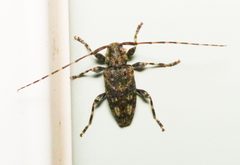
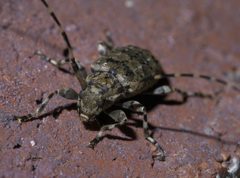
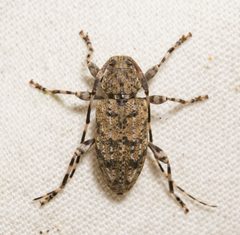
Astyleiopus variegatus
(Haldeman, 1847)
Variegated Longhorned Beetle
Astyleiopus variegatus is a of longhorned beetle in the Cerambycidae, representing the sole member of its . It has been reared from dead branches of red buckeye (Aesculus pavia) in Missouri, constituting a documented larval record. The species is distributed across eastern and central North America, with records from Canada and the United States.
Pronunciation
How to pronounce Astyleiopus variegatus: /æˌstɪliˈoʊpəs ˌvɛəriˈeɪɡətəs/
These audio files are automatically generated. While they are not always 100% accurate, they are a good starting point.
Identification
As the only in its , Astyleiopus variegatus can be distinguished from other longhorned beetles by its unique generic characteristics. It belongs to the tribe Acanthocinini within the Lamiinae. Specific diagnostic features distinguishing it from similar Acanthocinini genera are not documented in available sources.
Images
Habitat
Associated with deciduous forest where its larval plant, red buckeye (Aesculus pavia), occurs. The host plant grows on rich, moist, east-facing slopes in the southeastern United States, reaching the southeastern Ozarks in Missouri.
Distribution
Recorded from Alberta, Manitoba, New Brunswick, Nova Scotia, and Ontario in Canada. United States distribution includes Missouri, with the documented from the White River Hills region.
Seasonality
have been reared from wood collected in spring, suggesting larval development occurs within dead branches. Specific adult activity period is not documented.
Diet
Larvae feed on dead wood of red buckeye (Aesculus pavia). feeding habits are not documented.
Host Associations
- Aesculus pavia - larval Reared from dead branches; constitutes a new larval record documented in MacRae and Rice 2007
Life Cycle
Larval development occurs within dead branches of plants. emerge following , with rearing records indicating spring from wood collected the previous season.
Ecological Role
Contributes to wood decomposition as a larval inhabitant of dead branches.
Similar Taxa
- Hyperplatys maculataCo-occurs as a cerambycid associate on red buckeye; distinguished by -level characters
- Leptostylus transversusCo-occurs as a cerambycid associate on red buckeye; distinguished by -level characters
- Lepturges angulatusCo-occurs as a cerambycid associate on red buckeye; distinguished by -level characters
More Details
Taxonomic note
The Astyleiopus is , containing only A. variegatus. The was described by Haldeman in 1847.
Research context
The Missouri record resulted from a deliberate wood-boring survey using cut and seasoned red buckeye branches, demonstrating the value of targeted rearing methods for documenting cerambycid associations.