
Lepturges
Bates, 1863
Species Guides
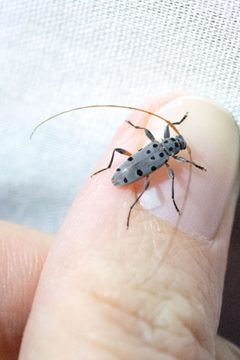
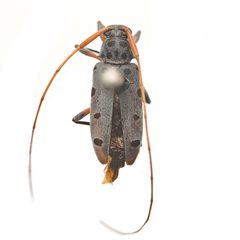
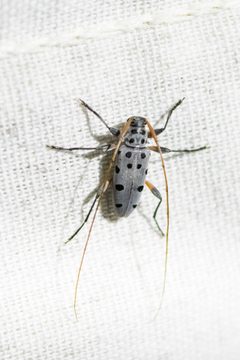
8Lepturges is a of longhorn beetles in the Lamiinae, established by Henry Walter Bates in 1863. The genus contains exclusively Neotropical distributed from central Mexico to southern Paraguay. Species are small to medium-sized cerambycids with typical lamiine . Some species have been recorded from temperate North America, including Missouri and Vermont, though these may represent occasional vagrants or previously undocumented rather than established ranges. The genus is associated with woody vegetation, with at least one species (Lepturges limpidus) linked to plants in the Malvaceae.
Pronunciation
How to pronounce Lepturges: //lɛpˈtʊr.dʒiːz//
These audio files are automatically generated. While they are not always 100% accurate, they are a good starting point.
Identification
Lepturges are small to medium-sized lamiine longhorn beetles. They can be distinguished from similar by their characteristic antennal structure and body proportions typical of the tribe Acanthocinini. Specific identification to species level requires examination of elytral patterns, pronotal shape, and genitalia. The genus is most readily separated from related lamiine genera by the combination of slender body form and the structure of the antennal scape.
Images
Habitat
Primarily associated with woodland and forested in the Neotropical region. Records include mesic lowland deciduous forests, dry post oak woodlands, and xeric dolomite prairie remnants with woody vegetation. In North America, specimens have been collected in sand prairie remnants and dry-mesic upland deciduous forests. The Humid Chaco ecoregion in Argentina—characterized by woodland-savanna mosaics with subtropical climate (21°C mean temperature, 1300 mm annual precipitation)—represents a documented habitat for at least one .
Distribution
Exclusively Neotropical in native range, extending from central Mexico to southern Paraguay. New records from northeast Argentina (Colonia Benítez, Chaco Province) represent range extensions. North American records from Missouri and Vermont exist in distributional databases, though these may require verification. Climatic modeling indicates widespread suitability throughout the Neotropical region.
Seasonality
have been recorded in mid-July in Missouri, suggesting summer activity in temperate regions. In subtropical areas, activity likely extends across warmer months. No comprehensive phenological data available for the as a whole.
Host Associations
- Catostemma fragrans - plantMalvaceae; only documented association for Lepturges limpidus, though this association appears non-dependent and the may utilize alternative hosts
Behavior
are and attracted to ultraviolet and mercury-vapor lights. In Missouri, Lepturges confluens was collected at UV/MV light setups in mesic lowland deciduous forest. Adults have been captured in ethanol-red wine baited jug traps and Lindgren funnel traps, suggesting attraction to fermenting baits.
Ecological Role
As phytophagous/ cerambycids, larvae likely contribute to wood decomposition and nutrient cycling in forest . Potential for economic impact if established outside native range, given the capacity demonstrated by other Cerambycidae.
Human Relevance
No direct economic importance documented. At least one (Lepturges limpidus) has been flagged as a potential species due to new distributional records suggesting range expansion. Specimens are occasionally collected by entomologists in biodiversity surveys and trapping studies.
Similar Taxa
- AcanthocinusBoth belong to tribe Acanthocinini and share slender body form; Lepturges typically smaller with different antennal proportions
- LeptostylusSimilar size and general lamiine appearance; Lepturges distinguished by antennal structure and lack of prominent elytral present in many Leptostylus
- AegomorphusOverlapping in eastern North America; Lepturges generally smaller with more uniform elytral coloration
Sources and further reading
- BugGuide
- Wikipedia
- GBIF taxonomy match
- iNaturalist taxon
- NCBI Taxonomy
- Catalogue of Life
- Friday Flower: Red Buckeye | Beetles In The Bush
- Ascalaphidae | Beetles In The Bush
- August | 2022 | Beetles In The Bush
- New Distributional Records and Characterization of the Climatic Niche of Lepturges (Lepturges) limpidus Bates, 1872 (Coleoptera, Cerambycidae): Sink or Source Population?