
Leptostylus
LeConte, 1852
flatfaced longhorn beetles
Species Guides
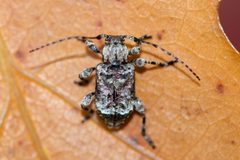
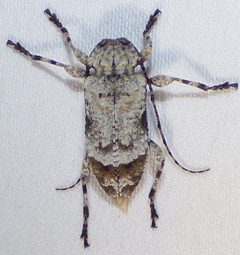
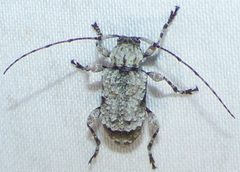
3Leptostylus is a of longhorn beetles in the Lamiinae, established by John Lawrence LeConte in 1852. The genus contains approximately 70 described distributed primarily in the Americas, from the United States through Central and South America to Argentina. Species in this genus are characterized by their cryptic, bark-mimicking appearance and are typically associated with dead or dying woody vegetation. The genus is part of the tribe Acanthocinini, one of the largest tribes in Cerambycidae.
Pronunciation
How to pronounce Leptostylus: /lɛptoʊˈstaɪləs/
These audio files are automatically generated. While they are not always 100% accurate, they are a good starting point.
Images
Habitat
in this are found in association with dead or dying woody vegetation. Specific records include: forested areas with oak, hickory, and other hardwood species; pine and juniper woodlands; agricultural plantations including citrus groves; and thorn forest remnants. The genus shows broad habitat across its range, from temperate deciduous forests to tropical dry forests.
Distribution
The ranges from the United States (including Missouri, Oklahoma, and Texas) south through Mexico, Central America, and South America to Argentina. Specific country records include: United States, Mexico (including Oaxaca State), Colombia (Tolima department), and Argentina (Chaco Province). The distribution spans from approximately 40°N to 35°S latitude.
Seasonality
At least one , Leptostylus transversus, exhibits distinctly bimodal seasonal activity in Missouri, with active March through June and September through October, and reduced activity during July and August. This pattern may represent adult in late summer and fall, followed by and renewed spring activity. Other species may show different seasonal patterns in tropical portions of the range.
Diet
Larvae are wood-borers, developing within dead or dying branches and trunks of woody plants. Larvae of Leptostylus hilaris have been recorded as stem borers in Tahiti lime (Citrus latifolia). The exhibits extreme polyphagy: Leptostylus transversus has been reared from both angiosperms (Amelanchier arborea, Carya ovata, Diospyros virginiana) and gymnosperms (Juniperus virginiana, Pinus echinata, P. sylvestris), showing no preference for either plant group.
Host Associations
- Amelanchier arborea - larval serviceberry
- Carya ovata - larval shagbark hickory
- Diospyros virginiana - larval persimmon
- Juniperus virginiana - larval eastern red-cedar
- Pinus echinata - larval shortleaf pine
- Pinus sylvestris - larval Scots pine
- Citrus latifolia - larval Tahiti lime; first record for Leptostylus hilaris in Colombia
- Sapindus saponaria - larval soapberry; new record for Leptostylus gibbulosus in Oaxaca, Mexico
- Aesculus pavia - larval red buckeye
- Vitisgrape ; associated with other cerambycids in same
Life Cycle
Complete with , larval, pupal, and stages. Larvae are wood-borers that develop within dead or dying woody material. Adults emerge from host wood, with timing varying by and latitude. In Leptostylus transversus, most reared specimens emerge after mid-August, supporting an autumn emergence pattern with subsequent .
Behavior
are cryptic and likely remain on or near material. At least one (Leptostylus transversus) is abundant and frequently collected by beating dead branches. Adults of some species may be found on flowers, though this is not well documented for the as a whole.
Ecological Role
Larvae function as primary decomposers of dead woody material, contributing to nutrient cycling in forest . The extreme polyphagy of some suggests flexible ecological roles across diverse forest types. Some species have been recorded as potential pests of agricultural crops, including citrus.
Human Relevance
Some have potential economic significance as pests of cultivated plants. Leptostylus hilaris has been recorded as a stem borer in Tahiti lime plantations in Colombia, representing a potential concern for citrus agriculture. The is of interest to coleopterists due to its diversity and broad distribution.
Similar Taxa
- AcanthocinusBoth belong to tribe Acanthocinini and share similar cryptic, bark-mimicking appearance with mottled coloration
- AstylidiusSimilar flatfaced longhorn in Lamiinae, with comparable body form and antennal proportions
- LepturgesRelated in same tribe with similar overall habitus, though Lepturges often show more pronounced elytral tuberculation
More Details
Taxonomic history
The was established by John Lawrence LeConte in 1852 and has undergone subsequent refinement. Many were described by Henry Walter Bates in the 1870s-1880s based on Central and South American material. The genus remains actively studied, with new species and records continuing to be documented.
Research significance
Leptostylus transversus was noted as one of the most common cerambycid in Missouri during a comprehensive state survey (MacRae 1994), with 268 specimens examined. This abundance made it useful for documenting unusual biological features such as bimodal seasonality and extreme polyphagy spanning angiosperms and gymnosperms.
Sources and further reading
- BugGuide
- Wikipedia
- iNaturalist taxon
- NCBI Taxonomy
- Catalogue of Life
- Cerambycidae | Beetles In The Bush | Page 10
- Friday Flower: Red Buckeye | Beetles In The Bush
- Some notes of natural history and distribution of Leptostylus gibbulosus bates, 1874 (Coleoptera: Cerambycidae)
- Leptostylus hilaris Bates, 1872 (Coleoptera: Cerambycidae) on Tahiti lime (Citrus latifolia Tanaka, Rutaceae) in Colombia