
Aegomorphus
Haldeman, 1847
Species Guides
4- Aegomorphus arizonicus
- Aegomorphus modestus
- Aegomorphus morrisii
- Aegomorphus quadrigibbus(Four-humped Longhorned Beetle)
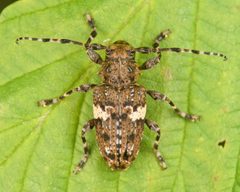
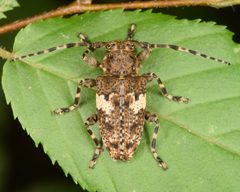
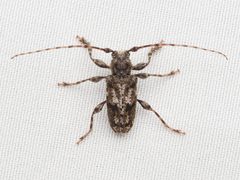
Aegomorphus is a large of longhorn beetles (Cerambycidae) established by Haldeman in 1847. The genus underwent significant taxonomic revision: most were originally placed in Acanthoderes, then transferred to Psapharochrus, which was elevated to genus rank before being determined in 2020 to be a junior synonym of Aegomorphus. The genus contains numerous species distributed across the Americas, with at least one species (A. quadrigibbus) documented as an agricultural pest of Persian lime orchards in Mexico.
Pronunciation
How to pronounce Aegomorphus: /ˈaɪɡəˌmɔrfəs/
These audio files are automatically generated. While they are not always 100% accurate, they are a good starting point.
Identification
in this were historically confused with Acanthoderes and Psapharochrus. Accurate identification requires examination of genitalic and other subtle morphological characters; the genus was only recently stabilized taxonomically following synonymization of Psapharochrus in 2020.
Images
Habitat
vary by ; A. quadrigibbus has been documented in Persian lime orchards. Other species occur in diverse woodland and forest habitats across North, Central, and South America.
Distribution
Widely distributed in the Americas. Documented from Colombia (CO), Denmark (DK), Norway (NO), Sweden (SE), Vermont (US), and broadly in the United States. The specific record of A. quadrigibbus causing damage occurs in Martínez de la Torre municipality, central Veracruz state, Mexico.
Life Cycle
For A. quadrigibbus: oviposit on trunks and branches of trees; larvae form galleries 2-5 cm deep in wood, sometimes surrounding trunks or branches and preventing nutrient flow.
Human Relevance
A. quadrigibbus is an agricultural pest of Persian lime (Citrus latifolia) orchards in Mexico, causing branch drying and tree death with average of 10.8% in affected orchards. This represents the first record of any Aegomorphus associated with Rutaceae trees.
Similar Taxa
- AcanthoderesMany Aegomorphus were originally described in Acanthoderes before being transferred; historical literature may use this name.
- PsapharochrusInvalid name previously used for now placed in Aegomorphus; Psapharochrus was synonymized with Aegomorphus in 2020.
Sources and further reading
- BugGuide
- Wikipedia
- GBIF taxonomy match
- iNaturalist taxon
- NCBI Taxonomy
- Catalogue of Life
- Tracking Tetraopes texanus with Terry | Beetles In The Bush
- 2018 Arizona Insect Collecting Trip “iReport” | Beetles In The Bush
- owl-flies | Beetles In The Bush
- First report of Aegomorphus quadrigibbus and Thryallis undatus (Coleoptera: Cerambycidae) damaging Persian lime orchards in Veracruz, México