
Scaphinotus marginatus
Fischer von Waldheim, 1820
Margined Snail-eating Beetle
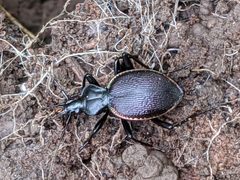
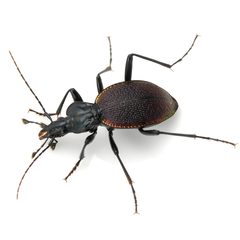
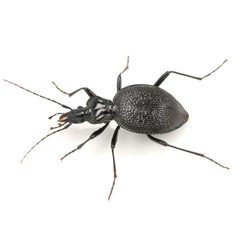
Scaphinotus marginatus is a large, flightless ground beetle in the Carabidae, commonly known as the margined snail-eating . are brachypterous (short-winged) and , preying exclusively on snails and slugs. The inhabits coniferous, mixed, and deciduous forests across western North America, typically near streams and lakes. It is distinguished from similar Scaphinotus species by subtle elytral margin characteristics and geographic distribution.
Pronunciation
How to pronounce Scaphinotus marginatus: /skæfɪˈnoʊtəs mɑːrdʒɪˈneɪtəs/
These audio files are automatically generated. While they are not always 100% accurate, they are a good starting point.
Identification
Distinguished from other Scaphinotus by the characteristic margins of the , which are more pronounced in this species. S. marginatus can be separated from S. angusticollis and S. viduus by geographic range and subtle differences in elytral margin structure. The species is flightless, which separates it from many other Carabidae. Confirmation of identification typically requires examination of male genitalia or detailed comparison with reference specimens.
Images
Habitat
Inhabits coniferous, mixed, and deciduous forests. Strongly associated with moist microhabitats, particularly along streams, lakes, and in riparian corridors. The requires humid conditions and is typically found in areas with abundant leaf litter and decaying wood where snails are plentiful.
Distribution
Western North America, from Alaska south through western Canada (Alberta, British Columbia, Quebec) and into the western United States (California, Idaho, Montana, Oregon, Washington, Wyoming). The distribution is closely tied to moist forest in mountainous and coastal regions.
Seasonality
are active primarily from spring through fall, with peak activity during summer months. Being , they are most commonly encountered at night. The exact timing of activity varies with elevation and local climate conditions.
Diet
Specialized of snails and slugs. The broad, powerful are adapted specifically for crushing mollusk shells. No other prey items are known to be consumed.
Life Cycle
Development includes , larval, pupal, and stages. Larvae are also predatory on snails. The complete likely spans one to two years, though detailed studies are lacking. Adults are long-lived and may persist for multiple seasons.
Behavior
Strictly , spending daylight hours concealed under logs, rocks, or in leaf litter. are flightless due to reduced wings (brachypterous), limiting to . When disturbed, they may release defensive secretions typical of carabid beetles. Foraging occurs at night on the forest floor, with individuals tracking snail trails to locate prey.
Ecological Role
Acts as a regulating of snails and slugs in forest . As a large, flightless predator, it represents a distinctive component of the ground beetle fauna in western North American forests. The may serve as an indicator of intact, mature forest with stable moisture regimes.
Human Relevance
Of minor direct economic importance. Occasionally encountered by hikers and naturalists. The is not considered a pest and does not require management. Its specialized diet and requirements make it vulnerable to forest fragmentation and drying of stream corridors.
Similar Taxa
- Scaphinotus angusticollisOverlaps in distribution in the Pacific Northwest; distinguished by more slender body form and different elytral margin characteristics.
- Scaphinotus viduusOccurs in similar in western North America; separated by differences in pronotal and elytral shape and margin structure.
- Cychrus speciesRelated snail-eating beetles in the same tribe; distinguished by different body proportions, more cylindrical form, and different geographic ranges.
More Details
Taxonomic History
First described by Fischer von Waldheim in 1820. The Scaphinotus is part of the tribe Cychrini, a group of specialized snail-eating ground beetles. The has undergone relatively little taxonomic revision, though subtle geographic variation in has been noted.
Conservation Status
Not formally assessed by IUCN or other conservation bodies. The appears to remain relatively common within its range, though loss and stream corridor degradation may threaten local . Its flightless nature makes populations vulnerable to isolation and local extinction.
Research Needs
Detailed studies of , including larval development and , are lacking. The ' response to forest management practices and climate change effects on stream-associated would benefit from investigation.
Sources and further reading
- BugGuide
- Wikipedia
- GBIF taxonomy match
- iNaturalist taxon
- NCBI Taxonomy
- Field Guide Selected References
- Field Guide
- Meloidae Holdings | Entomology Research Museum
- ground beetles | Beetles In The Bush
- Pixelated Entomology: Analyzing Beetles' Flower Use Through Digital Samples
- Green Light: New ID Test Ready for Invasive Mealybug Pest