
Scaphinotus angusticollis
(Mannerheim, 1823)
Narrow-collared Snail-eating Beetle
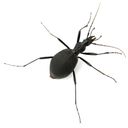
Scaphinotus angusticollis is a large ground beetle in the Carabidae, commonly known as the narrow-collared snail-eating . are brachypterous (short-winged), gregarious, and . The exhibits regional color , with individuals appearing in dark black or deep red morphs. It has been observed preying on snails, slugs, earthworms, and spiders.


Pronunciation
How to pronounce Scaphinotus angusticollis: /ˌskæfəˈnoʊtəs æŋˌɡʌstɪˈkɒlɪs/
These audio files are automatically generated. While they are not always 100% accurate, they are a good starting point.
Identification
Distinguished from similar ground beetles by combination of large size, brachypterous condition, and gregarious , and regional color (black or red morphs). As a Scaphinotus , belongs to the Cychrini tribe of snail-hunting carabids, which can be distinguished from other Carabinae by their specialized mandibular structure for crushing snail shells.
Images
Appearance
Large ground beetle with brachypterous (short-winged) . Exhibits color with regional variation: dark black and deep red morphs have been documented. As a member of the Cychrini tribe, possesses the characteristic robust body form and strong typical of snail-hunting carabids.
Habitat
Inhabits coniferous, mixed, and deciduous forests, as well as cultivated fields. In southwestern British Columbia, has been documented in managed coniferous riparian forests, where 30 m riparian reserves maintain sizes comparable to unharvested forests.
Distribution
North America: British Columbia (Canada), Quebec (Canada), Alaska, California, Oregon, Washington (USA). Also present in southwestern British Columbia based on ecological study.
Seasonality
activity pattern documented; specific seasonal timing not detailed in available sources.
Diet
Life Cycle
stage brachypterous; details of larval development and complete not documented in available sources.
Behavior
Gregarious and . Movement studies in southwestern British Columbia indicate beetles move twice as far in 30 m riparian reserves compared to clearcuts, suggesting differential perception of quality.
Ecological Role
in forest , particularly of mollusks and other soft-bodied . Study in southwestern British Columbia indicates 30 m riparian reserves maintain sizes and facilitate movement at levels comparable to unharvested riparian forests, suggesting importance in forest ecosystem conservation planning.
Human Relevance
Used as for forest management practices; research subject for riparian reserve effectiveness in maintaining terrestrial insect .
Similar Taxa
More Details
Forest Management Research
Subject of study on riparian reserve effectiveness in southwestern British Columbia. in 30 m reserves matched unharvested forest levels, while clearcut populations were approximately half the size. Movement distances were greater in reserves than clearcuts.
Taxonomic History
Originally described as Cychrus angusticollis by Mannerheim in 1823, later transferred to Scaphinotus.
Sources and further reading
- BugGuide
- Wikipedia
- GBIF taxonomy match
- iNaturalist taxon
- NCBI Taxonomy
- Meloidae Holdings | Entomology Research Museum
- Mite on White | Beetles In The Bush
- Bug Eric: Beetle Bonanza
- November | 2012 | Beetles In The Bush | Page 2
- Black is beautiful! | Beetles In The Bush
- Carabidae | Beetles In The Bush
- Relative abundance and movement of the carabid beetle Scaphinotus angusticollis in managed coniferous riparian forests of southwestern British Columbia