
Scaphinotus elevatus
Fabricius, 1787
eastern snail eater, Large-thoraxed Snail-eating Beetle, elevated thorax snail-eating beetle
Species Guides
2Scaphinotus elevatus is a of ground beetle in the Carabidae, commonly known as the eastern snail eater. It is one of the larger carabid beetles in North America, with most individuals measuring at least 15 mm in length. The species belongs to the Carabinae , which includes the so-called 'caterpillar hunters' and 'snail hunters'—giant ground beetles closely related to tiger beetles. Six are recognized, distributed across eastern, central, and southwestern North America.
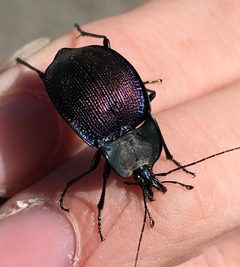
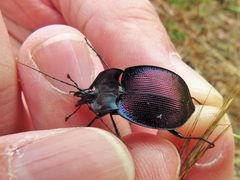
Identification
Distinguished from other ground beetles by its large size (15–25 mm), elevated , and prominent . The Scaphinotus is further characterized by elongated body form and association with snails as prey. Within the genus, S. elevatus can be separated from by geographic distribution and subtle morphological differences in pronotal elevation and body proportions. The six show geographic variation in coloration and minor structural features.
Images
Habitat
Occurs in forested and woodland , particularly in areas with calcareous soils that support snail . Found in deciduous and mixed forests, often in moist microhabitats. The is ground-dwelling and typically found in leaf litter, under logs, or in other sheltered locations during the day.
Distribution
North America. The as a whole ranges from eastern Canada and the northeastern United States westward to New Mexico and southward to the Gulf Coast. Individual have more restricted ranges: S. e. elevatus in the eastern United States (Alabama to New England); S. e. flammeus in the central United States (Arkansas to Ohio); S. e. coloradensis in the Great Plains and Rocky Mountain foothills; S. e. neomexicanus in New Mexico; S. e. lengi in Virginia; and S. e. tenebricosus in the southeastern United States (North Carolina, South Carolina, Virginia).
Seasonality
are active from spring through fall, with peak activity likely occurring in late spring and early summer. Specific seasonal patterns vary by geographic location and .
Diet
Specialized of land snails and slugs. Uses large, powerful to crush snail shells and extract the soft body. This dietary specialization is reflected in the ' and its classification among the 'snail hunter' carabids.
Life Cycle
Complete (holometabolous). are laid in soil or under debris. Larvae are predatory, likely feeding on small snails or other soft-bodied . occurs in soil. are long-lived and may persist for multiple years. Detailed information is limited.
Behavior
or . are active hunters that search for snail prey on the ground surface. When not actively foraging, they seek shelter under logs, stones, or in leaf litter. The is capable of but may be relatively sedentary within suitable patches.
Ecological Role
that helps regulate land snail and slug . As a large ground beetle, it may also serve as prey for vertebrate predators such as birds and small mammals. The contributes to nutrient cycling through its consumption of mollusks.
Human Relevance
Generally beneficial due to its on snails and slugs, which can be agricultural and garden pests. Not known to be of direct economic importance. Occasionally encountered by entomologists and naturalists. The has been featured in entomological literature and field guides.
Similar Taxa
- Scaphinotus angusticollisSimilar large size and snail-eating , but distinguished by geographic range (western North America) and more slender body form
- Scaphinotus marginatusOverlapping range in some areas, but distinguished by less elevated and different body proportions
- Scaphinotus petersiSimilar preferences but distinguished by geographic distribution and pronotal shape
- Calosoma spp.Similar large size and predatory habits, but distinguished by different body form (more rounded, less elongated), different structure, and caterpillar rather than snail
More Details
Subspecies diversity
Six are recognized, showing substantial geographic variation in coloration and minor morphological features. The subspecies epithets reflect either geographic origin (coloradensis, neomexicanus, lengi) or descriptive features (flammeus = fiery, tenebricosus = dark, elevatus = elevated).
Taxonomic history
The was first described by Fabricius in 1787, making it one of the earlier-described North American carabid beetles. The Scaphinotus has undergone taxonomic revision, with the species now placed in the tribe Cychrini based on morphological and molecular evidence.
Conservation status
Not formally assessed by IUCN. The appears to be relatively widespread and common within its range, though some with restricted distributions (e.g., S. e. lengi in Virginia, S. e. neomexicanus in New Mexico) may warrant local conservation attention.