
Calosoma aurocinctum
Chaudoir, 1850
gold-ringed caterpillar hunter, Texas Green Calosoma
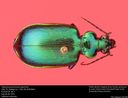
Calosoma aurocinctum is a large ground beetle in the Carabinae, commonly known as the gold-ringed caterpillar hunter or Texas Green Calosoma. It was described by Maximilien Chaudoir in 1850. The occurs from Texas south through Mexico to Central America, inhabiting lowland to mid-elevation areas. As a member of the caterpillar hunter Calosoma, it likely exhibits arboreal foraging to prey on caterpillars, though specific behavioral observations for this species are limited.
Pronunciation
How to pronounce Calosoma aurocinctum: /kæloʊˈsoʊmə ɔːroʊˈsɪŋktəm/
These audio files are automatically generated. While they are not always 100% accurate, they are a good starting point.
Identification
Distinguished from other Calosoma by the 'gold-ringed' pattern implied by its ; from other ground beetles by large size, exposed forward-directed , and with segments longer than wide; from darkling beetles (Tenebrionidae) by exposed mandibles, rapid running , and antennae structure
Images
Habitat
Lowland to midland areas; specific microhabitat details not documented for this
Distribution
Guatemala, Mexico, Nicaragua, and Texas (USA); ranges from southern United States through Middle America
Diet
Presumed to prey on caterpillars based on membership and , but specific prey records for this are not documented
Behavior
Likely arboreal foraging typical of Calosoma caterpillar hunters, ascending trees to hunt prey; rapid running when disturbed characteristic of the
Ecological Role
; likely contributes to caterpillar control in forest
Human Relevance
Potential agent for caterpillar pests; no documented negative impacts
Similar Taxa
- Calosoma scrutatorSimilar large size and caterpillar-hunting ; C. scrutator has more intense purple pronotal coloration and elongated
- Calosoma wilcoxiSimilar arboreal foraging and ; C. wilcoxi is smaller (about one-third the size) and lacks the 'gold-ringed' pattern
- Calosoma sayiSame with similar large size and predatory habits; C. sayi is uniformly black without metallic or gold markings
More Details
Taxonomic note
The was described by Chaudoir in 1850, not 1950 as stated in some sources. GBIF records confirm the 1850 date.
Sources and further reading
- BugGuide
- Wikipedia
- GBIF taxonomy match
- iNaturalist taxon
- Ground beetles up in the air: Calosoma wilcoxi and Calosoma scrutator — Bug of the Week
- Feasting on the bounty | Beetles In The Bush
- May | 2011 | Beetles In The Bush | Page 2
- Best of BitB 2012 | Beetles In The Bush
- Bug Eric: ID Tip: Ground Beetle or Darkling Beetle?
- November | 2012 | Beetles In The Bush | Page 2