
Triops
Schrank, 1803
tadpole shrimp, shield shrimp
Species Guides
1- Triops longicaudatus(Longtail Tadpole Shrimp)
Triops is a of small branchiopod crustaceans in the order Notostraca, commonly known as tadpole shrimp or shield shrimp. The genus is distinguished by having only a pair of long, thin caudal extensions on the , unlike the related genus Lepidurus which bears an additional central platelike process. Some are frequently sold as aquarium pets in dried kits, hatching upon contact with fresh water. In agricultural settings, particularly California rice , certain species function as early-season pests that damage germinating seedlings.
Pronunciation
How to pronounce Triops: /ˈtraɪ.ɒps/
These audio files are automatically generated. While they are not always 100% accurate, they are a good starting point.
Identification
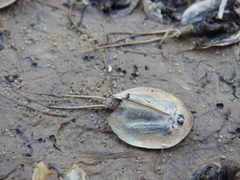
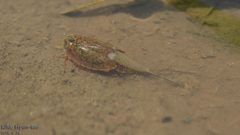
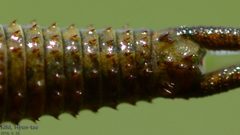
Distinguished from the only other living notostracan Lepidurus by : Triops bears only paired long, thin caudal extensions, while Lepidurus possesses these plus a central platelike process. The bears two large positioned close together and nearly , plus a third naupliar ocellus (simple ) located between them but deep within the head. All three eyes are visible through the shell covering of the head. The body is shielded by a broad, flattened covering the head and , with a long, segmented .
Images
Habitat
Inhabits temporary freshwater pools, including vernal pools and seasonal rainpools. In agricultural contexts, occupies flooded rice fields. Requires that undergo periodic wet-dry cycles, as survive desiccation in dried mud or dust between wet periods. cannot survive when soil dries out.
Distribution
Found on multiple continents including Africa, Australia, Asia, South America, Europe (including Great Britain), and parts of North America with suitable climates. Molecular evidence suggests earliest diverging lineages occur in areas formerly part of Gondwana, indicating Gondwanan origin. Specific distribution varies by ; for example, Triops longicaudatus occurs in western North America including California, while T. cancriformis has broader Palearctic distribution and has been recorded in Qatar.
Seasonality
Active during wet periods following rains or flooding. In seasonal , completes within approximately 4 weeks. hatch upon flooding after dry periods, with preventing immediate hatching until sufficient water accumulates. In California rice systems, represents an early-season pest present soon after field flooding.
Diet
, consuming plant material, , and conspecifics (). In rice fields, feeds on germinating rice seedlings. Triops longicaudatus has been observed consuming Culex mosquito larvae. In captivity, accepts carrots, shrimp pellets, dried shrimp, living shrimp, Daphnia, and various other items including lunch meat, crackers, and potatoes.
Life Cycle
enter extended when dry, with remarkable desiccation resistance—laboratory studies demonstrate survival of temperatures up to 98°C for 16 hours, with boiling required for mortality. Eggs can remain viable for decades in desiccated state. Hatching triggered by flooding and sufficient water accumulation. Nauplii resemble miniature within 24 hours of hatching. Most reproduce sexually, though some dominated by producing internally fertilized eggs; in T. cancriformis, mode varies with latitude (sexual in south, in north). Adult life expectancy up to 90 days. Adults cannot survive temperatures above 34°C for 24 hours or 40°C for 2 hours.
Behavior
Benthic feeder that burrows in mud, stirring up sediment and creating murky water conditions in high- . Under hypoxic conditions, makes frequent trips to the water surface to obtain oxygen, which is energetically costly and reduces time available for feeding. Possesses extracellular hemoglobin in that increases in concentration under low-oxygen conditions, facilitating oxygen uptake and allowing extended time in benthic feeding zones during hypoxia. Digging in rice fields uproots young seedlings.
Ecological Role
Functions as a of mosquito larvae and other small in temporary pool . In rice agroecosystems, acts as a pest through seedling damage, but also potentially contributes to weed suppression. Serves as prey for mosquitofish (Gambusia affinis) and potentially other aquatic predators. Presence in Wyoming has been associated with successful hatching of American spadefoot toads, suggesting possible ecological indicator value.
Human Relevance
Significant agricultural pest in California rice , where Triops longicaudatus damages germinating seeds and seedlings through feeding and digging . Currently managed primarily with , though research explores alternatives including mosquitofish and cultural practices. Used as biological pest control in Japanese rice paddies for weed suppression, with the Beni-Kabuto Ebi albino variant of T. cancriformis particularly valued. Sold commercially as aquarium pets in dried kits under names including "aquasaurs," "trigons," or "triops," with T. longicaudatus and T. cancriformis most commonly available. Considered a potential ally against West Nile virus due to consumption of Culex mosquito larvae.
Similar Taxa
- LepidurusThe only other extant of Notostraca; distinguished by —Lepidurus possesses a central platelike process in addition to the paired caudal extensions found in both genera. Some Lepidurus are endangered and restricted to vernal pool , unlike the abundant, disturbance-tolerant Triops longicaudatus.
- LynceitesUpper Carboniferous fossil once thought to represent Triops, now recognized as a separate extinct genus based on subsequent anatomical analysis.
Misconceptions
Despite , Triops are neither tadpoles (amphibian larvae) nor true shrimp (decapod crustaceans), but branchiopod crustaceans. The term "living fossil" requires qualification—while the has ancient origins and generalized body plan, careful analysis indicates that pre-Cenozoic fossils attributed to Triops actually belong to other notostracan or diplostracan , with the earliest definitive Triops fossil being Early Miocene in age.
More Details
Extreme egg resilience
survive temperatures up to 98°C and require boiling for mortality, an to the harsh conditions of temporary pool in arid regions.
Hemoglobin adaptation
Extracellular hemoglobin concentration varies inversely with oxygen tension during development, providing plastic physiological response to hypoxic conditions.
Taxonomic history
name Triops (Schrank, 1803) was long contested with Apus (Bosc, 1801-1802), with resolution by ICZN in 1958 favoring Triops due to preoccupation of Apus by an avian genus.
Sources and further reading
- BugGuide
- Wikipedia
- GBIF taxonomy match
- iNaturalist taxon
- NCBI Taxonomy
- Catalogue of Life
- Ten Facts You May Not Know About Tadpole Shrimp | Bug Squad
- Begone Tadpole Shrimps! They're 'Time Travelers' in Rice Fields | Bug Squad
- Outstanding Group of UC Davis Graduate Students at ESA Meeting | Bug Squad
- Visitors Marvel at Tadpole Shrimp at Bohart Museum Open House | Bug Squad
- Have a Rice Day! (Except for the Armyworms) | Bug Squad
- Why Phoenix Is the Place to Be Nov. 10-13 | Bug Squad
- Advances in Reproductive Biology of Triops
- Triops (Entomostraca) Eggs Killed Only by Boiling
- The Distribution of Triops and Lepidurus (Branchiopoda) in Australia
- Response of the Tadpole Shrimp Triops Longica Udatus To Hypoxia
- First Record of Triops cancriformis (Branchiopoda: Notostraca) in Qatar: Its Origin and Range Expansion Inferred From Genetics, Morphology, and Reproduction.