
Triopsidae
Keilhack, 1909
Tadpole Shrimps, Shield Shrimp
Genus Guides
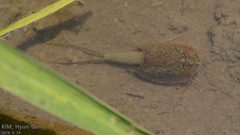
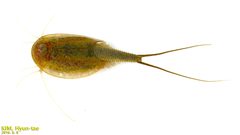
2Triopsidae is the sole in the order Notostraca, commonly known as tadpole shrimps or shield shrimps. These freshwater crustaceans are considered living fossils, with body plans essentially unchanged since the . The family contains two , Triops and Lepidurus. Members possess a distinctive broad, flat covering the , a long segmented-appearing with numerous leg pairs, and . Their can survive extended desiccation, enabling to persist through drought conditions and hatch when reflood.
Pronunciation
How to pronounce Triopsidae: //traɪˈɒpsɪˌdiː//
These audio files are automatically generated. While they are not always 100% accurate, they are a good starting point.
Identification
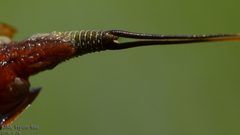
Distinguished from other branchiopods by the broad, shield-like covering most of the body and the long, multi-appendaged . Fairy shrimp (Anostraca) lack a carapace entirely. Clam shrimp (Conchostraca) possess a bivalved carapace enclosing the entire body. Water fleas (Cladocera) are much smaller with a compressed, often transparent carapace. Within Triopsidae, Triops and Lepidurus are separated by : Triops has a long, slender telson with two long caudal rami, while Lepidurus has a short, broad telson with a medial projection between the rami.
Images
Habitat
Temporary freshwater pools, vernal pools, rice fields, seasonal wetlands, and shallow lakes. Requires that undergo periodic wet-dry cycles. Tolerates variable water chemistry including elevated salinity and temperatures. Substrate typically muddy or silty.
Distribution
in distribution across temperate and tropical regions. Records from North America (including California rice fields), Europe (Denmark, Norway, Sweden), Asia, Africa, Australia, and South America. Specific distribution varies by within the .
Seasonality
Active present in spring and early summer following flooding. In California rice fields, hatching occurs soon after field flooding, with peak activity during early growing season. Adult decline as habitats dry; cannot survive desiccation.
Diet
and opportunistic. Feeds on , detritus, organic particles, and small . In agricultural settings, has been observed damaging germinating rice seedlings by consuming plant tissue.
Life Cycle
laid in substrate hatch upon flooding, with development to adulthood in days to weeks depending on temperature. Eggs possess rugged outer enabling extended dormancy during dry periods—documented viability for decades. No larval stages; direct development from nauplius-like early form to . Multiple possible per season if conditions persist. Adults cannot survive habitat desiccation; persist solely through eggs.
Behavior
Swims with side often oriented upward, frequently swimming upside-down near water surface. Rapid, jerky swimming movements interspersed with periods resting on substrate. Stirring of bottom sediments during activity creates turbid water conditions. Burrows shallowly in muddy substrate.
Ecological Role
Consumer of and detritus in temporary aquatic . Prey for fish, birds, and other aquatic where co-occurring. agent research indicates mosquitofish (Gambusia affinis) can suppress . Nutrient cycling through bioturbation of sediments.
Human Relevance
Agricultural pest in California rice fields, where feeding on rice seedlings causes economic damage. Heavy reliance on for management has raised concerns regarding surface water and resistance development. Research into alternative management includes using mosquitofish and reduced-rate insecticide applications. Sold in aquarium trade as "living fossils" or "Triops" kits. Subject of scientific interest due to ancient lineage and capabilities.
Similar Taxa
- Anostraca (fairy shrimp)Lack entirely; body laterally compressed with elongated, distinct segments
- Conchostraca (clam shrimp)Enclosed in bivalved, clam-like ; body not visible externally
- Cladocera (water fleas)Much smaller size; bivalved and typically transparent; body form compact and rounded
- Horseshoe crabs (Limulidae)Marine chelicerates, not crustaceans; superficial convergent resemblance in body form but unrelated
Misconceptions
Neither tadpoles nor shrimp: reflects convergent appearance, not phylogenetic affinity. Not true shrimp (Decapoda). Not insects despite frequent entomological attention due to agricultural pest status.
More Details
Living fossil status
Morphological stasis for approximately 200 million years; Triassic fossils assignable to modern based on and .
Desiccation-resistant eggs
structure enables survival through drought periods lasting years to decades; hatching triggered by hydration and environmental cues.
Agricultural research
UC Davis studies by Ian Grettenberger and colleagues have evaluated non- management, including mosquitofish and reduced-rate applications.