
Notostraca
G. O. Sars, 1867
tadpole shrimp, shield shrimp
Family Guides
1- Triopsidae(Tadpole Shrimps)
Notostraca is an order of small crustaceans commonly known as tadpole shrimp or shield shrimp. The group contains a single extant , Triopsidae, with two : Triops and Lepidurus. These animals are considered living fossils, with morphologically similar forms dating back to the Late Devonian approximately 360 million years ago. They inhabit temporary freshwater pools, shallow lakes, and similar aquatic environments worldwide except Antarctica.
Pronunciation
How to pronounce Notostraca: /ˌnotoˈstrɑːkə/
These audio files are automatically generated. While they are not always 100% accurate, they are a good starting point.
Identification
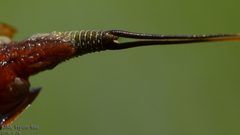
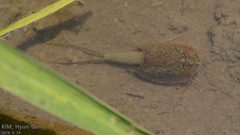
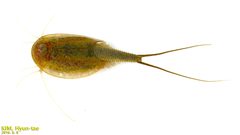
The broad, shield-shaped covering the entire distinguishes Notostraca from other branchiopods. The two are separable by : Lepidurus possesses a rounded projection between the caudal rami, while Triops lacks this projection. -level identification is complicated by extreme phenotypic plasticity and variation in reproductive mode; molecular methods are increasingly necessary for definitive identification.
Images
Habitat
Temporary freshwater pools, shallow lakes, peat bogs, moorland, and flooded agricultural fields such as rice paddies. Also found in brackish and saline pools. characteristically undergo periodic drying, with notostracans surviving as desiccation- during dry periods.
Distribution
Worldwide distribution except Antarctica. Documented from North America, South America, Europe, Africa, Asia, Australia, and oceanic islands including Socotra and Madagascar. In Europe, rare and localized occur in the United Kingdom (New Forest, Hampshire; Solway Firth, Scotland).
Seasonality
Active following rainfall or flooding that rehydrates desiccated . In seasonal environments, appear shortly after pools fill and complete their before desiccation. In agricultural settings such as California rice fields, Triops longicaudatus emerges as an early-season pest immediately after field flooding.
Diet
. Feeds on plant material, small including fairy shrimp and fish, detritus, and sediment particles. has been observed, including consumption of siblings.
Life Cycle
are carried briefly in a cup-like pouch before being laid. Eggs enter and can survive desiccation for decades (reported up to 27 years). Upon rehydration, eggs hatch and larvae develop directly without . Maturation from egg to adulthood can occur in 2–3 weeks under favorable conditions. cannot survive desiccation.
Behavior
Benthic lifestyle in muddy waters; feeds by taking up food from sediment particles and preying on small animals. Burrows in sediment, stirring up mud and clouding water. Swimming occurs with side often oriented upward at the water surface.
Ecological Role
and scavenger in temporary aquatic ; contributes to nutrient cycling through sediment disturbance. Serves as prey for fish and other aquatic predators where co-occurring. In rice agroecosystems, acts as early-season pest that can reduce seedling establishment.
Human Relevance
Agricultural pest in California rice production, where Triops longicaudatus damages germinating rice seedlings by feeding and sediment disturbance. Heavy reliance on for management has prompted development of alternative strategies including using mosquitofish (Gambusia affinis). Sold commercially as novelty pets via dried . Conservation concern for rare such as Lepidurus packardi (endangered vernal pool tadpole shrimp) in California and Triops cancriformis in Europe.
Similar Taxa
- Anostraca (fairy shrimp)Both are branchiopods inhabiting temporary pools, but Anostraca lack the broad shield-like and swim upside down with elongated, segmented bodies and no carapace covering the
- Spinicaudata (clam shrimp)Both are large branchiopods with bivalved , but Spinicaudata have laterally compressed, hinged carapaces enclosing the entire body rather than the dorsoventrally flattened, unhinged carapace of Notostraca
- Horseshoe crabs (Limulidae)Superficially similar shield-like shape and long caudal spine, but horseshoe crabs are marine chelicerates, not crustaceans, and are vastly larger with fundamentally different body organization
Misconceptions
"tadpole shrimp" and "shield shrimp" are misleading: these animals are neither tadpoles (amphibian larvae) nor true shrimp (decapods), but rather primitive crustaceans in the class Branchiopoda. The "living fossil" designation refers to morphological conservatism, not genetic or physiological stasis.
More Details
Reproductive plasticity
Reproductive mode varies within and among : , self- of females, and all occur. In Triops cancriformis, parthenogenesis predominates in colder northern regions while bisexual is more common in warmer southern regions. Male frequency varies accordingly from absent to common in different .
Desiccation-resistant eggs
possess a rugged outer enabling survival of extreme conditions including complete drying, temperature extremes, salt water immersion, and passage through animal digestive tracts. This capacity underlies persistence in ephemeral and long-distance .
Fossil record
Extensive fossil record dating to Late Devonian (Famennian, ~365 million years ago) with Strudops goldenbergi from Belgium. Morphological stability for over 250 million years qualifies the group as living fossils. Related fossil group Kazacharthra from Triassic-Jurassic of Central Asia may belong within Notostraca or as sister group.
Sources and further reading
- BugGuide
- Wikipedia
- GBIF taxonomy match
- iNaturalist taxon
- NCBI Taxonomy
- Catalogue of Life
- Begone Tadpole Shrimps! They're 'Time Travelers' in Rice Fields | Bug Squad
- Ten Facts You May Not Know About Tadpole Shrimp | Bug Squad
- Visitors Marvel at Tadpole Shrimp at Bohart Museum Open House | Bug Squad
- Bohart Museum Virtual Open House: Think Pests of Alfalfa and Rice | Bug Squad
- Outstanding Group of UC Davis Graduate Students at ESA Meeting | Bug Squad
- Just Add Water - Buglife Blog - Buglife
- Reproduction in Notostraca (Crustacea)
- Фауна Anostraca, Notostraca и Conchostraca Харьковской области
- NEW DATA ON THE FAUNA OF ANOSTRACA, NOTOSTRACA AND CONCHOSTRACA OF THE UDMURT REPUBLIC
- Comparative Respiratory Physiology and Ecology of Phyllopod Crustacea. III. Notostraca 1* )
- A record of Notostraca on Socotra Island and the importance of local conservation of the habitat
- The status of Anostraca, Notostraca and Conchostraca (Crustacea: Branchiopoda) in Yugoslavia
- Distribution of species of Anostraca, Notostraca, Spinicaudata, and Laevicaudata in Mexico
- The geographical distribution of Triops australiensis (Crustacea: Notostraca) in Australia: a biogeoclimatic analysis
- Distribution of species of Anostraca, Notostraca, Spinicaudata, and Laevicaudata in Mexico
- A first comprehensive dataset of the large branchiopods (Branchiopoda, Anostraca, Notostraca, Laevicaudata, Spinicaudata, Cyclestherida) of India.
- First Record of Triops cancriformis (Branchiopoda: Notostraca) in Qatar: Its Origin and Range Expansion Inferred From Genetics, Morphology, and Reproduction.