
Lepidurus packardi
Simon, 1886
Vernal Pool Tadpole Shrimp
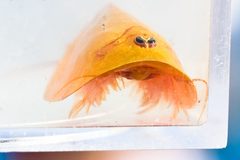
Lepidurus packardi is a federally endangered, California freshwater microcrustacean in the order Notostraca. It is an ephemeral wetland restricted to vernal pools and other temporary water bodies. The is a key food source for larval California Tiger Salamander and acts as an engineer through bioturbation. It reaches approximately 5 cm in length with a shield-like up to 3.5 cm long.
Pronunciation
How to pronounce Lepidurus packardi: //ˈlɛpɪˌdʊrəs ˈpækərdi//
These audio files are automatically generated. While they are not always 100% accurate, they are a good starting point.
Identification
Distinguished from the related Lepidurus couesii by morphological differences. Females can be identified by sacs attached to the eleventh phyllopods. The combination of vernal pool , California distribution, and specific morphological features ( shape, phyllopod number, cercopod presence) allows identification. Definitive separation from L. couesii requires examination of detailed morphological characters.
Images
Habitat
Ephemeral freshwater wetlands including vernal pools, swales, playas, temporary ponds, , ditches, road ruts, and other natural and artificial temporary water bodies. Requires that undergoes periodic wet-dry cycles. Specifically associated with the endangered vernal pool grassland of California.
Distribution
to California, USA. Found in the Central Coast, Sacramento Valley, San Joaquin Valley, and southern Sierra Nevada foothills. Highest concentration in southeastern Sacramento Valley (35% of known occurrences). Also recorded from Agate Desert, Oregon. Specific documented locations include Sacramento National Wildlife , Travis Air Force Base, Jepson Prairie Preserve, Merced and San Luis National Wildlife Refuges, and multiple counties (Sacramento, Tehama, Tulare, Fresno, Merced, Stanislaus).
Seasonality
Active when temporary pools fill with water, typically during winter and spring rainy season. occurs upon pool filling. hatch within three weeks of refilling, often more quickly. Desiccation of eggs during dry periods is common but not required for hatching. Life span approximately 144 days with maturation at about 38 days and reproduction around day 54.
Diet
. Collects food items with phyllopods while swimming, climbing on vegetation, or digging in sediment. Specific food items not documented in available sources.
Host Associations
- California Tiger Salamander (Ambystoma californiense) - preyKey food source; comprises >90% of larval salamander diets when available
- Migratory waterfowl - preyServes as food source
- Echinostome fluke - Parasitic reduces significantly
Life Cycle
stage capable of extended desiccation survival. Hatches as metanauplius larva. Undergoes multiple (), adding phyllopods with each molt. Sexual maturity reached at 10–12 mm length (approximately 38 days). begins around day 54. Clutch size 8–61 eggs, with larger females showing higher . Total lifespan approximately 144 days. may possess alternative reproductive modes: fully bisexual, fully hermaphroditic, or mixed.
Behavior
Swims using phyllopods, climbs vegetation, and digs actively in sediment. Creates substantial bioturbation through digging , producing turbidity that can alter pool by reducing plant cover. Courtship and mating occur in water; females deposit in egg sacs before release.
Ecological Role
engineer through bioturbation that modifies conditions and reduces plant cover. Important prey item for larval California Tiger Salamander and migratory waterfowl. Serves as link between and higher vertebrate in vernal pool ecosystems.
Human Relevance
Federally listed (United States) and IUCN Red Listed. Subject of conservation efforts due to loss. sequenced as conservation resource. for vernal pool health. Research subject for understanding alternative reproductive modes and to ephemeral habitats.
Similar Taxa
- Lepidurus couesiiClosely related congeneric ; distinguished by morphological differences requiring detailed examination
- Triops longicaudatusAnother notostracan in California; abundant rice pest with different (agricultural fields vs. natural vernal pools) and conservation status
More Details
Conservation Status
Federally endangered in the United States; IUCN Red Listed. Approximately 9% of historical vernal pool remains, fragmented and isolated. Primary threats: urban development, agricultural conversion, hydrological alteration. 28% of all known occurrences in Sacramento County. University of California, Merced campus construction included protection plans for over 20,000 acres of habitat.
Genomic Resources
First scaffold-level assembly for any Lepidurus published 2022. Genome size 108.6 Mbps with 6 -length scaffolds comprising 71% of total length, 444 total contigs, 97.3% BUSCO completeness. Predicted gene set of 17,650 genes trained on Daphnia magna.
Reproductive Biology
may exhibit alternative reproductive modes: fully bisexual, fully hermaphroditic, or mixed. Geographic variation and genetic basis of these modes remain unknown and represent active research area.
Sources and further reading
- BugGuide
- Wikipedia
- GBIF taxonomy match
- iNaturalist taxon
- NCBI Taxonomy
- Catalogue of Life
- Ten Facts You May Not Know About Tadpole Shrimp | Bug Squad
- Redlegged Grasshopper
- Flabellate Grasshopper
- Packard Grasshopper
- Grasshoppers of Colorado
- Grasshoppers of Colorado
- The reference genome of the Vernal Pool Tadpole Shrimp, Lepidurus packardi